Order within 21h 2m for same day dispatch | Free shipping on orders $250+ | Free Bacteriostatic Water 30ml with $500+ Purchase

Order within --h --m for same day dispatch on Mon-Fri | Free shipping on orders $250+ | Free Bacteriostatic Water 30ml with $500+ Purchase

Order within 21h 2m for same day dispatch | Free shipping on orders $250+ | Free Bac water with $500+ Purchase

[researchers_badge]

About

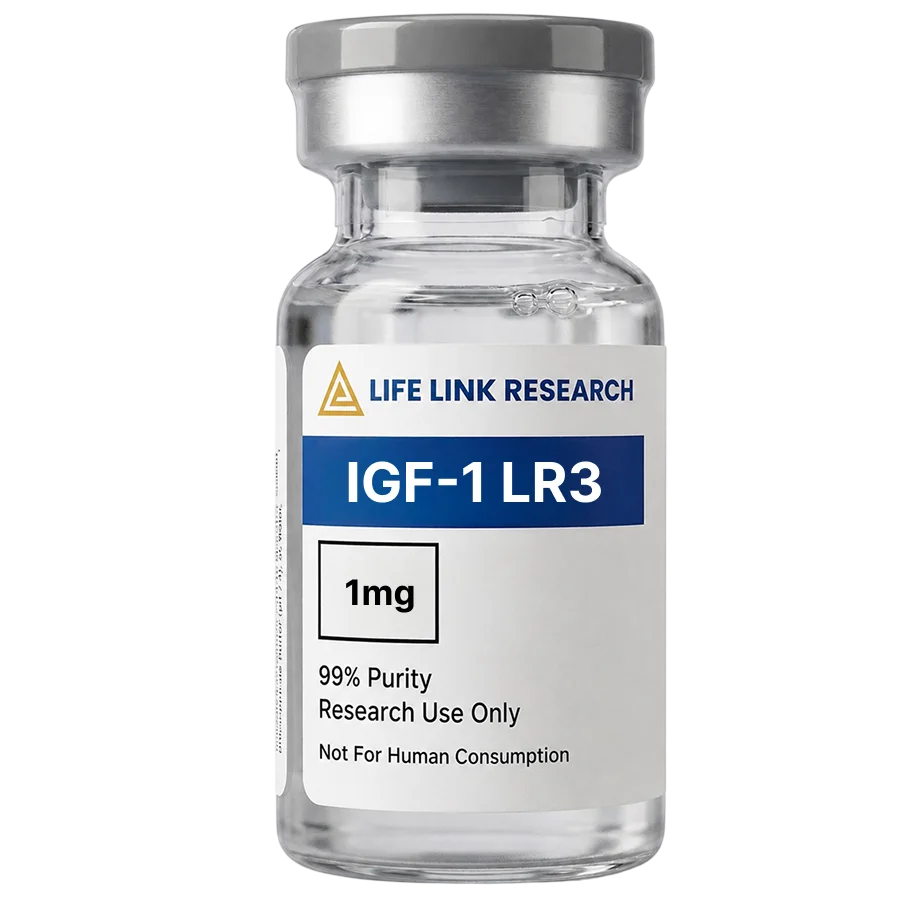
IGF-1 LR3 1mg

CAS: 946870-92-4 · MW: ~9111 Da · Purity: ≥98% by reverse-phase HPLC · Format: 1 mg lyophilized · Endotoxin: <1 EU/mg (LAL) · Identity: ESI-MS confirmed

IGF-1 LR3 (Long Arg³ Insulin-like Growth Factor-1) is an 83-amino-acid recombinant analog of insulin-like growth factor 1, modified by an arginine substitution at position 3 and a 13-residue N-terminal extension. This research-grade IGF-1 LR3 peptide is supplied as a 1 mg lyophilized vial at ≥98% purity by reverse-phase HPLC, with third-party analytical verification of identity, purity, and endotoxin load for every manufactured lot.

For laboratory research use only. Not for human consumption, veterinary use, food, or therapeutic use. Not a drug, supplement, or cosmetic. Sold exclusively to qualified research professionals and institutions.

Structure & Identity

IGF-1 LR3 has been characterized in the published literature as a single-chain polypeptide of 83 amino acid residues. Researchers have described the molecule as differing from native IGF-1 in two ways: substitution of glutamic acid with arginine at position 3, and an additional 13-residue N-terminal sequence (MFPAMPLSSLFVN-) retained from the methionyl-porcine growth hormone fusion cassette used during E. coli expression. The peptide has an approximate molecular weight of 9111 Da. In the biochemical literature, these structural modifications have been described as reducing the affinity of the IGF-1 LR3 analog for the six insulin-like growth factor binding proteins (IGFBP-1 through IGFBP-6) relative to native IGF-1 [1,2].

Research Background

IGF-1 LR3 has been referenced across in vitro and animal-model studies examining the IGF-1 axis and its downstream signaling. Published research contexts for the LR3 analog include:

  • IGF-1 receptor signaling. Investigated as a tool reagent in cultured cell lines (including L6 myoblasts and 3T3-L1 fibroblasts) for studies of IGF-1 receptor (IGF-1R) binding, autophosphorylation kinetics, and downstream PI3K/Akt and MAPK/ERK1/2 pathway engagement [1,3].
  • Animal-model characterization. Referenced in rodent models examining nitrogen balance, protein turnover, and clearance kinetics of the LR3 analog versus native IGF-1 under defined experimental conditions [2].
  • Bioprocess and cell-culture research. Characterized in the literature as a defined-medium component for hybridoma, CHO, and HEK293 cell line maintenance, where reduced IGFBP affinity is described as functionally relevant in serum-supplemented systems [2].

These references describe findings in non-human in vitro and animal systems and do not constitute claims about effects in humans.

Specifications

AttributeValue
Sequence length83 amino acids
Expression systemRecombinant E. coli
ModificationsArg³ substitution; 13-aa N-terminal extension
CAS Number946870-92-4
Molecular FormulaC₄₀₀H₆₂₅N₁₁₁O₁₁₅S₉
Molecular Weight~9111 Da (ESI-MS confirmed)
Purity≥98% by reverse-phase HPLC
IdentityESI mass spectrometry
Endotoxin<1 EU/mg (LAL chromogenic assay)
BioburdenSterile-filtered through 0.22 µm prior to lyophilization
Format1 mg lyophilized powder, single-use amber vial
AppearanceWhite to off-white amorphous powder
Solubility (lab context)Soluble in 10 mM acetic acid, dilute HCl, or sterile water
Isoelectric point~8.5

Storage & Handling

Lyophilized material is stable at -20°C for 24 months from date of manufacture when protected from light and moisture. Once reconstituted in laboratory buffer, the peptide should be aliquoted into low-binding polypropylene tubes and stored at -80°C. Repeated freeze-thaw cycles are not recommended; IGF-1 family peptides are susceptible to aggregation and oxidation of methionine residues. Handling should occur under aseptic conditions in a Class II biosafety cabinet or laminar flow hood. Standard laboratory PPE applies per institutional biosafety guidelines.

Quality Assurance

Every manufactured lot is accompanied by batch-specific analytical documentation including: third-party reverse-phase HPLC chromatogram, ESI-MS deconvoluted mass spectrum, LAL chromogenic endotoxin quantification, residual moisture by Karl Fischer titration, and SDS-PAGE single-band confirmation. Reference standards are maintained at -80°C and cross-validated against international IGF-1 reference preparations on a quarterly basis. Manufacturing occurs in ISO 9001-certified facilities under documented cGMP-aligned procedures.

This material is supplied exclusively to qualified research professionals, academic laboratories, contract research organizations, and institutional purchasing departments. Proof of institutional affiliation and a signed research-use acknowledgment may be requested prior to shipment.

For laboratory research use only. Not for human consumption, veterinary use, food, or therapeutic use. Not a drug, supplement, or cosmetic.

Frequently Asked Questions

What is IGF-1 LR3?

IGF-1 LR3 (Long Arg³ Insulin-like Growth Factor-1) is an 83-amino-acid recombinant analog of native human IGF-1, produced by E. coli expression. It carries an arginine substitution at residue 3 of the mature IGF-1 sequence and a 13-residue N-terminal extension. The CAS number is 946870-92-4 and the molecular weight is approximately 9111 Da.

How is IGF-1 LR3 different from native IGF-1?

IGF-1 LR3 differs from native IGF-1 in two ways: the Arg³ substitution and the N-terminal extension. The published literature describes these modifications as reducing the analog’s affinity for the IGF binding proteins (IGFBP-1 through IGFBP-6) relative to native IGF-1, while affinity for the IGF-1 receptor (IGF-1R) is preserved [1,2].

What is the molecular weight of IGF-1 LR3?

Approximately 9111 Da, with a molecular formula of C₄₀₀H₆₂₅N₁₁₁O₁₁₅S₉. Identity is confirmed lot-to-lot by ESI mass spectrometry.

What is the CAS number for IGF-1 LR3?

946870-92-4.

What purity is IGF-1 LR3 supplied at?

≥98% by reverse-phase HPLC. Each manufactured lot is third-party analyzed and accompanied by batch-specific documentation of HPLC purity, ESI-MS identity, LAL endotoxin load (<1 EU/mg), and residual moisture.

How should IGF-1 LR3 be stored?

Lyophilized vials are stable at -20°C for 24 months when protected from light and moisture. Once reconstituted in laboratory buffer, the peptide should be aliquoted into low-binding tubes and stored at -80°C. Repeated freeze-thaw cycles are not recommended.

How is IGF-1 LR3 reconstituted for laboratory work?

In a research-laboratory context, IGF-1 LR3 is soluble in dilute acetic acid (10 mM), dilute HCl, or sterile water. Researchers typically reconstitute in bacteriostatic water or PBS for in vitro experimental work, following standard aseptic technique.

Who can purchase IGF-1 LR3?

This material is supplied exclusively to qualified research professionals, academic laboratories, contract research organizations, and institutional purchasing departments. Proof of institutional affiliation and a signed research-use acknowledgment may be requested.

What is IGF-1 LR3 used for in research?

IGF-1 LR3 has been referenced in the peer-reviewed literature as a tool reagent for studying IGF-1 receptor signaling independent of IGFBP modulation, in animal-model research examining the IGF-1 axis, and in cell-culture media development. All published characterizations are in non-human in vitro or animal systems.

References

  1. Francis GL, Ross M, Ballard FJ, Milner SJ, Senn C, McNeil KA, Wallace JC, King R, Wells JR. Novel recombinant fusion protein analogues of insulin-like growth factor (IGF)-I indicate the relative importance of IGF-binding protein and receptor binding for enhanced biological potency. J Mol Endocrinol. 1992;8(3):213-23. PMID: 1379704
  2. Tomas FM, Knowles SE, Owens PC, Chandler CS, Francis GL, Read LC, Ballard FJ. Increased weight gain, nitrogen retention and muscle protein synthesis following treatment of diabetic rats with insulin-like growth factor (IGF)-I and Long-R3-IGF-I. J Endocrinol. 1993;137(3):413-21. PMID: 8371074
  3. Dupont J, Holzenberger M. Biology of insulin-like growth factors in development. Birth Defects Res C Embryo Today. 2003;69(4):257-71. PMID: 14745968
  4. Coleman ME, DeMayo F, Yin KC, Lee HM, Geske R, Montgomery C, Schwartz RJ. Myogenic vector expression of insulin-like growth factor I stimulates muscle cell differentiation and myofiber hypertrophy in transgenic mice. J Biol Chem. 1995;270(20):12109-16. PMID: 7744859

IGF-1 LR3 1mg

$169.00

Choose your quantity Save up to 20%
Quantity
Price / vial
Savings

9 in stock

In Stock
Purchase & earn 169 points.
Purity Guarantee: Every vial is backed by independent Janoshik verification. Not satisfied with your order? Contact us for resolution.
6-Test Panel
Most suppliers test 1. We test 6.
Janoshik Verified
Independent 3rd-party COA
Same-Day Shipping
Order by 2 PM PT, ships today
Ships from California
USPS Priority · 2–3 day delivery
Accepted:
VISA AMERICANEXPRESS ACH
Buy 3 for $ each and save 5%
Buy 5 for $ each and save 10%
Buy 10 for $ each and save 20%
Buy 3 for $ each and save 5 %
Buy 5 for $ each and save 10 %
Buy 10 for $ each and save 20 %

Product Usage:

These products are intended for research use only.

This designation permits the use of these research chemicals strictly for in vitro testing and laboratory experimentation. All product information provided on this website is for educational purposes only. Any form of bodily introduction into humans or animals is strictly prohibited by law. These products must be handled only by licensed and qualified professionals.

These products are not drugs, foods, or cosmetics and must not be misbranded, misused, or mislabeled as such.

Related Products

All Articles And Product Information Provided On This Website Are For Informational And Educational Purposes Only.
The products offered on this website are furnished for in-vitro studies only. In-vitro studies {Latin: in glass) are performed outside of the body. These products are not medicines or drugs and have not been approved by the FDA to prevent, treat or cure any medical condition, ailment or disease. Bodily introduction of any kind into humans or animals is strictly forbidden by law.

About

IGF-1 LR3 1mg

CAS: 946870-92-4 · MW: ~9111 Da · Purity: ≥98% by reverse-phase HPLC · Format: 1 mg lyophilized · Endotoxin: <1 EU/mg (LAL) · Identity: ESI-MS confirmed

IGF-1 LR3 (Long Arg³ Insulin-like Growth Factor-1) is an 83-amino-acid recombinant analog of insulin-like growth factor 1, modified by an arginine substitution at position 3 and a 13-residue N-terminal extension. This research-grade IGF-1 LR3 peptide is supplied as a 1 mg lyophilized vial at ≥98% purity by reverse-phase HPLC, with third-party analytical verification of identity, purity, and endotoxin load for every manufactured lot.

For laboratory research use only. Not for human consumption, veterinary use, food, or therapeutic use. Not a drug, supplement, or cosmetic. Sold exclusively to qualified research professionals and institutions.

Structure & Identity

IGF-1 LR3 has been characterized in the published literature as a single-chain polypeptide of 83 amino acid residues. Researchers have described the molecule as differing from native IGF-1 in two ways: substitution of glutamic acid with arginine at position 3, and an additional 13-residue N-terminal sequence (MFPAMPLSSLFVN-) retained from the methionyl-porcine growth hormone fusion cassette used during E. coli expression. The peptide has an approximate molecular weight of 9111 Da. In the biochemical literature, these structural modifications have been described as reducing the affinity of the IGF-1 LR3 analog for the six insulin-like growth factor binding proteins (IGFBP-1 through IGFBP-6) relative to native IGF-1 [1,2].

Research Background

IGF-1 LR3 has been referenced across in vitro and animal-model studies examining the IGF-1 axis and its downstream signaling. Published research contexts for the LR3 analog include:

  • IGF-1 receptor signaling. Investigated as a tool reagent in cultured cell lines (including L6 myoblasts and 3T3-L1 fibroblasts) for studies of IGF-1 receptor (IGF-1R) binding, autophosphorylation kinetics, and downstream PI3K/Akt and MAPK/ERK1/2 pathway engagement [1,3].
  • Animal-model characterization. Referenced in rodent models examining nitrogen balance, protein turnover, and clearance kinetics of the LR3 analog versus native IGF-1 under defined experimental conditions [2].
  • Bioprocess and cell-culture research. Characterized in the literature as a defined-medium component for hybridoma, CHO, and HEK293 cell line maintenance, where reduced IGFBP affinity is described as functionally relevant in serum-supplemented systems [2].

These references describe findings in non-human in vitro and animal systems and do not constitute claims about effects in humans.

Specifications

AttributeValue
Sequence length83 amino acids
Expression systemRecombinant E. coli
ModificationsArg³ substitution; 13-aa N-terminal extension
CAS Number946870-92-4
Molecular FormulaC₄₀₀H₆₂₅N₁₁₁O₁₁₅S₉
Molecular Weight~9111 Da (ESI-MS confirmed)
Purity≥98% by reverse-phase HPLC
IdentityESI mass spectrometry
Endotoxin<1 EU/mg (LAL chromogenic assay)
BioburdenSterile-filtered through 0.22 µm prior to lyophilization
Format1 mg lyophilized powder, single-use amber vial
AppearanceWhite to off-white amorphous powder
Solubility (lab context)Soluble in 10 mM acetic acid, dilute HCl, or sterile water
Isoelectric point~8.5

Storage & Handling

Lyophilized material is stable at -20°C for 24 months from date of manufacture when protected from light and moisture. Once reconstituted in laboratory buffer, the peptide should be aliquoted into low-binding polypropylene tubes and stored at -80°C. Repeated freeze-thaw cycles are not recommended; IGF-1 family peptides are susceptible to aggregation and oxidation of methionine residues. Handling should occur under aseptic conditions in a Class II biosafety cabinet or laminar flow hood. Standard laboratory PPE applies per institutional biosafety guidelines.

Quality Assurance

Every manufactured lot is accompanied by batch-specific analytical documentation including: third-party reverse-phase HPLC chromatogram, ESI-MS deconvoluted mass spectrum, LAL chromogenic endotoxin quantification, residual moisture by Karl Fischer titration, and SDS-PAGE single-band confirmation. Reference standards are maintained at -80°C and cross-validated against international IGF-1 reference preparations on a quarterly basis. Manufacturing occurs in ISO 9001-certified facilities under documented cGMP-aligned procedures.

This material is supplied exclusively to qualified research professionals, academic laboratories, contract research organizations, and institutional purchasing departments. Proof of institutional affiliation and a signed research-use acknowledgment may be requested prior to shipment.

For laboratory research use only. Not for human consumption, veterinary use, food, or therapeutic use. Not a drug, supplement, or cosmetic.

Frequently Asked Questions

What is IGF-1 LR3?

IGF-1 LR3 (Long Arg³ Insulin-like Growth Factor-1) is an 83-amino-acid recombinant analog of native human IGF-1, produced by E. coli expression. It carries an arginine substitution at residue 3 of the mature IGF-1 sequence and a 13-residue N-terminal extension. The CAS number is 946870-92-4 and the molecular weight is approximately 9111 Da.

How is IGF-1 LR3 different from native IGF-1?

IGF-1 LR3 differs from native IGF-1 in two ways: the Arg³ substitution and the N-terminal extension. The published literature describes these modifications as reducing the analog’s affinity for the IGF binding proteins (IGFBP-1 through IGFBP-6) relative to native IGF-1, while affinity for the IGF-1 receptor (IGF-1R) is preserved [1,2].

What is the molecular weight of IGF-1 LR3?

Approximately 9111 Da, with a molecular formula of C₄₀₀H₆₂₅N₁₁₁O₁₁₅S₉. Identity is confirmed lot-to-lot by ESI mass spectrometry.

What is the CAS number for IGF-1 LR3?

946870-92-4.

What purity is IGF-1 LR3 supplied at?

≥98% by reverse-phase HPLC. Each manufactured lot is third-party analyzed and accompanied by batch-specific documentation of HPLC purity, ESI-MS identity, LAL endotoxin load (<1 EU/mg), and residual moisture.

How should IGF-1 LR3 be stored?

Lyophilized vials are stable at -20°C for 24 months when protected from light and moisture. Once reconstituted in laboratory buffer, the peptide should be aliquoted into low-binding tubes and stored at -80°C. Repeated freeze-thaw cycles are not recommended.

How is IGF-1 LR3 reconstituted for laboratory work?

In a research-laboratory context, IGF-1 LR3 is soluble in dilute acetic acid (10 mM), dilute HCl, or sterile water. Researchers typically reconstitute in bacteriostatic water or PBS for in vitro experimental work, following standard aseptic technique.

Who can purchase IGF-1 LR3?

This material is supplied exclusively to qualified research professionals, academic laboratories, contract research organizations, and institutional purchasing departments. Proof of institutional affiliation and a signed research-use acknowledgment may be requested.

What is IGF-1 LR3 used for in research?

IGF-1 LR3 has been referenced in the peer-reviewed literature as a tool reagent for studying IGF-1 receptor signaling independent of IGFBP modulation, in animal-model research examining the IGF-1 axis, and in cell-culture media development. All published characterizations are in non-human in vitro or animal systems.

References

  1. Francis GL, Ross M, Ballard FJ, Milner SJ, Senn C, McNeil KA, Wallace JC, King R, Wells JR. Novel recombinant fusion protein analogues of insulin-like growth factor (IGF)-I indicate the relative importance of IGF-binding protein and receptor binding for enhanced biological potency. J Mol Endocrinol. 1992;8(3):213-23. PMID: 1379704
  2. Tomas FM, Knowles SE, Owens PC, Chandler CS, Francis GL, Read LC, Ballard FJ. Increased weight gain, nitrogen retention and muscle protein synthesis following treatment of diabetic rats with insulin-like growth factor (IGF)-I and Long-R3-IGF-I. J Endocrinol. 1993;137(3):413-21. PMID: 8371074
  3. Dupont J, Holzenberger M. Biology of insulin-like growth factors in development. Birth Defects Res C Embryo Today. 2003;69(4):257-71. PMID: 14745968
  4. Coleman ME, DeMayo F, Yin KC, Lee HM, Geske R, Montgomery C, Schwartz RJ. Myogenic vector expression of insulin-like growth factor I stimulates muscle cell differentiation and myofiber hypertrophy in transgenic mice. J Biol Chem. 1995;270(20):12109-16. PMID: 7744859
Published Research Applications
Metabolic Pathway Modulation
Dual GIP/GLP-1 receptor agonism on insulinotropic signaling in pancreatic beta-cell models
PMID: 34170647
Adipose Tissue Biology
Lipid metabolism and energy expenditure in in-vitro adipose tissue models
PMID: 35658024
Hepatocyte Research
Hepatic lipid accumulation and NASH-related inflammatory pathways
PMID: 36780086
Cardiovascular Cell Biology
Endothelial function under metabolic stress conditions
PMID: 37840850
Receptor Binding Studies
Dual receptor selectivity and cAMP signaling characterization
PMID: 33186500
Neuroprotection Models
CNS effects and neuroinflammatory marker modulation
PMID: 36878413
Published Research Applications
Long R3 IGF-1 vs IGF-1 Comparison
Reduced IGF-binding-protein affinity gives Long R3 IGF-1 ~3× the bioactivity of native IGF-1
Organ Growth in Guinea Pig
LR3 IGF-1 stimulates organ growth while reducing plasma IGFBP-3
In Vitro Embryo Development
Different effects of IGF-1 and Long R3 IGF-1 on embryo IGFBP and receptor expression
Intranasal LR3 IGF-1 Brain Delivery
Intranasal LR3 IGF-1 reaches brain and modulates CNS function
IGF-1R Signaling Review
Comprehensive review of IGF-1 receptor signaling and effects of LR3 IGF-1
Tissue Specificity / Anabolic Effects
IGF-1 systemic effects on muscle, bone, and metabolism
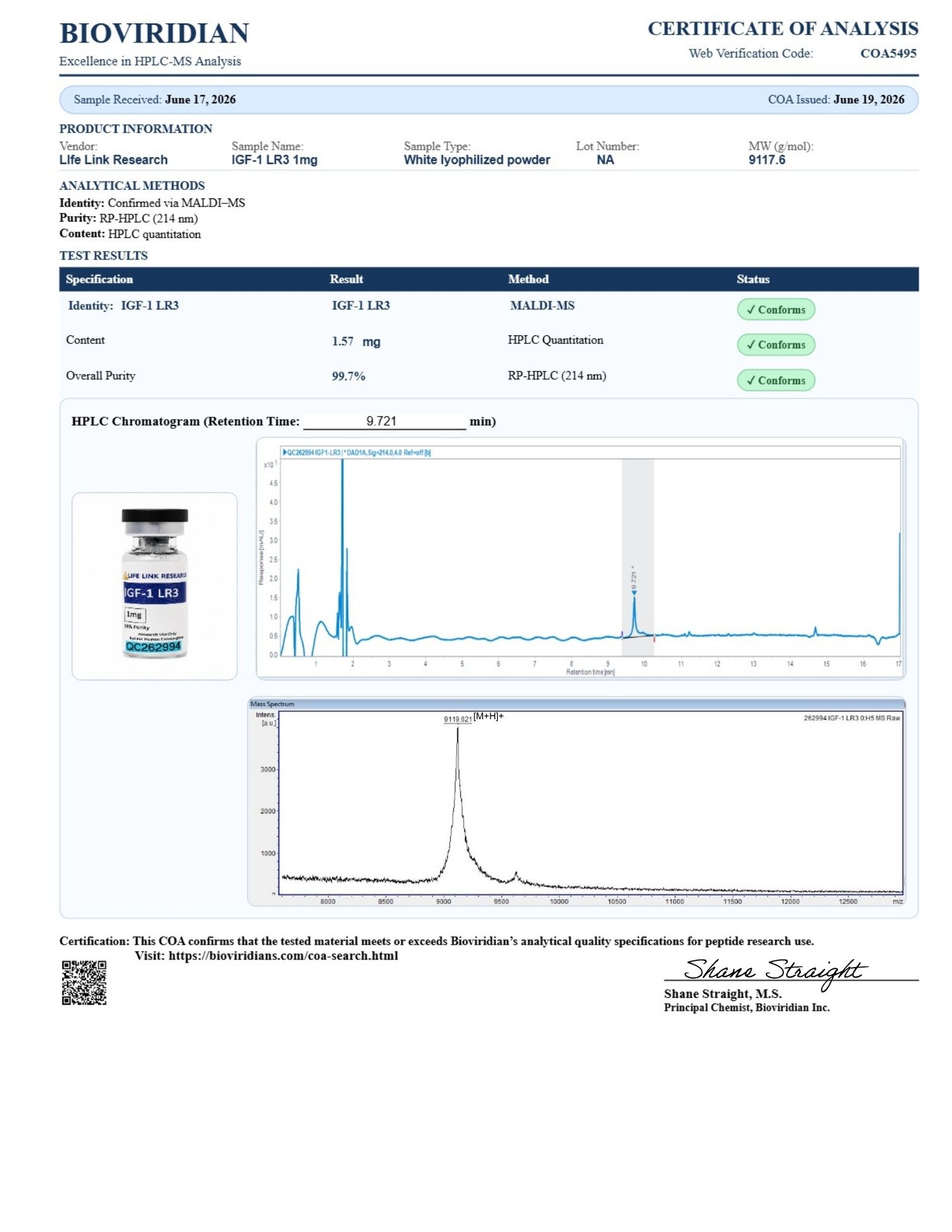
6-Test Verification Panel

Most peptide suppliers run one purity test. We run six, then send every batch to Janoshik for independent verification.

HPLC
≥99%
LCMS
Confirmed
Heavy Metals
< LOD
Endotoxin
< 0.5 EU
Sterility
Sterile
AAA
Verified
Life Link ResearchMost Suppliers
HPLC Purity
LCMS Identity
Heavy Metals (ICP-MS)
Endotoxin (LAL)
Sterility
Amino Acid Analysis
3rd Party (Janoshik)
Common Questions
How is this product tested?
Every batch undergoes our 6-test panel: HPLC purity, LCMS mass confirmation, ICP-MS heavy metals, LAL endotoxin, sterility, and amino acid analysis. Samples are then sent to Janoshik Analytical for independent verification. All COA reports are downloadable from this page.
How should I store it?
Store lyophilized peptide at -20°C. Reconstituted: 2-8°C, use within 14 days. Ships ambient, stable for transit.
How fast do you ship?
Orders by 2 PM PT ship same day via USPS Priority from California. 2-3 business days typical. Free shipping $250+.
What payment methods do you accept?
All major credit cards (Visa, Mastercard, American Express), ACH, and cryptocurrency.

Ready to Start Your Research?

99%+ purity. 6-test verified. Janoshik-confirmed.

Order

IGF-1 LR3 1mg

Same-Day Shipping Secure Checkout Ships from CA

IGF-1 LR3 1mg

$169.00

 /vial

ADD TO CART

LifeLinkResearch

Terms & Conditions

LifeLinkResearch.com
Cookie policy

We use cookies to enhance your experience. By continuing to use our site, you consent to our cookie policy.

Waiver & disclaimer of liability

By using this site, you confirm you have read our waiver and agree to all terms of our disclaimer of liability.

Product usage

Products are for research and development only — not for human consumption. You confirm you are 21 or older. Statements have not been evaluated by the FDA. Continued use implies acceptance.

1