
Description
Structure & Identity
NAD+ is a dinucleotide, built from two nucleotides, one carrying nicotinamide and one carrying adenine, joined through their phosphate groups. It is a coenzyme with the molecular formula C₂₁H₂₇N₇O₁₄P₂ and a molecular weight of 663.43 Da. Because it contains no amino-acid chain, it is not a peptide.
Research Background
NAD+ research is central to cellular energy and the enzymes that depend on it.
- Central coenzyme. NAD+ carries electrons in the reactions that produce cellular energy [PMID: 32694684].
- Homeostasis. How cells regulate NAD+ levels is a core question in cellular metabolism research [PMID: 32694684].
- Sirtuin fuel. NAD+/sirtuin pathway is one of the most-studied signaling axes in cellular metabolism research [PMID: 42188047].
- Energy regulation. It links to AMPK and SIRT1 in energy-expenditure research [PMID: 19262508].
- Broader signaling. The wider sirtuin network ties NAD+ to metabolism and mitochondria [PMID: 42442718].
These are research contexts, not approved uses, and the compound is intended for laboratory study.
Specifications
| Attribute | Value |
| Chemical name | NAD+ (nicotinamide adenine dinucleotide) |
| Type | Coenzyme (dinucleotide), not a peptide |
| Also Known As | Nicotinamide adenine dinucleotide |
| CAS number | 53-84-9 |
| Molecular formula | C₂₁H₂₇N₇O₁₄P₂ |
| Molecular weight | 663.43 g/mol |
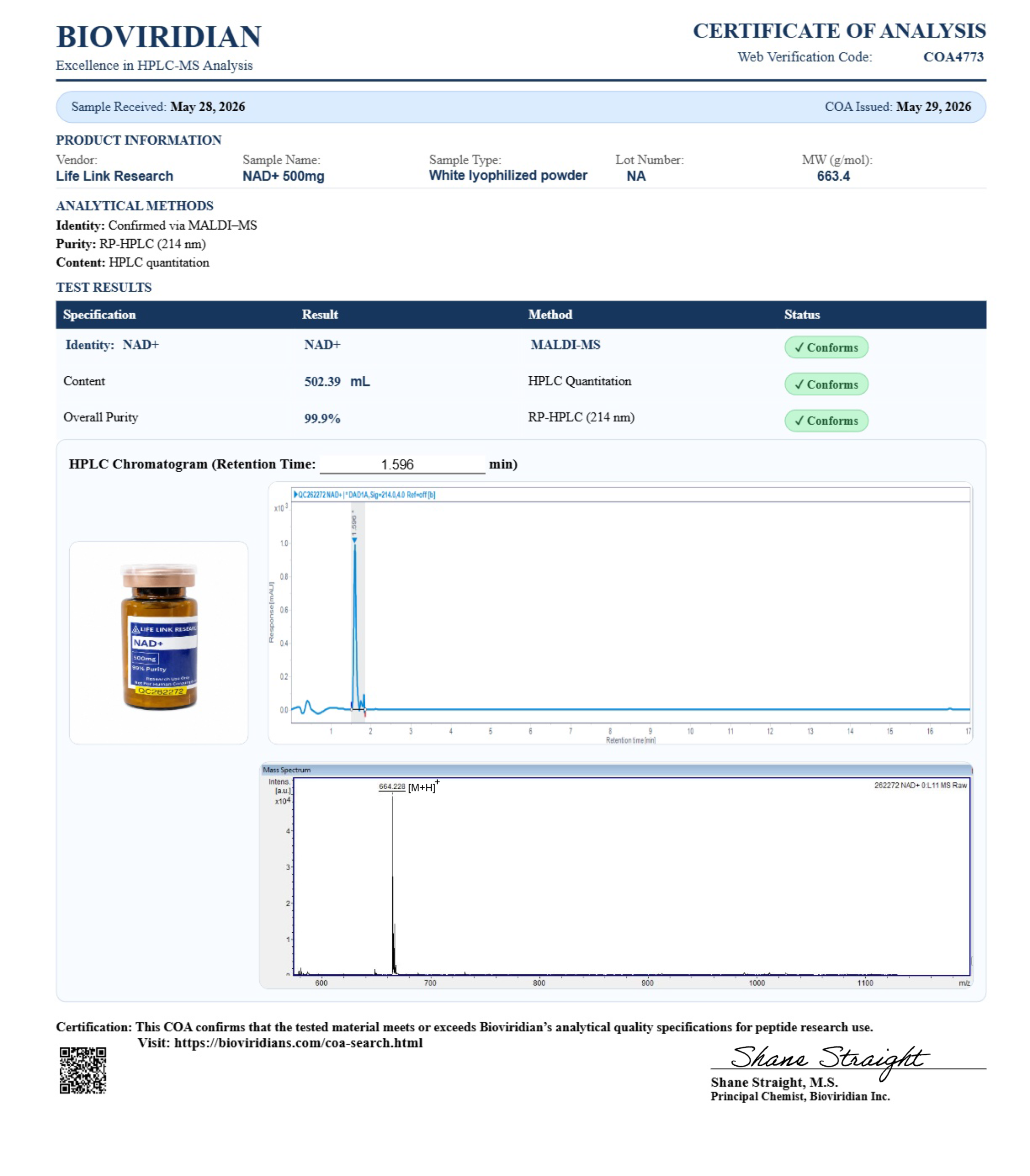
| Purity | ≥99% by reverse-phase HPLC |
| Identity | Confirmed by ESI mass spectrometry |
| Physical form | Lyophilized powder |
| Appearance | White to off-white solid |
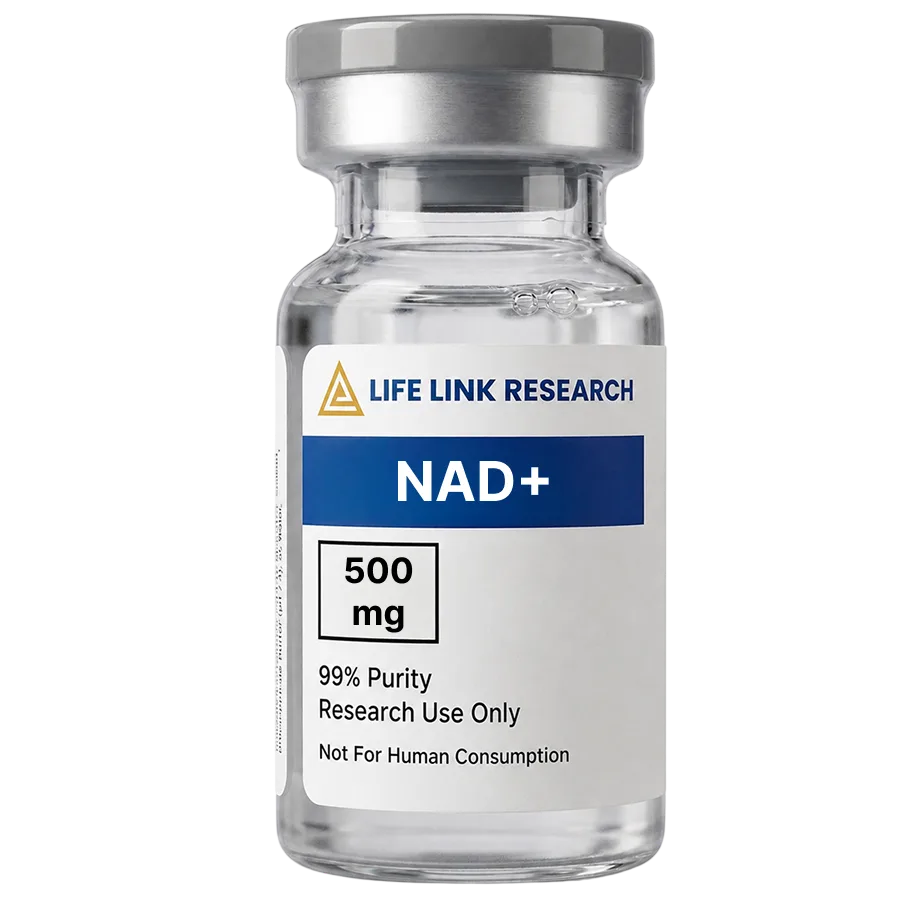
| Quantity | 500 mg per vial |
| Storage | -20°C, protected from light |
| Solubility | Freely water-soluble |
| Classification | Research use only |
Storage & Handling
Keep the sealed vial frozen at -20°C and shielded from light until use. NAD+ is sensitive to moisture and heat, so let the vial reach room temperature before opening, reseal promptly, and keep prepared solution for assay cold and reasonably fresh. Avoid repeated freeze-thaw cycles.
Quality Assurance
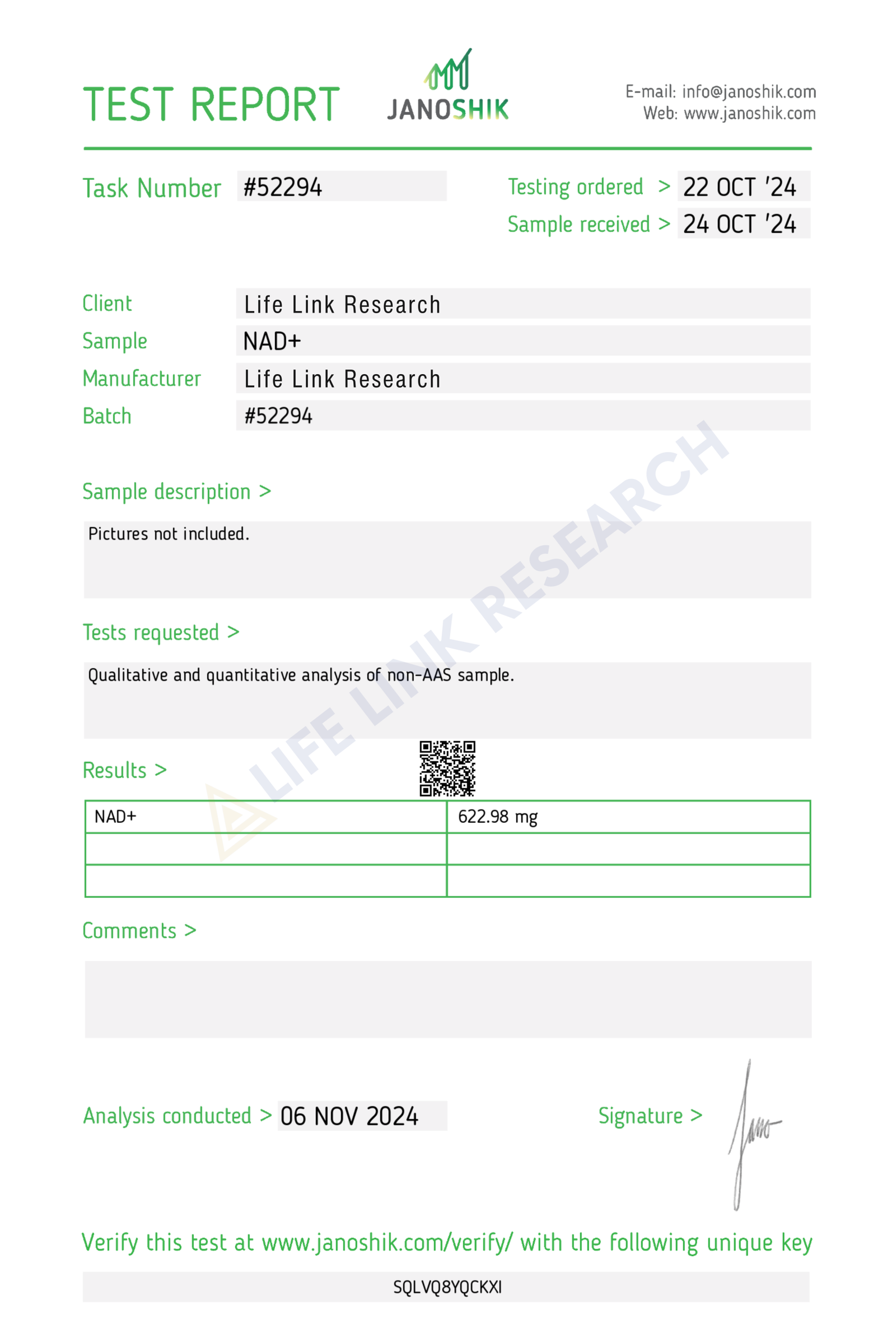
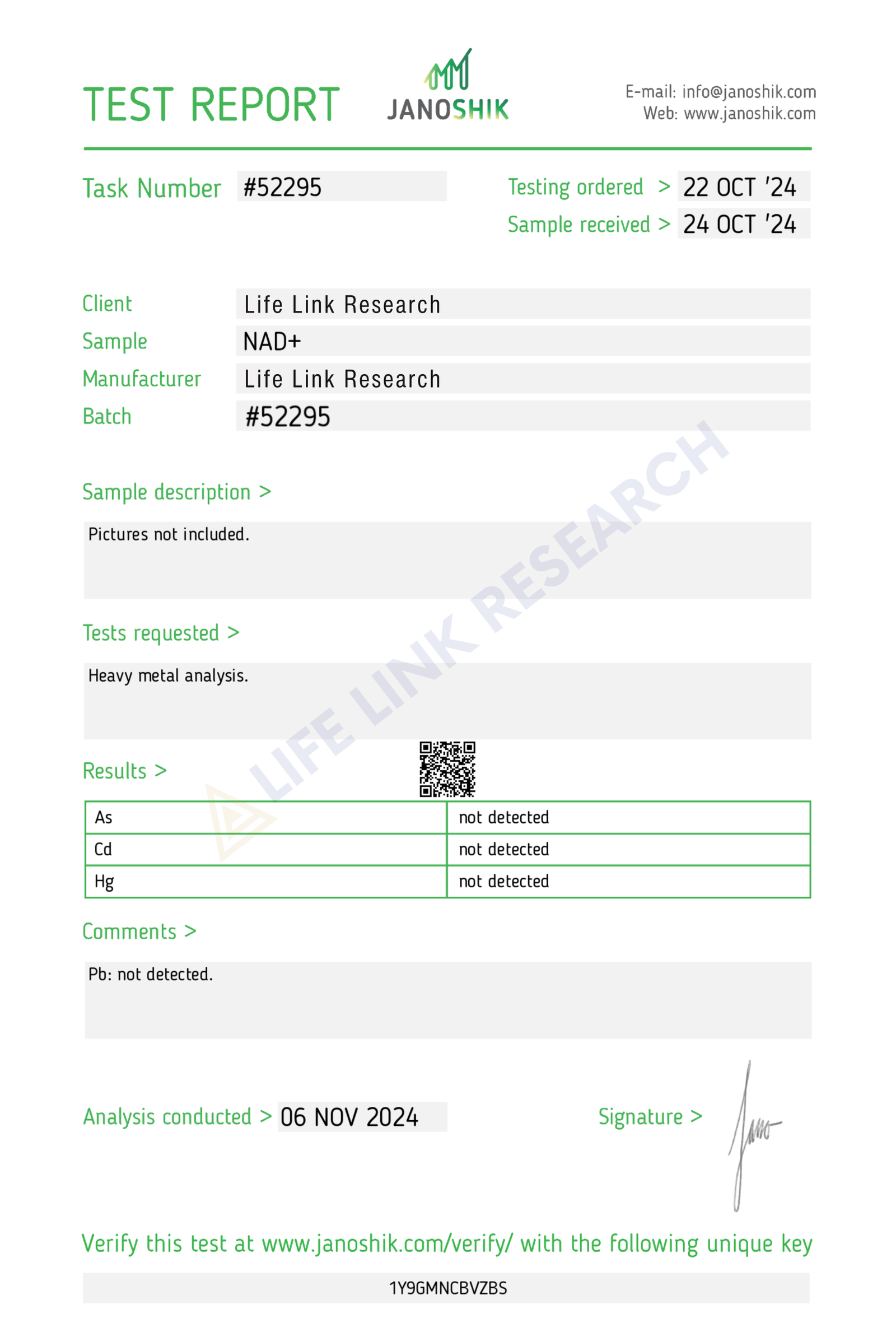
NAD+ is produced to research-grade standards and verified by an independent lab before release. Purity is measured by reverse-phase HPLC and identity by mass spectrometry, with testing carried out by third-party laboratories, including Janoshik Analytical and domestic labs. A certificate of analysis is issued for each batch, so its figures match the exact vial you receive.
Frequently Asked Questions
Is NAD+ a peptide?
No. NAD+ is a coenzyme (a dinucleotide), not a peptide. It contains no amino-acid chain. It is studied in metabolism and cellular-energy research and is supplied for research use only.
What does NAD+ do in the cell?
It carries electrons in the reactions that generate energy and serves as a substrate for sirtuin enzymes. That dual role makes it central to metabolism and cellular-energy research.
What are sirtuins, and how do they relate to NAD+?
Sirtuins are enzymes involved in cellular metabolism that use NAD+ as a substrate. The NAD+/sirtuin pathway is one of the most-studied areas in NAD+ research.
What is NAD+’s molecular weight?
Its formula is C₂₁H₂₇N₇O₁₄P₂, its molecular weight is 663.43 Da, and its CAS number is 53-84-9.
Is NAD+ FDA approved?
The material sold here is a research-use-only reference compound, not for human or veterinary use, diagnosis, or treatment.
How should NAD+ be stored?
Keep the powder frozen at -20°C and protected from light, reseal promptly after opening, and keep it away from heat and moisture.
How is this NAD+ verified?
It is tested to ≥99% purity by reverse-phase HPLC with mass-spec identity confirmation by an independent lab, and each batch ships with a certificate of analysis.