For Research Use Only. Not for Human Consumption. Not for use in diagnostic or therapeutic procedures. This product has not been evaluated by the FDA for safety or efficacy. Sold for laboratory research purposes only.
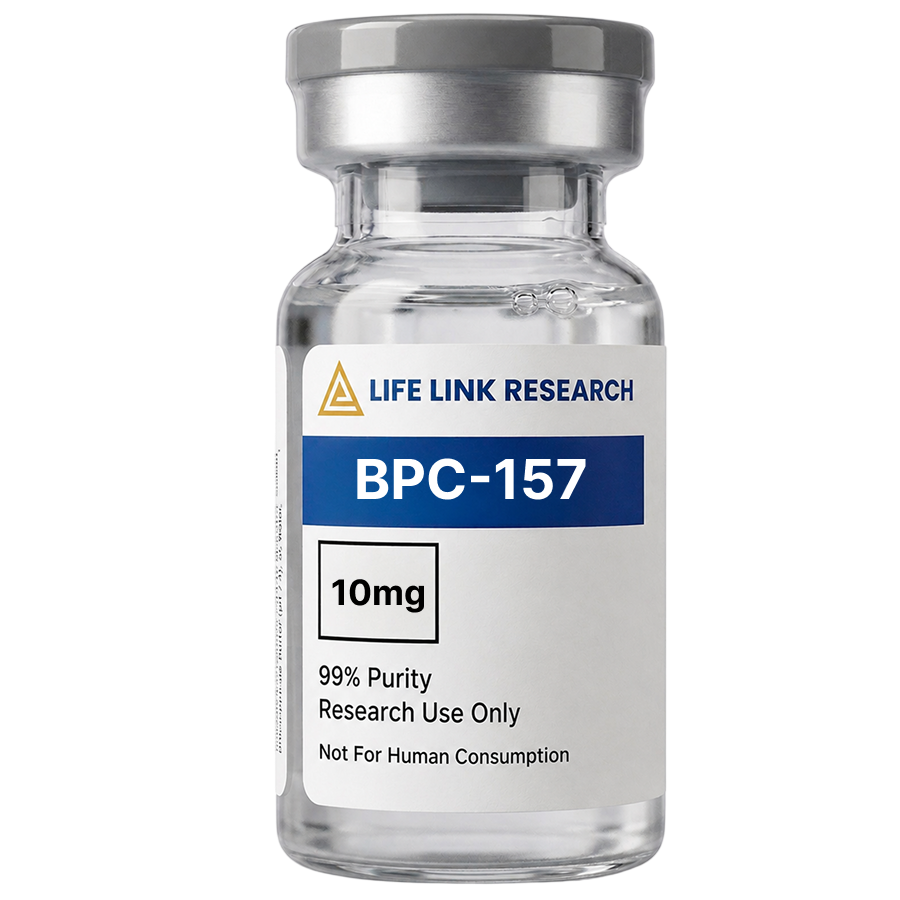
CAS: 137525-51-0 · MW: 1419.5 Da · Purity: ≥99% by reverse-phase HPLC · Format: 10 mg powder · Identity: ESI-MS confirmed
BPC-157 is a short peptide that comes from a protective protein found in the stomach, which is where the “Body Protection Compound” name comes from. Researchers study it heavily in tissue-repair and gut models, and it is one of the peptides that recently drew FDA attention in the 2026 compounding review. This is the 10 mg vial, supplied as a reference material for that research.
BPC-157 is a pentadecapeptide, a chain of fifteen amino acids with the sequence Gly-Glu-Pro-Pro-Pro-Gly-Lys-Pro-Ala-Asp-Asp-Ala-Gly-Leu-Val. It is a partial sequence derived from a larger gastric protein, and it is notably stable, holding up in conditions that would break down many peptides. That stability is a practical advantage in the lab.
BPC-157 research spans gut protection, tissue repair, and the blood-vessel signaling that supports healing.
These are research contexts, not approved uses, and the peptide is intended purely for laboratory study.
| Attribute | Value |
| Chemical name | BPC-157 (body protection compound-157) |
| Also Known As | Body Protection Compound 157, PL-14736 (related) |
| Sequence | Gly-Glu-Pro-Pro-Pro-Gly-Lys-Pro-Ala-Asp-Asp-Ala-Gly-Leu-Val |
| CAS number | 137525-51-0 |
| Molecular formula | C62H98N16O22 |
| Molecular weight | 1419.5 g/mol |
| Purity | ≥99% by reverse-phase HPLC |
| Length | 15 amino acids |
| Identity | Confirmed by ESI mass spectrometry |
| Physical form | Lyophilized powder |
| Appearance | White to off-white solid |
| Quantity | 10 mg per vial |
| Storage | -20°C, protected from light |
| Solubility | Soluble in bacteriostatic or sterile water |
| Classification | Research use only |
Keep the sealed vial frozen at -20°C and shielded from light until use. After reconstitution, store the solution at 2-8°C and use it within about two weeks. BPC-157 is relatively stable for a peptide, but warming the vial to room temperature before opening and avoiding repeated freeze-thaw cycles are still worthwhile habits that protect the material.
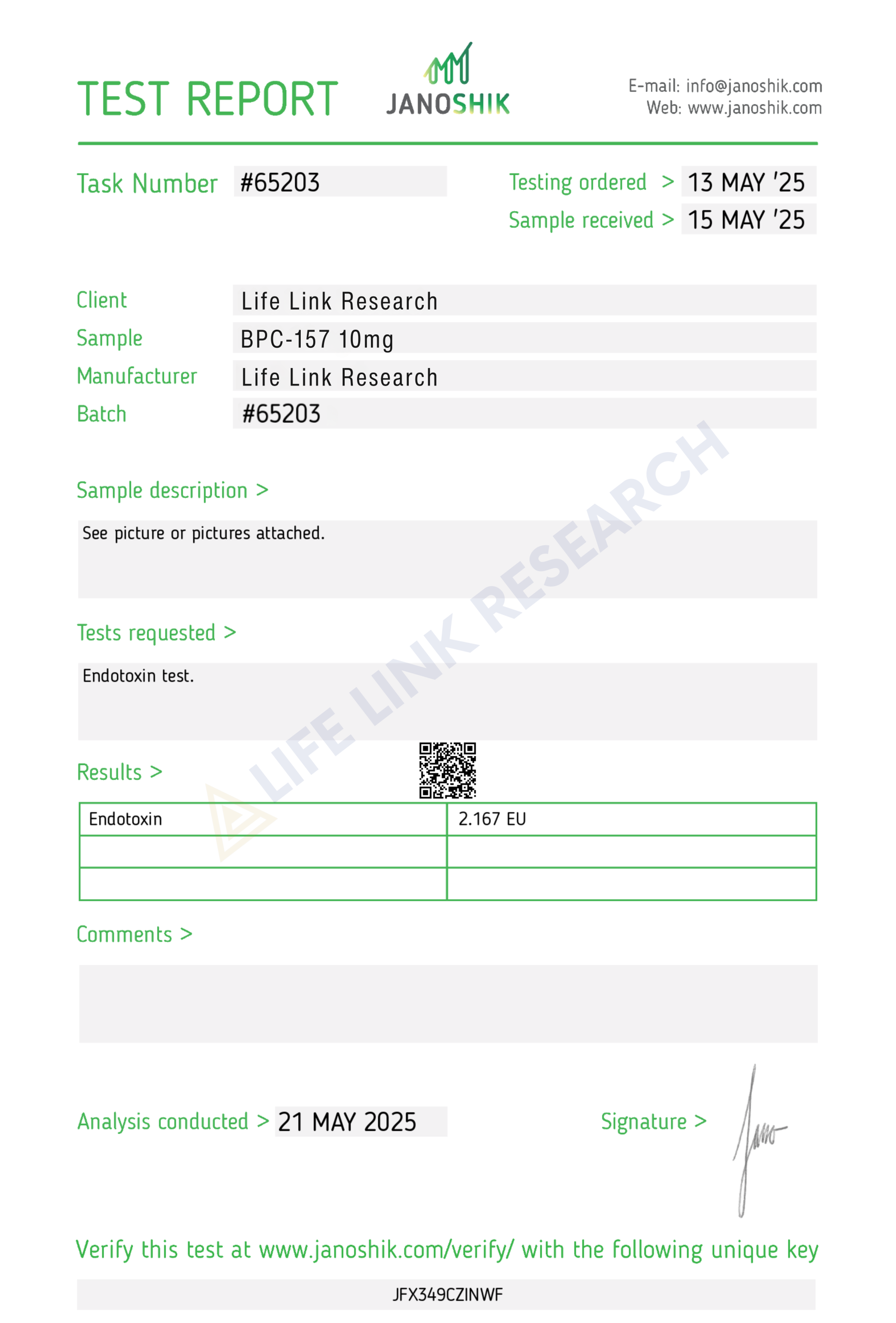
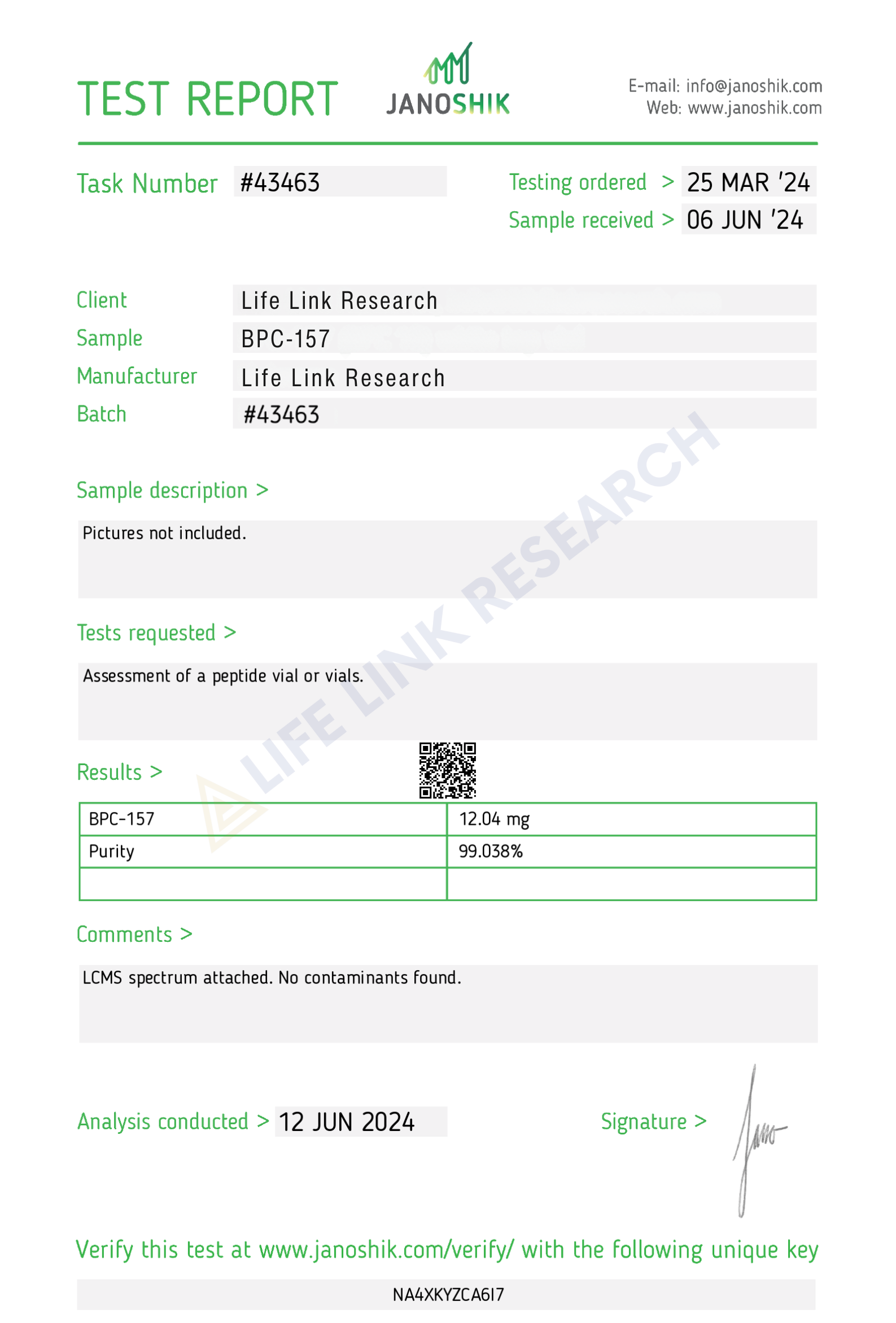
BPC-157 is produced under research-grade manufacturing controls and released only after an outside lab has verified it. Purity is measured by reverse-phase HPLC and identity by mass spectrometry, with that testing carried out by independent third-party laboratories, including Janoshik Analytical and domestic US labs. A certificate of analysis is issued for each batch, so its figures match the exact vial you receive.
BPC-157 is a synthetic 15-amino-acid peptide derived from a protein in gastric juice. It is studied in tissue-repair and gastrointestinal research and is supplied for research use only.
Body Protection Compound. The name reflects the gastric protein the peptide’s sequence comes from, which is the origin of most of its research interest.
It resists breakdown better than many peptides, holding up in conditions that would degrade others. That stability makes it convenient to handle and study in the lab.
No. BPC-157 is not FDA approved. In 2026 an FDA advisory committee recommended it for a compounding list, but that is not an approval. The material here is a research-use-only reference peptide, not for human or veterinary use.
Its sequence is Gly-Glu-Pro-Pro-Pro-Gly-Lys-Pro-Ala-Asp-Asp-Ala-Gly-Leu-Val, its formula is C62H98N16O22, and its molecular weight is about 1419.5 g/mol, with CAS number 137525-51-0.
They are studied for overlapping repair pathways but are different molecules. BPC-157 is a gastric-derived pentadecapeptide; TB-500 is a fragment of thymosin beta-4. Researchers sometimes study them together.
Keep the powder frozen at -20°C and protected from light. Once reconstituted for research, store the solution at 2-8°C and use within about two weeks.
It is tested to ≥99% purity by reverse-phase HPLC with mass-spec identity confirmation by an independent lab, and each batch ships with its own certificate of analysis.
$89.00
55 in stock
For Research Use Only. Not for Human Consumption. Not for use in diagnostic or therapeutic procedures. This product has not been evaluated by the FDA for safety or efficacy. Sold for laboratory research purposes only.
CAS: 137525-51-0 · MW: 1419.5 Da · Purity: ≥99% by reverse-phase HPLC · Format: 10 mg powder · Identity: ESI-MS confirmed
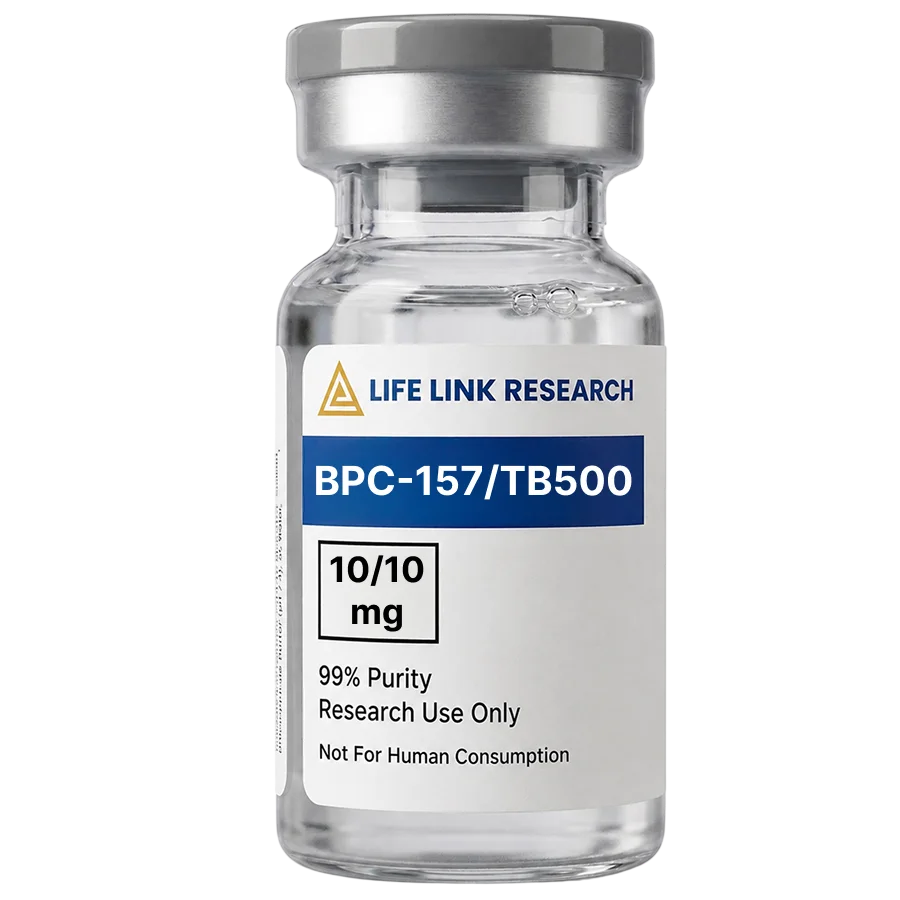
BPC-157 is a short peptide that comes from a protective protein found in the stomach, which is where the “Body Protection Compound” name comes from. Researchers study it heavily in tissue-repair and gut models, and it is one of the peptides that recently drew FDA attention in the 2026 compounding review. This is the 10 mg vial, supplied as a reference material for that research.
BPC-157 is a pentadecapeptide, a chain of fifteen amino acids with the sequence Gly-Glu-Pro-Pro-Pro-Gly-Lys-Pro-Ala-Asp-Asp-Ala-Gly-Leu-Val. It is a partial sequence derived from a larger gastric protein, and it is notably stable, holding up in conditions that would break down many peptides. That stability is a practical advantage in the lab.
BPC-157 research spans gut protection, tissue repair, and the blood-vessel signaling that supports healing.
These are research contexts, not approved uses, and the peptide is intended purely for laboratory study.
| Attribute | Value |
| Chemical name | BPC-157 (body protection compound-157) |
| Also Known As | Body Protection Compound 157, PL-14736 (related) |
| Sequence | Gly-Glu-Pro-Pro-Pro-Gly-Lys-Pro-Ala-Asp-Asp-Ala-Gly-Leu-Val |
| CAS number | 137525-51-0 |
| Molecular formula | C62H98N16O22 |
| Molecular weight | 1419.5 g/mol |
| Purity | ≥99% by reverse-phase HPLC |
| Length | 15 amino acids |
| Identity | Confirmed by ESI mass spectrometry |
| Physical form | Lyophilized powder |
| Appearance | White to off-white solid |
| Quantity | 10 mg per vial |
| Storage | -20°C, protected from light |
| Solubility | Soluble in bacteriostatic or sterile water |
| Classification | Research use only |
Keep the sealed vial frozen at -20°C and shielded from light until use. After reconstitution, store the solution at 2-8°C and use it within about two weeks. BPC-157 is relatively stable for a peptide, but warming the vial to room temperature before opening and avoiding repeated freeze-thaw cycles are still worthwhile habits that protect the material.
BPC-157 is produced under research-grade manufacturing controls and released only after an outside lab has verified it. Purity is measured by reverse-phase HPLC and identity by mass spectrometry, with that testing carried out by independent third-party laboratories, including Janoshik Analytical and domestic US labs. A certificate of analysis is issued for each batch, so its figures match the exact vial you receive.
BPC-157 is a synthetic 15-amino-acid peptide derived from a protein in gastric juice. It is studied in tissue-repair and gastrointestinal research and is supplied for research use only.
Body Protection Compound. The name reflects the gastric protein the peptide’s sequence comes from, which is the origin of most of its research interest.
It resists breakdown better than many peptides, holding up in conditions that would degrade others. That stability makes it convenient to handle and study in the lab.
No. BPC-157 is not FDA approved. In 2026 an FDA advisory committee recommended it for a compounding list, but that is not an approval. The material here is a research-use-only reference peptide, not for human or veterinary use.
Its sequence is Gly-Glu-Pro-Pro-Pro-Gly-Lys-Pro-Ala-Asp-Asp-Ala-Gly-Leu-Val, its formula is C62H98N16O22, and its molecular weight is about 1419.5 g/mol, with CAS number 137525-51-0.
They are studied for overlapping repair pathways but are different molecules. BPC-157 is a gastric-derived pentadecapeptide; TB-500 is a fragment of thymosin beta-4. Researchers sometimes study them together.
Keep the powder frozen at -20°C and protected from light. Once reconstituted for research, store the solution at 2-8°C and use within about two weeks.
It is tested to ≥99% purity by reverse-phase HPLC with mass-spec identity confirmation by an independent lab, and each batch ships with its own certificate of analysis.

CAS: 77591-33-4 · MW: 4963.55 Da · Purity: ≥99% by reverse-phase HPLC · Forma...
$66.00Save 20% on 10+COA Available
Purchase & earn 66 points.Add to cart
Format: 5 mg CJC-1295 (no DAC) + 5 mg Ipamorelin (combined) · Purity: ≥99% by...
$72.00Save 20% on 10+COA Available
Purchase & earn 72 points.Add to cart
CAS: 121062-08-6 · MW: 1024.2 Da · Purity: ≥99% by reverse-phase HPLC · Forma...
$44.00Save 20% on 10+COA Available
Purchase & earn 44 points.Add to cart99%+ purity. third-party verified. both 3rd party domestic Labs And Janoshik Analytical Verified.
$89.00
/vial
Life Link Research supplies research peptides to qualified researchers and laboratories. Please confirm your eligibility before continuing.
Our products are sold only to researchers aged 21 or over, for laboratory use. Thank you for your honesty — you are being redirected.
21+ • Research use only • Not for human use