
Tirzepatide is a synthetic 39-amino acid peptide that acts as a dual agonist at both the GLP-1 receptor (GLP-1R) and the glucose-dependent insulinotropic polypeptide receptor (GIPR). It is the first dual incretin receptor agonist — a new class of research compound that allows simultaneous study of GLP-1 and GIP pathway activation within a single molecule.
In research contexts, tirzepatide is significant because GIP and GLP-1 pathways are complementary: GLP-1R activation drives insulin secretion and suppresses glucagon, while GIPR activation further enhances insulin secretion and may play distinct roles in adipose tissue and CNS signaling. Studying both pathways with a single compound enables cleaner experimental design compared to co-administering two separate agonists.
Tirzepatide Structure
Molecular formula: C₂₂₅H₃₄₈N₄₈O₆₈ (approximate)
Molecular weight: ~4,813 Da
Amino acid count: 39 amino acids
Structural class: Dual GIP/GLP-1 receptor agonist; GIP-based backbone with GLP-1R agonist activity at C-terminus
The key structural innovation in tirzepatide is that its peptide backbone is based on the native GIP sequence — unlike semaglutide, which is GLP-1 based. The molecule is modified with a C₁₈ fatty diacid chain (for albumin binding and extended half-life) and amino acid substitutions that confer dual receptor agonism.
Mechanism of Action
GLP-1R activation:
– Stimulates glucose-dependent insulin secretion
– Inhibits glucagon release
– Slows gastric emptying
– Activates hypothalamic satiety pathways
GIPR activation:
– Additional glucose-dependent insulin secretion augmentation
– GIPR-specific effects in adipose tissue (fatty acid metabolism)
– Potential CNS effects distinct from GLP-1R
– Bone metabolism signaling (GIPR is expressed in osteoblasts)
Net effect in research models: The dual agonism produces a synergistic incretin response that differs qualitatively from GLP-1R monoagonism (semaglutide). This makes tirzepatide particularly valuable for comparative studies between single and dual incretin receptor activation.
Tirzepatide vs. Semaglutide in Research
| Feature | Tirzepatide | Semaglutide |
|---|---|---|
| Receptor targets | GLP-1R + GIPR | GLP-1R only |
| Backbone | GIP-based | GLP-1 based |
| Approx. half-life | ~5 days | ~7 days |
| Comparative research use | Dual agonism studies | GLP-1R reference standard |
| Complexity | Higher (dual pathway) | Lower (monoagonist) |
For researchers studying GLP-1R-specific effects, semaglutide is the cleaner monoagonist reference. For researchers studying incretin system interactions and GIPR contributions, tirzepatide provides the dual-pathway model.
Research Applications
- Incretin biology: GLP-1 + GIP receptor co-activation studies
- Metabolic pathway research: Comparative dual vs. single agonist signaling
- Adipose tissue biology: GIPR-specific effects in fat tissue models
- CNS research: GLP-1 vs. GIP contributions to appetite and reward circuitry
- Cardiovascular research: Dual incretin receptor effects in cardiac models
- Bone biology: GIPR signaling in osteoblast models
FAQs
Is tirzepatide a GLP-1 agonist?
Yes, but it’s more precisely a dual GLP-1/GIP agonist. Tirzepatide activates both the GLP-1 receptor and the GIP receptor, whereas semaglutide (a GLP-1 agonist) activates only the GLP-1R.
How does tirzepatide differ from retatrutide?
Tirzepatide is a dual agonist (GLP-1R + GIPR). Retatrutide is a triple agonist (GLP-1R + GIPR + glucagon receptor, GCGR), adding a third receptor pathway. Retatrutide represents the next level of incretin complexity for research.
What purity is required for tirzepatide research?
≥98% HPLC purity, with mass spectrometry confirmation of the molecular weight (~4,813 Da). Given tirzepatide’s complexity (39 amino acids + fatty acid modification), synthesis quality is especially important; impurity peaks can significantly affect receptor binding assays.
→ Tirzepatide 15mg — Life Link Research
For research purposes only. Not for human use.
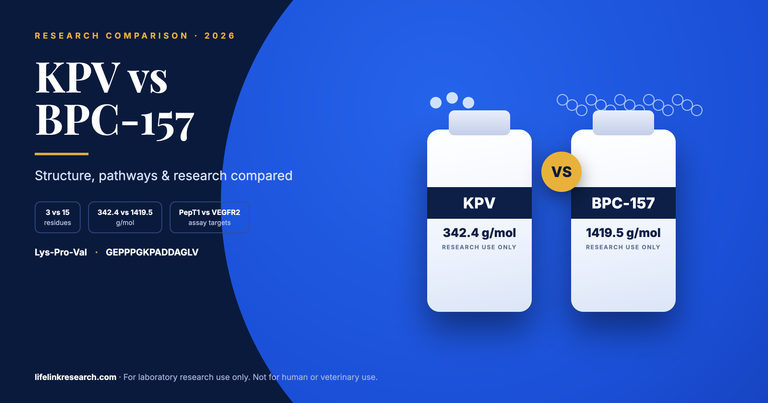
KPV vs BPC-157: Molecular Identity, Pathways and Research Compared
A PubMed search run in late October returns 230 records for BPC-157 and 47 for KPV. Exactly one record names both, and…
Read article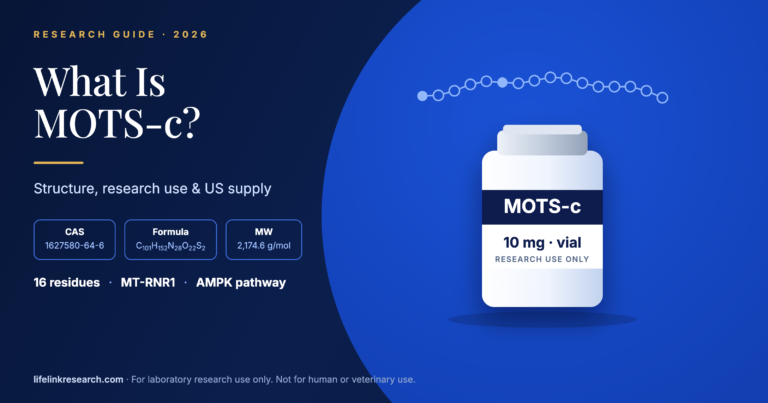
What Is MOTS-c? Structure, Research Use & US Supply
Quick Answer MOTS-c is a 16-amino-acid peptide coded within a short open reading frame of the mitochondrial 12S rRNA gene (MT-RNR1). It…
Read article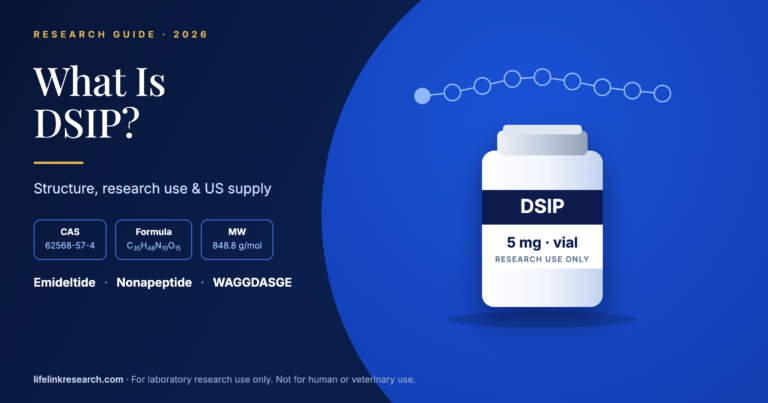
What Is DSIP? Structure, Research Use & US Supply
DSIP is a synthetic nine-residue peptide, WAGGDASGE, listed under the international name Emideltide. On July 24, 2026, it drew the narrowest vote…
Read articleResearch-grade peptides
99%+ purity. Verified every batch.
Identity and purity tested on every batch by third-party labs, Janoshik Analytical and US-based laboratories. Shipped same day from California.
Shop all peptides