

Description
Structure & Identity
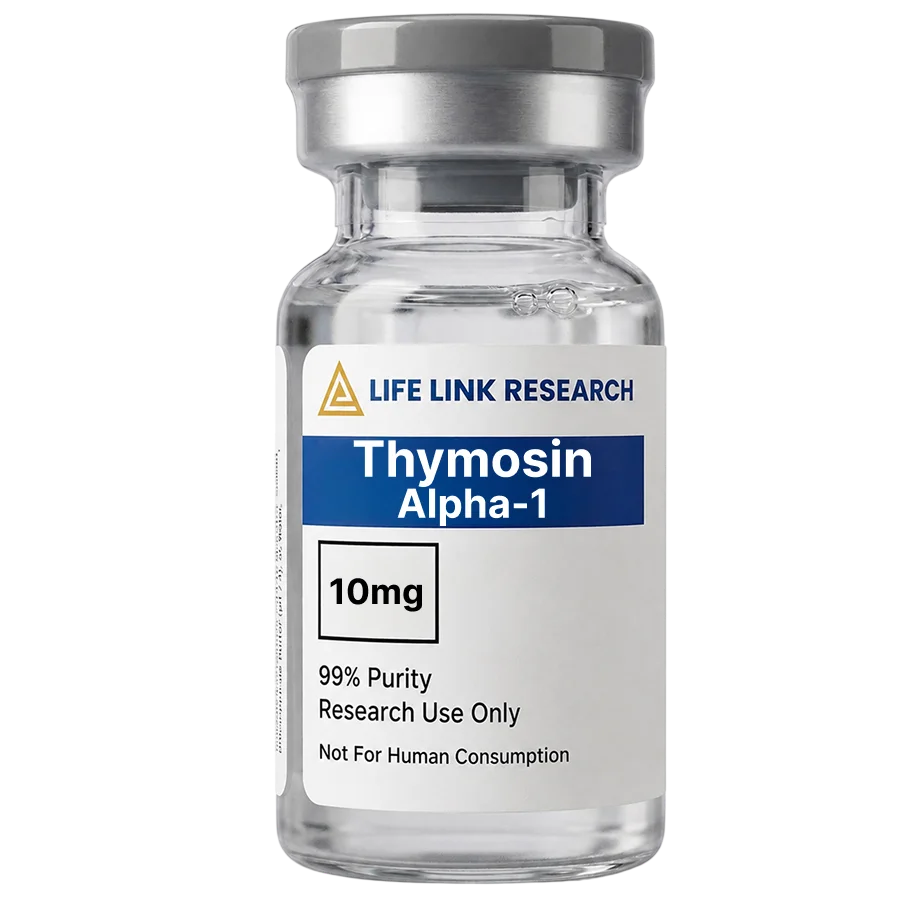
Thymosin Alpha-1 is a 28-amino-acid peptide with an acetylated N-terminus, cleaved from the larger precursor prothymosin alpha. The acetyl cap at its front end is a natural modification carried over from how the body produces it. Its longer chain, relative to the small signaling peptides, reflects the fuller immune-signaling role researchers study.
Research Background
Thymosin Alpha-1 research is centered firmly on the immune system.
- Thymic origin. Thymosin Alpha-1 is cleaved from prothymosin alpha, produced in the immune-training thymus gland [PMID: 11381492].
- Immune-cell signaling. It is widely studied in immune-cell signaling research [PMID: 27450734].
- Comprehensive characterization. Detailed reviews map its immune roles across research settings [PMID: 33362999].
- Immune-cell regulation. It appears in immune-cell regulation research [PMID: 36812669].
- Viral-model immune signaling. It has been examined in immune-cell signaling assays using viral-infection cell models [PMID: 28106477].
These are laboratory research areas rather than approved uses, and the material is provided to support that immune-focused study.
Specifications
| Attribute | Value |
| Chemical name | Thymosin Alpha-1 (acetylated, 28-mer) |
| Also Known As | Tα1, thymalfasin |
| CAS number | 62304-98-7 |
| Molecular formula | C129H215N33O55 |
| Molecular weight | 3108.3 g/mol |
| Modification | N-terminal acetylation |
| Purity | ≥99% by reverse-phase HPLC |
| Length | 28 amino acids (acetylated) |
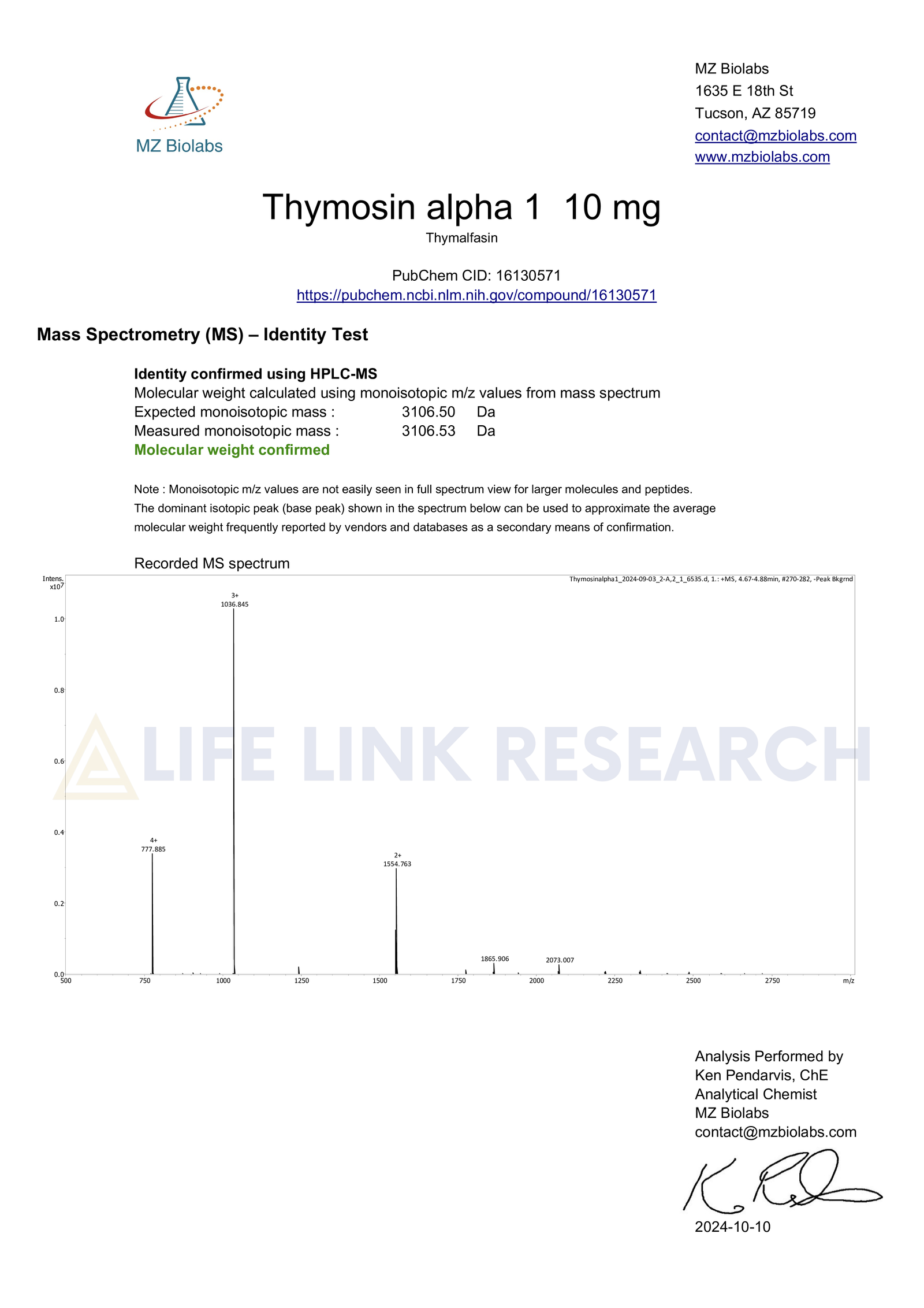
| Identity | Confirmed by ESI mass spectrometry |
| Physical form | Lyophilized powder |
| Appearance | White to off-white solid |
| Quantity | 10 mg per vial |
| Storage | -20°C, protected from light |
| Solubility | Soluble in bacteriostatic or sterile water |
| Classification | Research use only |
Storage & Handling
Keep the unopened vial in a -20°C freezer, protected from light, until you use it. After preparing it, store the solution at 2-8°C and use in your study within about two weeks. As with other longer peptides, bringing the vial to room temperature before opening and minimizing freeze-thaw cycles both help keep the 28-residue chain intact.
Quality Assurance
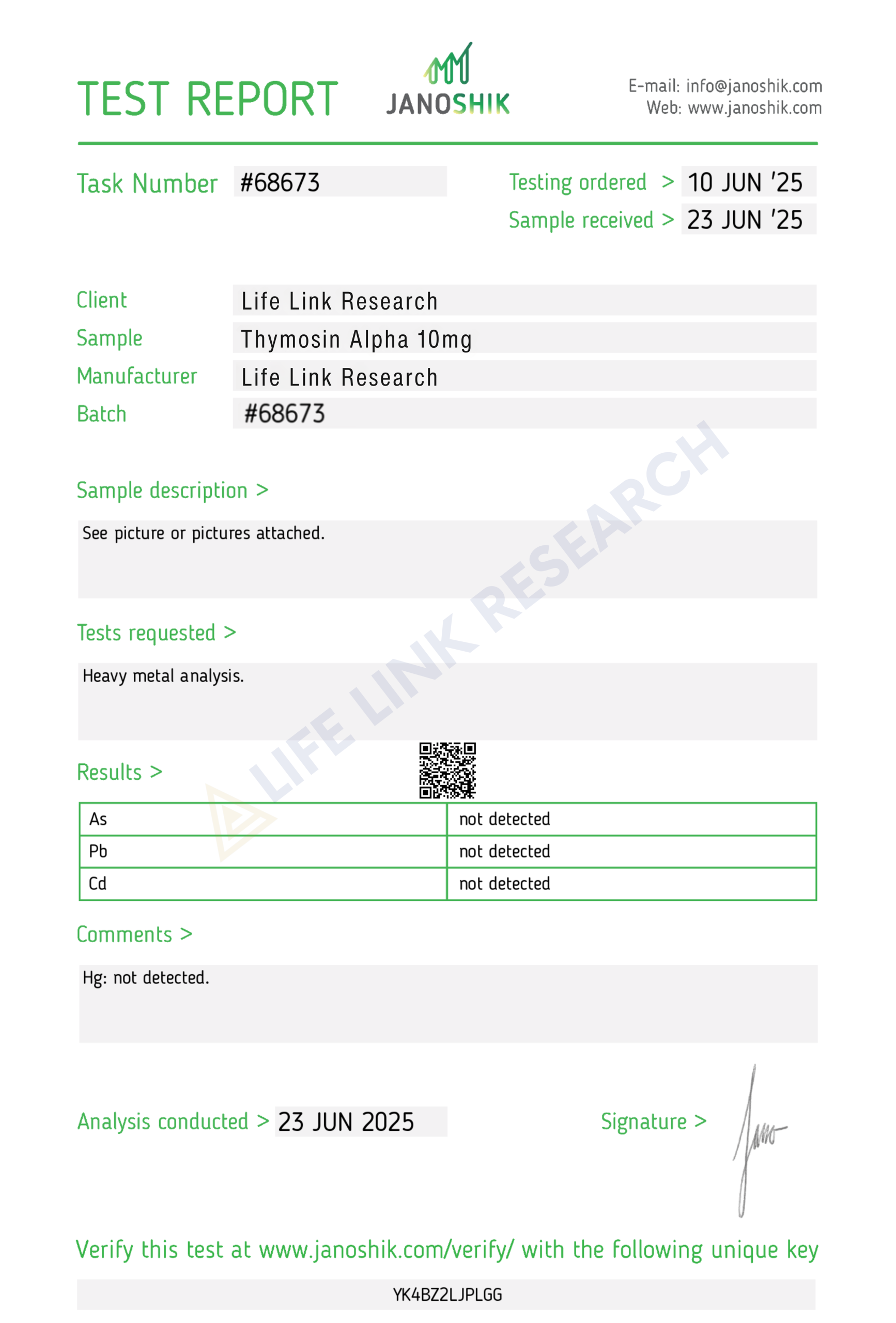
Thymosin Alpha-1 is manufactured under research-grade controls and released only after independent verification. Reverse-phase HPLC quantifies its purity and mass spectrometry confirms its identity, with testing done by third-party laboratories, including Janoshik Analytical and domestic US labs. Each batch is accompanied by its own certificate of analysis, tying the results to the material you receive.
Frequently Asked Questions
What is Thymosin Alpha-1?
Thymosin Alpha-1 is a 28-amino-acid peptide derived from a thymus protein, studied mainly in immune-signaling research. It is supplied for research use only.
Where does Thymosin Alpha-1 come from?
It is cleaved from a larger precursor called prothymosin alpha, which is produced in the thymus gland. The thymus is central to immune development, which is why the peptide is an immune-research subject.
What does the acetylation mean?
The peptide carries an acetyl group on its N-terminus, a small natural modification present in the way the body makes it. It is reflected in the “acetylated” descriptor on the specifications.
How does Thymosin Alpha-1 work in research?
Research describes it as an immune-modulating peptide that influences immune-cell signaling. These are findings from laboratory and model systems, not human treatment outcomes.
Is Thymosin Alpha-1 FDA approved?
The thymosin alpha-1 molecule is used clinically in some countries, but the material sold here is a research-use-only reference peptide, not for human or veterinary use.
What is its molecular weight?
It is a 28-residue peptide with a molecular formula of C129H215N33O55 and a molecular weight around 3108.3 g/mol, CAS number 62304-98-7.
How should Thymosin Alpha-1 be stored?
Store the powder frozen at -20°C and protected from light. Once reconstituted for research, keep it at 2-8°C and use within about two weeks.
How is quality confirmed?
It is tested to ≥99% purity by reverse-phase HPLC with mass-spec identity confirmation by an independent lab, and each batch includes a certificate of analysis.