
BPC-157 (Body Protection Compound 157) is a synthetic pentadecapeptide — a 15-amino acid sequence — derived from a protein found in human gastric juice. It is one of the most widely studied research peptides in angiogenesis and gastric-cell signaling, with a large body of preclinical literature on the nitric oxide system and growth-factor signaling.
The “157” designation refers to the peptide’s sequence number in the gastric protein isolate from which it was originally identified. It is also referred to in research literature as PL 14736, stable gastric pentadecapeptide BPC, and Bepecin.
Research use only: BPC-157 available from Life Link Research is for laboratory and in vitro research purposes only. Not for human use.
BPC-157 Structure
Amino acid sequence: Gly-Glu-Pro-Pro-Pro-Gly-Lys-Pro-Ala-Asp-Asp-Ala-Gly-Leu-Val (GEPPPGKPADDAGLV)
Molecular formula: C₆₂H₉₈N₁₆O₂₂
Molecular weight: 1,419.53 Da
Form: Lyophilized powder (research grade)
BPC-157 is a stable synthetic partial sequence of the naturally occurring Body Protection Compound found in gastric juice. Its stability in physiological conditions (unlike many peptides that degrade rapidly) makes it a useful research tool.
Proposed Mechanisms in Research Literature
Research into BPC-157 has proposed several mechanisms that account for its observed effects in preclinical studies:
Nitric oxide system modulation: BPC-157 is reported to upregulate eNOS (endothelial nitric oxide synthase) in endothelial cells, potentially through FAK-paxillin signaling. This may explain vasodilatory and angiogenic observations in tissue repair models.
Growth factor pathway activation: Studies have shown interaction with VEGF (vascular endothelial growth factor) pathways, which is linked to angiogenesis readouts in rodent models.which is linked to angiogenesis readouts in rodent models.
Fibroblast signaling: In vitro studies report effects on fibroblast migration and proliferation, and rodent tendon models have measured fibroblast outgrowth.
Neuroprotective pathways: CNS research has investigated BPC-157’s effects on dopaminergic and GABAergic systems in rodent models.
Note: The majority of BPC-157 research is preclinical (cell culture and rodent models). The mechanisms above are research findings — not clinical claims.
Research Applications
BPC-157 is studied across multiple research areas:
- Connective-tissue cell models: Fibroblasts, tenocytes
- Gastrointestinal research: Gastric-mucosa cell and rodent models
- Neurological research: CNS cell and rodent models
- Angiogenesis studies: Vascular biology and VEGF signaling
- Pharmacological research: Interaction with dopamine and serotonin systems
Purity Requirements for BPC-157 Research
BPC-157 is a 15-amino acid peptide — smaller and simpler to synthesize than GLP-1 compounds, but still subject to synthesis errors (deletion sequences, racemization) that can affect research results.
Minimum acceptable purity for research: ≥98% by HPLC
Mass spectrometry: Confirms molecular weight at 1,419.53 Da ± acceptable tolerance
Endotoxin: Critical for cell culture and in vivo studies; LAL assay required
Life Link Research’s BPC-157 10mg includes a full third-party COA at $89/vial — among the most competitive prices at this documentation standard.
FAQs
What does BPC stand for in BPC-157?
BPC stands for “Body Protection Compound.” BPC-157 is the 157th peptide sequence isolated from a gastric protein during the original research into gastric protective proteins.
Is BPC-157 natural or synthetic?
BPC-157 is a synthetic peptide derived from a naturally occurring protein found in human gastric juice. The 15-amino acid sequence is manufactured via solid-phase peptide synthesis (SPPS) for research use.
What is the difference between BPC-157 and TB-500?
BPC-157 (15 aa, derived from gastric protein) and TB-500 (thymosin beta-4 fragment, 43 aa, derived from a cytoskeletal protein) are different peptides with different proposed mechanisms. Some research uses them in combination; they are not interchangeable.
What purity should research-grade BPC-157 be?
Research-grade BPC-157 should be ≥98% pure by HPLC, with mass spectrometry confirmation of the correct molecular weight (1,419.53 Da). Third-party independent testing is preferred over vendor-internal assays.
→ BPC-157 10mg — Life Link Research
Research purposes only. Not for human use.
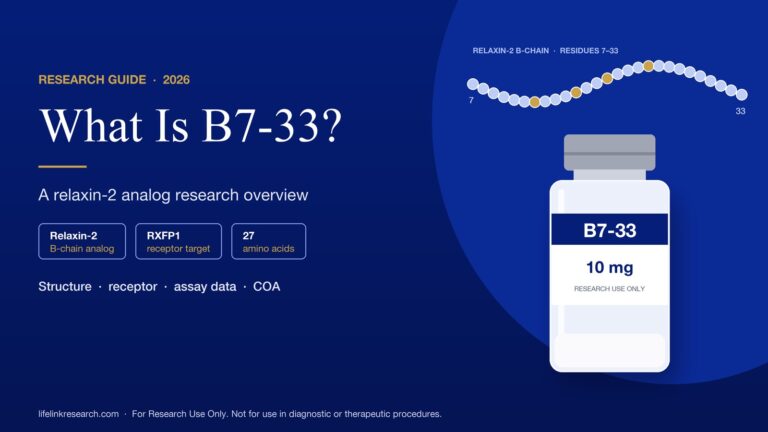
What Is B7-33? Relaxin-2 Analog Research Overview (2026)
Quick Answer B7-33 is a synthetic single-chain peptide built from part of the B chain of human relaxin-2, and it binds the…
Read article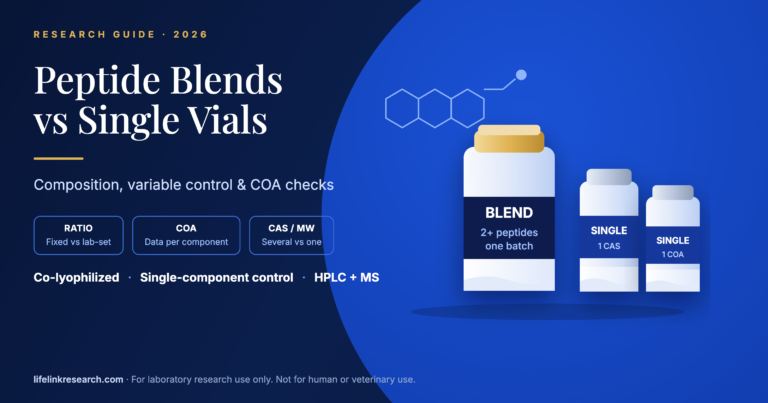
Peptide Blends vs Single Vials: How to Choose for Research (2026)
For Research Use Only. Not for use in diagnostic or therapeutic procedures. Choosing between peptide blends vs single peptides comes down to…
Read article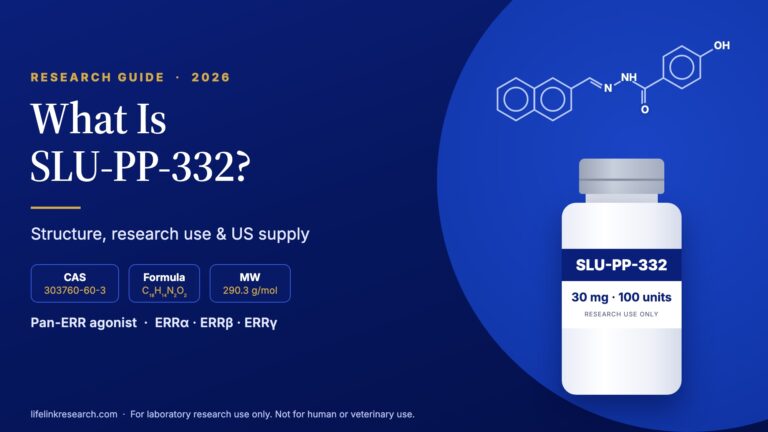
What Is SLU-PP-332? Structure, Research Use & US Supply
Quick Answer SLU-PP-332 is a synthetic small-molecule agonist of the estrogen-related receptors ERRŒ±, ERRŒ≤ and ERRŒ≥ (CAS 303760-60-3, PubChem CID 5338394). It…
Read articleResearch-grade peptides
99%+ purity. Verified every batch.
Identity and purity tested on every batch by third-party labs, Janoshik Analytical and US-based laboratories. Shipped same day from California.
Shop all peptides