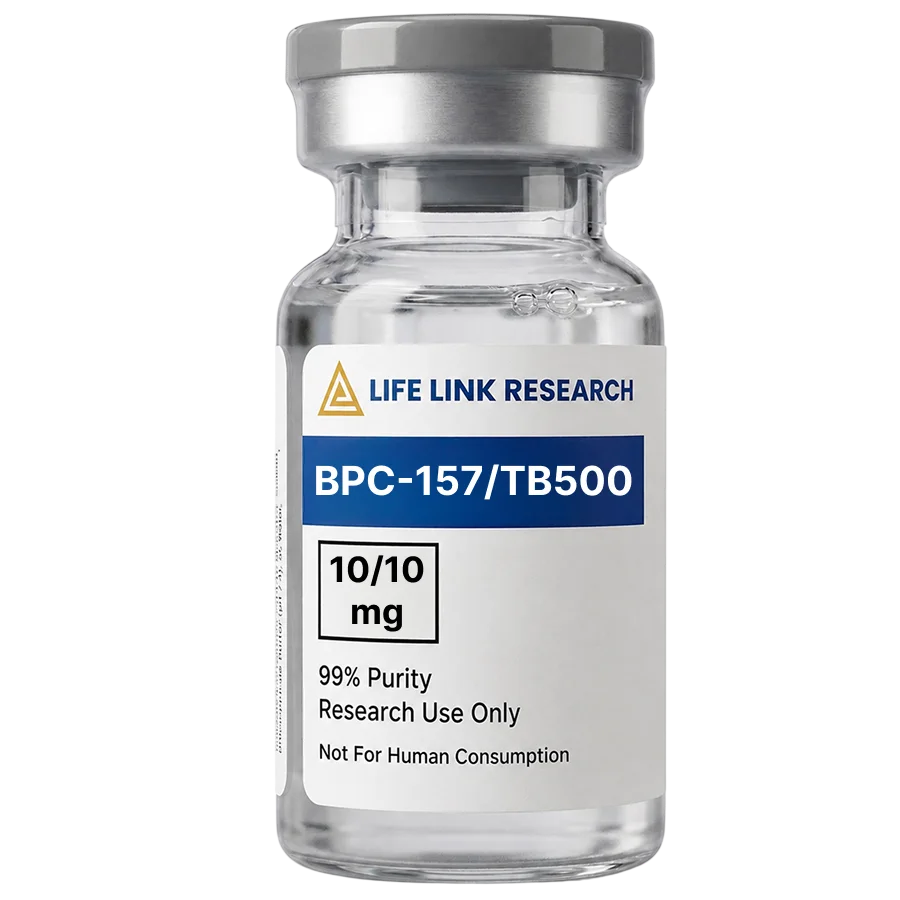

Description
Structure & Identity
TB-500 is a synthetic peptide based on the actin-binding region of thymosin beta-4, built around the LKKTETQ motif that carries the protein’s actin-sequestering activity. It reproduces that active fragment as an acetylated peptide, the N-terminal acetyl group being a natural modification that mirrors how the body presents the sequence. Because it isolates the actin-binding region on a short, stable chain, TB-500 is studied for actin regulation, cell migration, and cytoskeletal dynamics without the rest of the parent protein.
Research Background
Research on TB-500 draws on thymosin beta-4’s role in cell movement and tissue regeneration.
- Cell migration. As an actin-sequestering protein, thymosin beta-4 supports the cell migration that underpins tissue signaling, documented in foundational research [1].
- Multifunctional actin regulation. It is described in reviews as an actin-regulating peptide acting across several tissue-signaling processes [2].
- Fragment activity. The mapping of thymosin beta-4’s activity onto short peptide sequences supports the study of fragments like TB-500 [3].
These describe research areas, not approved uses, and the peptide is provided for laboratory study.
Specifications
| Attribute | Value |
| Chemical name | TB-500 (thymosin beta-4 fragment, actin-binding region) |
| Also Known As | Thymosin Beta-4, Tβ4 |
| CAS number | 77591-33-4 (Ac-LKKTETQ fragment) |
| Molecular weight | 4963.55 Da |
| Length | 43 amino acids (acetylated) |
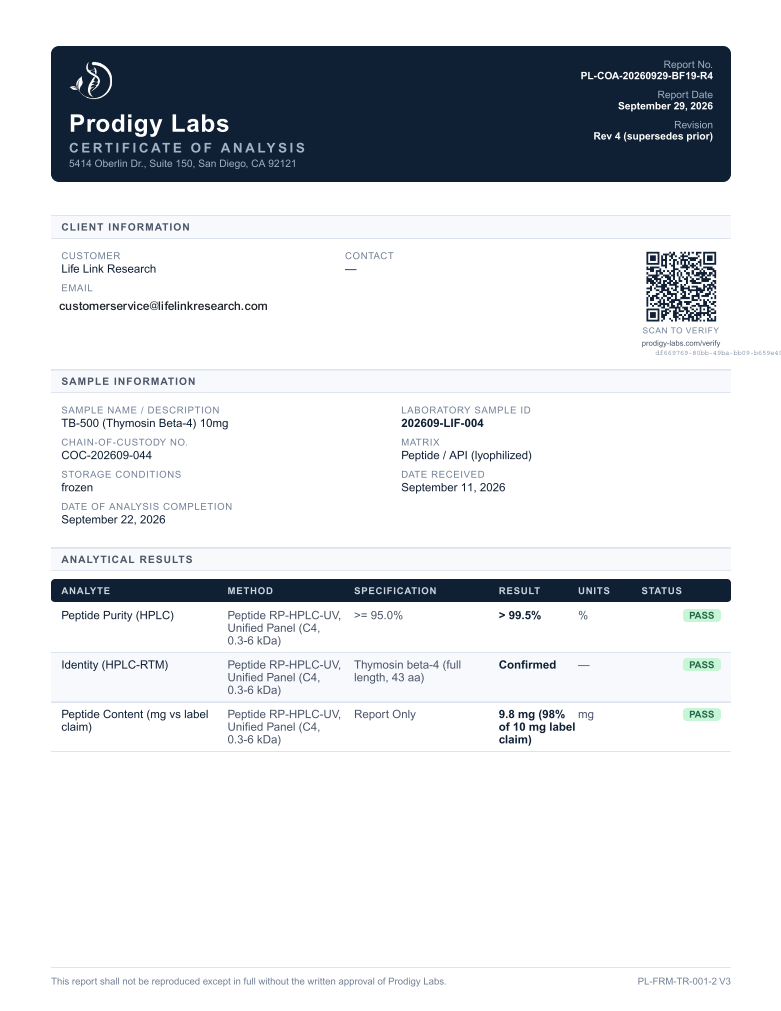
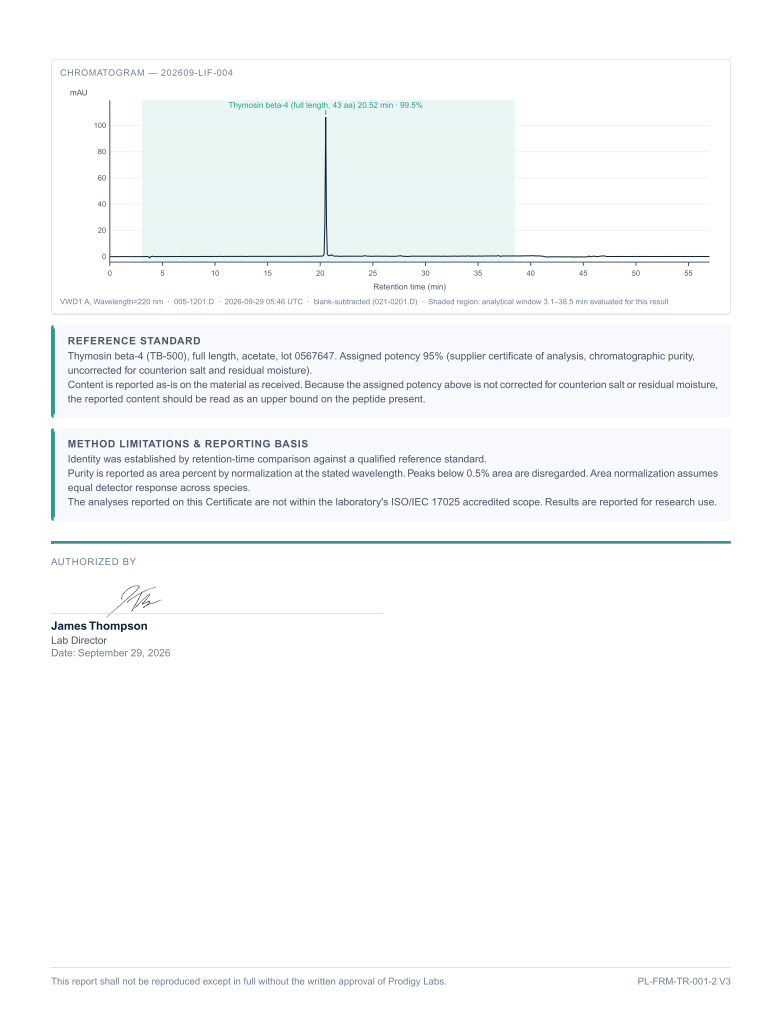
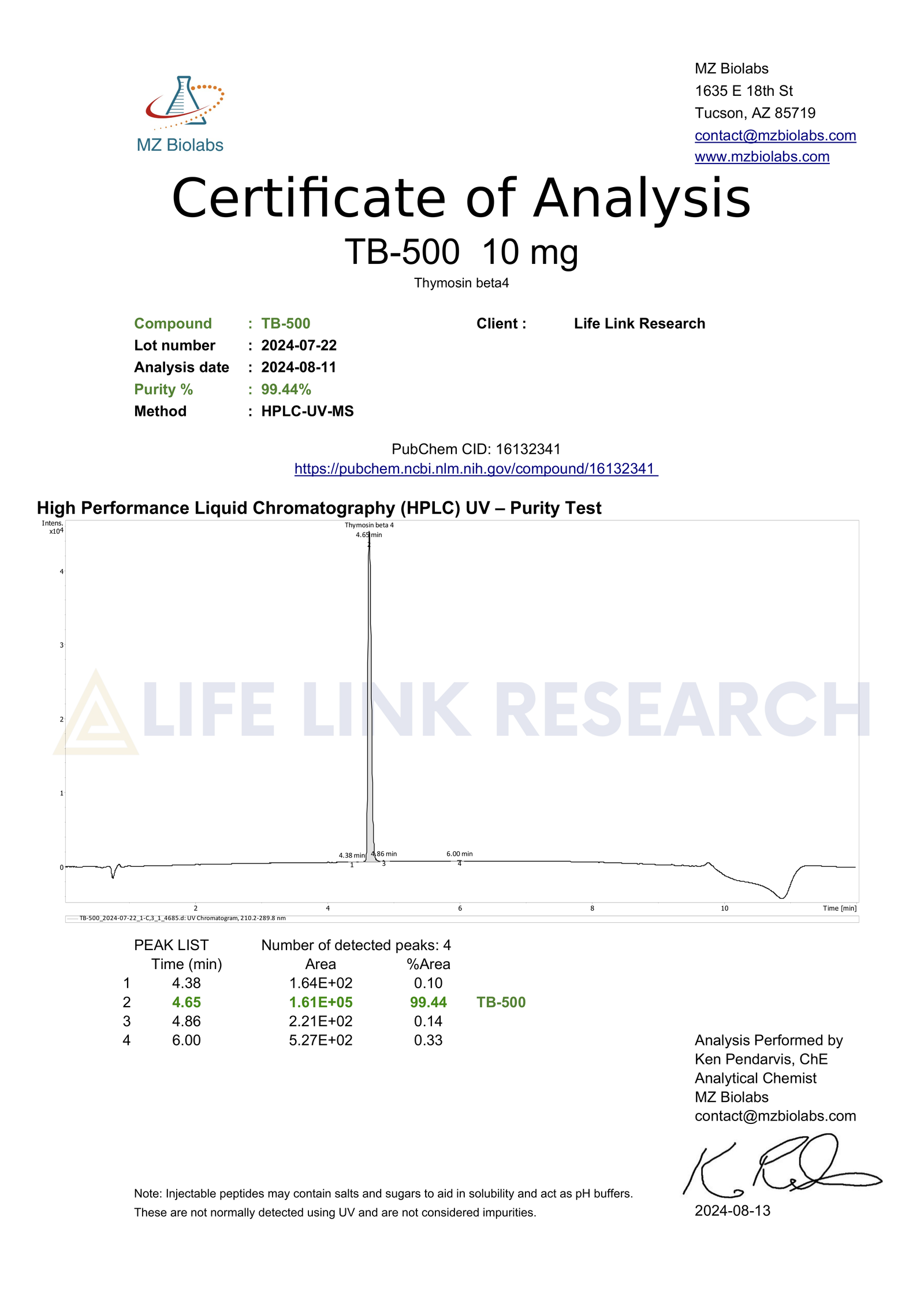
| Purity | ≥99% by reverse-phase HPLC |
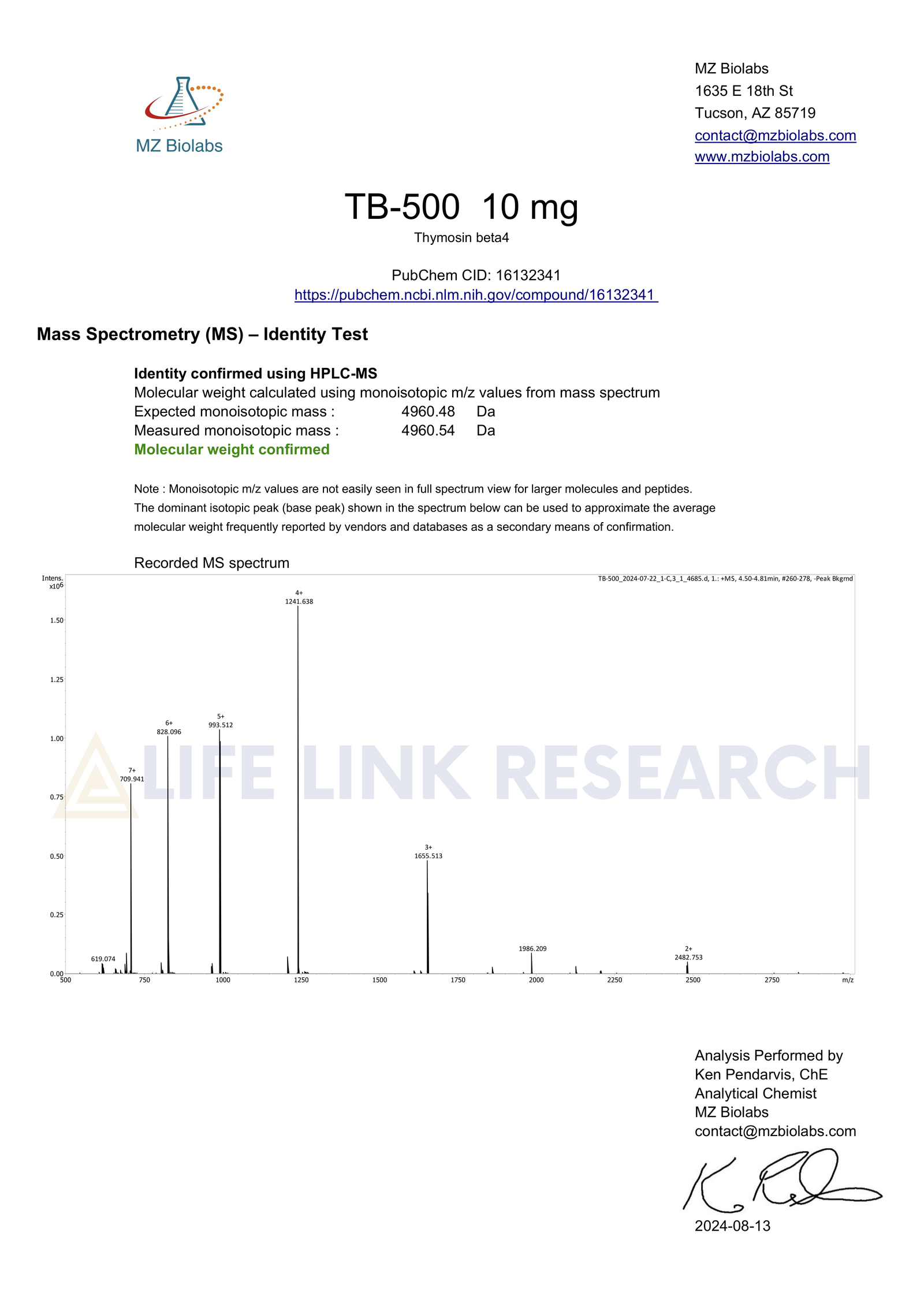
| Identity | Confirmed by ESI mass spectrometry |
| Physical form | Lyophilized powder |
| Appearance | White to off-white solid |
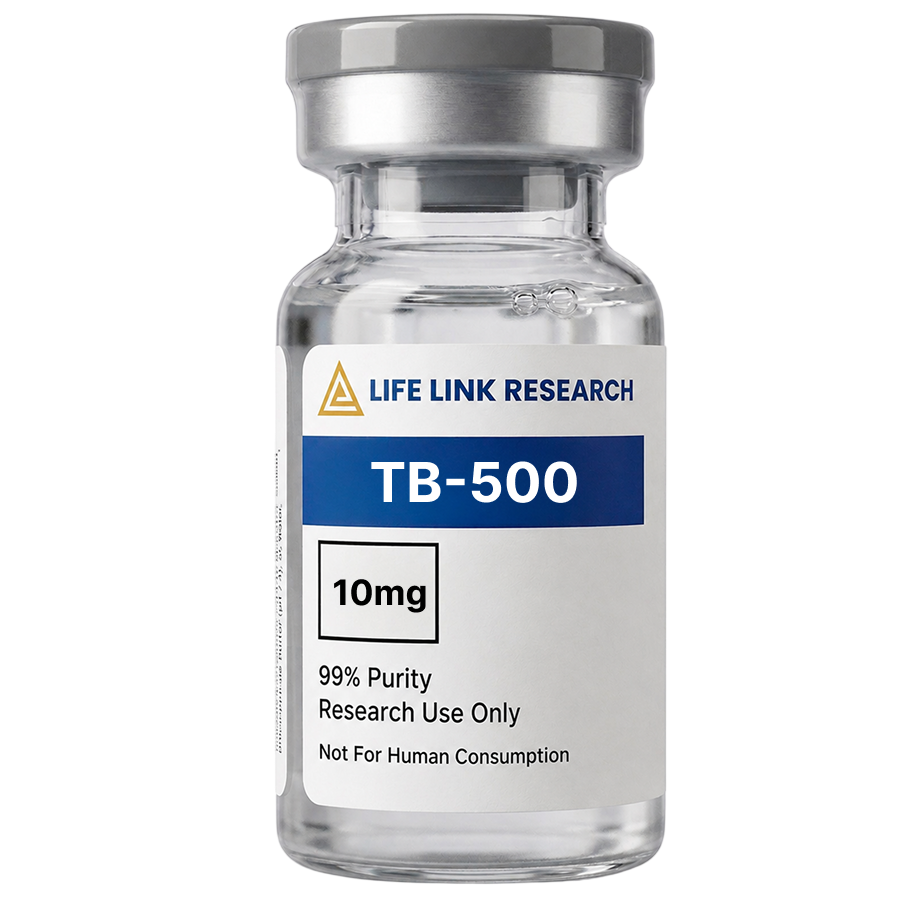
| Quantity | 10 mg per vial |
| Storage | -20°C, protected from light |
| Solubility | Soluble in bacteriostatic or sterile water |
| Classification | Research use only |
Storage & Handling
Keep the unopened vial at -20°C, away from light, until needed. Once dissolved, store the solution at 2-8°C and use for your research within roughly two weeks. Let the vial reach room temperature before opening to limit condensation, and aliquot the reconstituted material so it is not frozen and thawed repeatedly.
Quality Assurance
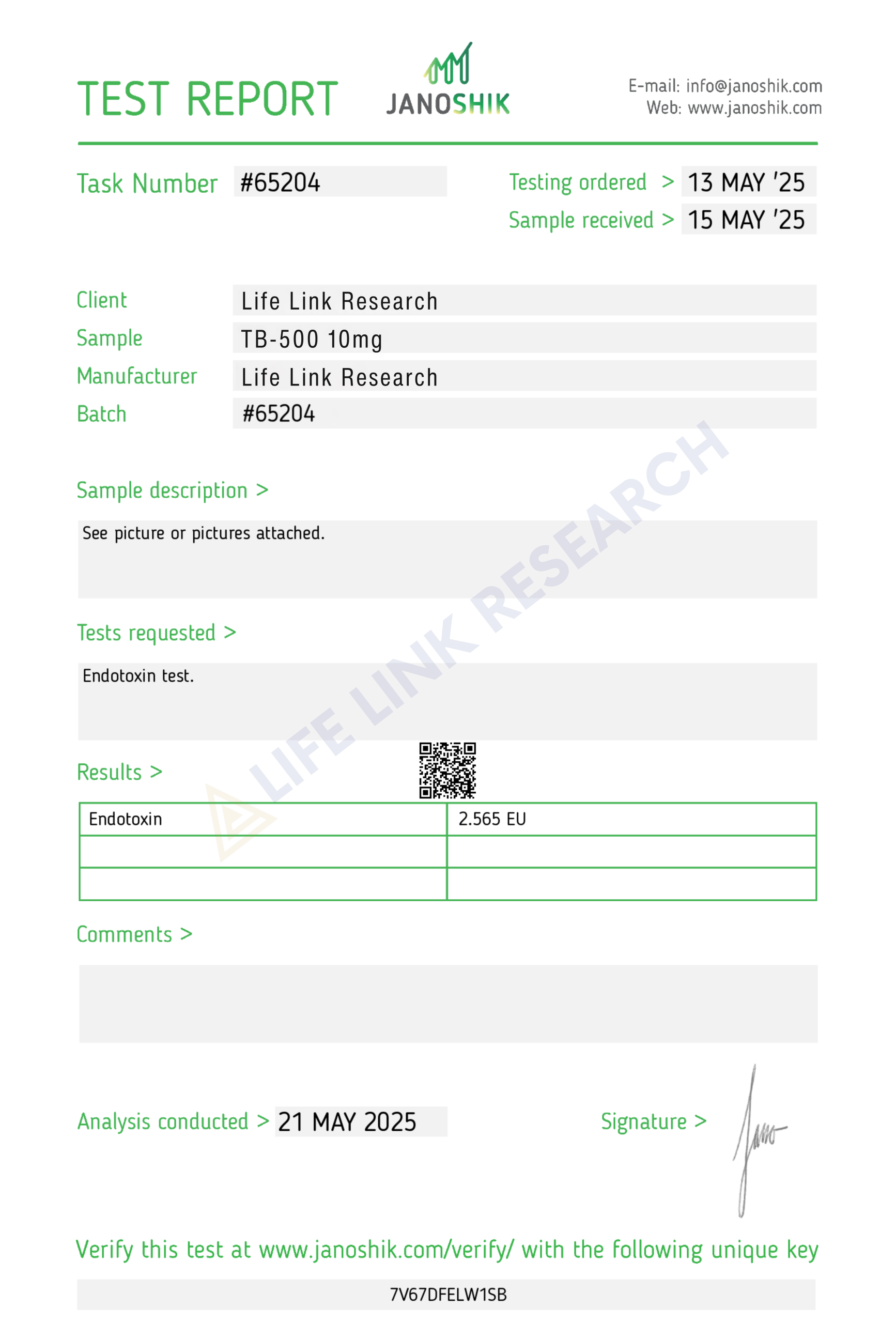
Every lot of TB-500 clears independent quality control before release. Manufacturing follows research-grade standards, and purity by reverse-phase HPLC and identity by mass spectrometry are confirmed by outside laboratories, including Janoshik Analytical and US-based labs. A batch-matched certificate of analysis accompanies the vial so the data traces to your material.
Frequently Asked Questions
What is the TB-500 10 mg used for in research?
It is a thymosin beta-4 fragment studied in cell-migration and actin-regulation research. TB-500 is a research-use-only material with no approved human use in this setting.
Is the 10 mg the same as the 5 mg TB-500?
Yes, apart from the amount of peptide in the vial. The 10 mg size suits research needing more working material.
Is TB-500 the full thymosin beta-4 protein?
No, it corresponds to the active fragment of thymosin beta-4, not the whole protein.
How does TB-500 relate to actin?
Thymosin beta-4 binds and sequesters actin, which helps regulate the cell movement involved in cytoskeletal remodeling. TB-500 is studied as a fragment carrying that activity.
Is TB-500 FDA approved?
No, it is not FDA approved. It featured in the 2026 FDA compounding review but was not approved. This listing is a research-use-only reference peptide, not for human or veterinary use.
How should the 10 mg vial be handled?
Keep it frozen at -20°C and out of light. After reconstitution for research, refrigerate at 2-8°C, aliquot, and use within about two weeks.
How is quality verified?
Purity is confirmed at ≥99% by reverse-phase HPLC with mass-spec identity confirmation by an independent lab, and a certificate of analysis is included with each batch.