
CagriSema is a fixed-ratio combination of two distinct peptides: semaglutide (a GLP-1 receptor agonist) and cagrilintide (a long-acting amylin analog). It is not a single molecule with dual pharmacophores (unlike tirzepatide or retatrutide) — it is a co-formulation combining two separate peptide mechanisms into one research compound.
The defining characteristic of CagriSema is the amylin pathway — specifically cagrilintide’s action at the amylin receptor (AMYR). Amylin is a peptide co-secreted with insulin from pancreatic beta cells and plays distinct roles in satiety, gastric emptying, and CNS appetite regulation that are mechanistically separate from GLP-1R signaling.
CagriSema therefore represents a different research hypothesis than tirzepatide: while tirzepatide adds GIP receptor agonism to the GLP-1 pathway, CagriSema adds amylin receptor activation.
Components
Semaglutide component:
– GLP-1 receptor agonist
– Mechanism: Incretin effect, insulin augmentation, CNS satiety, gastric motility
– Same GLP-1R pharmacology as standalone semaglutide
Cagrilintide component:
– Long-acting amylin analog
– Receptor: Amylin receptor (AMYR), a complex of calcitonin receptor + RAMP proteins
– Mechanism: Satiety signaling via area postrema (brainstem), complementary to GLP-1R hypothalamic pathways; additionally suppresses glucagon; slows gastric emptying (different CNS route than GLP-1R)
CagriSema vs. Other GLP-1 Compounds
| Feature | CagriSema | Tirzepatide | Semaglutide |
|---|---|---|---|
| Type | Co-formulation (2 peptides) | Single dual-agonist molecule | Single monoagonist |
| Primary pathway | GLP-1R + AMYR | GLP-1R + GIPR | GLP-1R |
| Amylin pathway | ✅ Yes (cagrilintide) | ❌ No | ❌ No |
| GIP pathway | ❌ No | ✅ Yes | ❌ No |
| Research hypothesis | GLP-1 + amylin synergy | GLP-1 + GIP synergy | GLP-1 monoagonism |
This is the core research distinction: CagriSema and tirzepatide both add a second receptor pathway to GLP-1R, but they add different pathways (AMYR vs GIPR), making them complementary research tools for studying incretin biology.
Research Applications
- Amylin receptor biology: AMYR pharmacology in combination with GLP-1R activation
- Complementary satiety pathway research: CNS area postrema (amylin) vs. hypothalamic (GLP-1) satiety mechanisms
- Comparative dual-mechanism studies: CagriSema vs. tirzepatide — different second pathways, similar research design
- Pancreatic beta cell research: Co-secreted insulin + amylin signaling models
- Glucagon suppression: Combined GLP-1R and AMYR contributions
FAQs
Is CagriSema a single molecule?
No. CagriSema is a co-formulation of two distinct peptides: semaglutide and cagrilintide. Tirzepatide and retatrutide are single molecules with dual/triple pharmacophores built into one peptide chain. This structural difference may affect how researchers design and interpret experiments.
What is cagrilintide?
Cagrilintide is a long-acting synthetic analog of amylin (islet amyloid polypeptide, IAPP), the peptide hormone co-secreted with insulin from pancreatic beta cells. Like semaglutide extended its GLP-1 half-life via fatty acid modification, cagrilintide extends amylin’s half-life to approximately 7 days.
How does CagriSema differ from tirzepatide?
Both combine GLP-1R agonism with a second mechanism. Tirzepatide’s second mechanism is GIP receptor agonism. CagriSema’s second mechanism is amylin receptor activation. These are distinct pathways with different downstream effects, making them complementary research tools rather than substitutes.
What purity is required for CagriSema research?
CagriSema contains two peptide components; each should meet ≥98% purity standards. The COA should specify purity of each component. Life Link Research provides third-party COA documentation for each batch.
→ CagriSema 10mg — Life Link Research
For research purposes only. Not for human use.
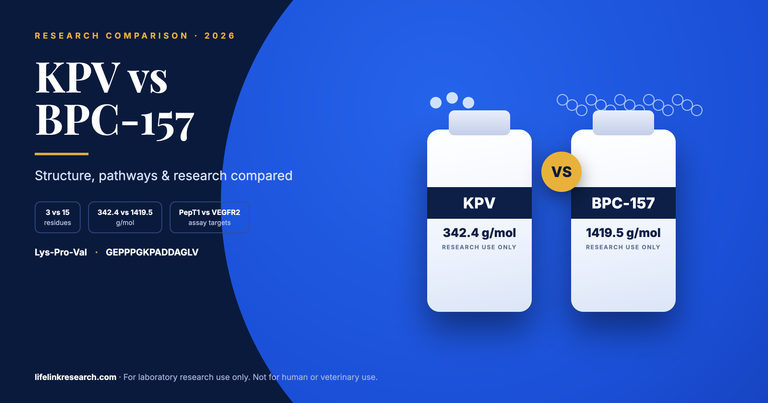
KPV vs BPC-157: Molecular Identity, Pathways and Research Compared
A PubMed search run in late October returns 230 records for BPC-157 and 47 for KPV. Exactly one record names both, and…
Read article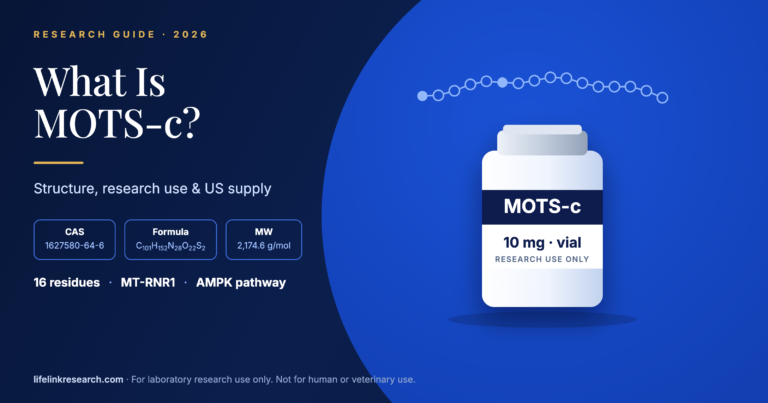
What Is MOTS-c? Structure, Research Use & US Supply
Quick Answer MOTS-c is a 16-amino-acid peptide coded within a short open reading frame of the mitochondrial 12S rRNA gene (MT-RNR1). It…
Read article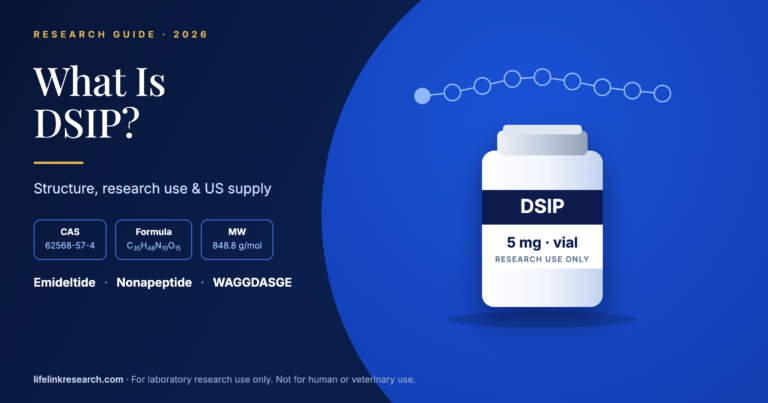
What Is DSIP? Structure, Research Use & US Supply
DSIP is a synthetic nine-residue peptide, WAGGDASGE, listed under the international name Emideltide. On July 24, 2026, it drew the narrowest vote…
Read articleResearch-grade peptides
99%+ purity. Verified every batch.
Identity and purity tested on every batch by third-party labs, Janoshik Analytical and US-based laboratories. Shipped same day from California.
Shop all peptides