Order within 21h 2m for same day dispatch | Free shipping on orders $250+ | Free Bacteriostatic Water 30ml with $500+ Purchase

Order within --h --m for same day dispatch | Free shipping on orders $250+ | Free Bacteriostatic Water 30ml with $500+ Purchase

Order within 21h 2m for same day dispatch | Free shipping on orders $250+ | Free Bac water with $500+ Purchase

100 researchers ordered this product in the last 30 days

About

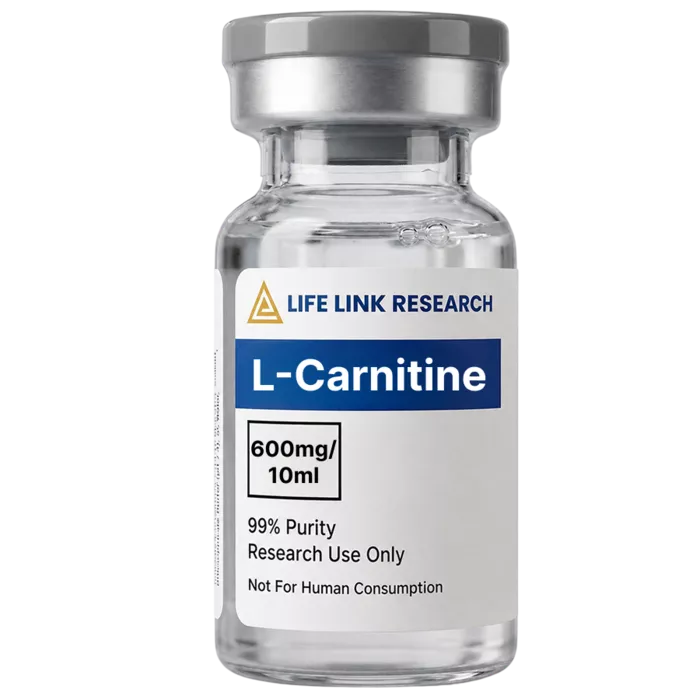
L-Carnitine 600mg/10ml

CAS: 541-15-1 · MW: 161.20 Da · Purity: ≥99% by reverse-phase HPLC · Format: 600 mg powder · Identity: ESI-MS confirmed · Optical rotation: [α]D²⁰ = -29.5° to -32.0°

L-Carnitine is a quaternary ammonium compound with the molecular formula C₇H₁₅NO₃ and the IUPAC name (3R)-3-hydroxy-4-(trimethylazaniumyl)butanoate, presented as an internal zwitterion in its free form. This research-grade L-carnitine is supplied as a 600 mg crystalline powder at ≥99% purity by reverse-phase HPLC, with third-party analytical verification of identity, purity, and optical rotation for every manufactured lot.

For laboratory research use only. Not for human consumption, veterinary use, food, or therapeutic use. Not a drug, supplement, or cosmetic. Sold exclusively to qualified research professionals and institutions.

Structure & Identity

L-Carnitine has been characterized in the biochemical literature as the biologically active stereoisomer of the carnitine zwitterion pair, with the (R)-configuration at the C-3 hydroxyl center [1]. The molecule is endogenously biosynthesized from L-lysine and L-methionine in mammalian liver and kidney tissue, and serves as the obligate cofactor for the carnitine palmitoyltransferase (CPT) shuttle system that transports long-chain fatty acyl groups across the inner mitochondrial membrane [1,2]. The molecular weight is 161.20 Da. L-Carnitine exists as a stable internal zwitterion at physiological pH, with the quaternary trimethylammonium cation balanced by the carboxylate anion. The D-enantiomer is biologically inactive and is not present in this material.

Research Background

L-Carnitine is one of the most extensively characterized cofactors in mitochondrial bioenergetics and serves as a standard reference reagent across multiple research domains. Published research contexts include:

  • Mitochondrial fatty acid β-oxidation research. Referenced as the substrate for the carnitine palmitoyltransferase I (CPT1) and II (CPT2) enzymes, which catalyze the rate-limiting step of long-chain fatty acid import into the mitochondrial matrix for β-oxidation. Used as a defined reagent in isolated mitochondrial preparations and permeabilized cell systems to study acyl-carnitine flux [1,2].
  • Acyl-carnitine profiling and metabolomics research. Used as the analytical reference standard for tandem mass spectrometry (MS/MS) acyl-carnitine profiling assays, including the methodologies underlying newborn screening research and inborn-error-of-metabolism research [3].
  • Carnitine biosynthesis pathway research. Referenced as the end product of the four-enzyme biosynthetic pathway from trimethyllysine, in research characterizing γ-butyrobetaine hydroxylase (BBOX1) and other pathway enzymes in animal-model systems [4].
  • Cultured cell metabolic research. Used as a defined supplement in serum-free and chemically defined media formulations for studies of cellular fatty acid metabolism, particularly in hepatocyte, cardiomyocyte, and skeletal muscle cell line research [2].

These references describe findings in non-human in vitro, animal-model, or chemistry research contexts. They do not constitute claims about effects in humans and are not intended to characterize the molecule’s approved therapeutic indications.

Specifications

AttributeValue
Chemical name(3R)-3-hydroxy-4-(trimethylazaniumyl)butanoate
SynonymsL-Carnitine, (R)-Carnitine, levocarnitine, vitamin BT
CAS Number541-15-1
Molecular FormulaC₇H₁₅NO₃
Molecular Weight161.20 Da
Purity≥99% by reverse-phase HPLC
IdentityESI mass spectrometry
Optical rotation[α]D²⁰ = -29.5° to -32.0° (c=10 in water)
Enantiomeric excess≥99.5% (R)-enantiomer by chiral HPLC
Loss on drying≤0.5%
Residue on ignition≤0.1%
Heavy metals≤10 ppm
Format600 mg crystalline powder, amber screw-cap vial
AppearanceWhite to off-white hygroscopic crystalline powder
Solubility (lab context)Highly soluble in water (>250 mg/mL at 20°C); soluble in methanol and ethanol; insoluble in acetone and chloroform
HygroscopicityHygroscopic — protect from atmospheric moisture

Storage & Handling

L-Carnitine is hygroscopic and must be protected from atmospheric moisture during storage and handling. Crystalline material is stable at 2–8°C for 24 months in tightly closed containers under desiccant; long-term storage at -20°C under inert atmosphere is preferred for analytical reference use. Once dissolved in aqueous laboratory buffer, solutions should be aliquoted into low-binding tubes and stored at -20°C; the zwitterion is chemically stable in solution at neutral pH but can undergo lactonization under acidic conditions. Handle under standard laboratory aseptic technique with PPE per institutional biosafety guidelines.

Quality Assurance

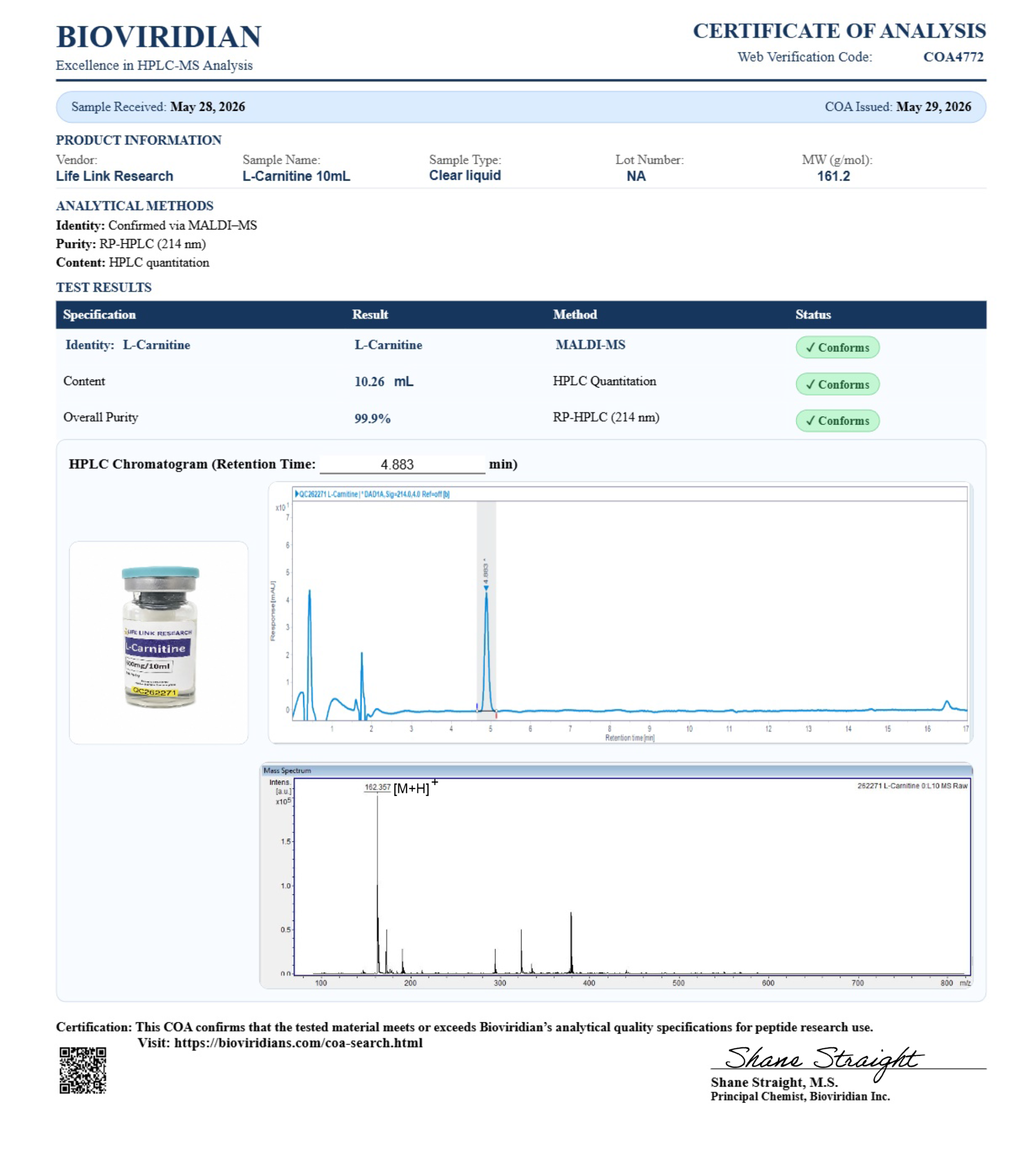
Every manufactured lot is accompanied by batch-specific analytical documentation including: third-party reverse-phase HPLC chromatogram, ESI-MS deconvoluted mass spectrum, chiral HPLC confirming ≥99.5% enantiomeric excess of the (R)-isomer, polarimetric specific rotation measurement, residual moisture (loss on drying), residue on ignition, and heavy-metals quantification. Reference standards are maintained at -20°C and cross-validated against pharmacopeial reference preparations. Manufacturing occurs in ISO 9001-certified facilities under documented quality-management procedures.

This material is supplied exclusively to qualified research professionals, academic laboratories, contract research organizations, and institutional purchasing departments. Proof of institutional affiliation may be required.

For laboratory research use only. Not for human consumption, veterinary use, food, or therapeutic use. Not a drug, supplement, or cosmetic.

Frequently Asked Questions

What is L-carnitine?

L-Carnitine is a quaternary ammonium zwitterion with the chemical name (3R)-3-hydroxy-4-(trimethylazaniumyl)butanoate. CAS 541-15-1. Molecular weight 161.20 Da. It is the biologically active (R)-stereoisomer of the carnitine pair, endogenously biosynthesized in mammals from L-lysine and L-methionine.

What is the difference between L-carnitine and D-carnitine?

The two are stereoisomers differing in configuration at the C-3 hydroxyl center. L-Carnitine (the R-isomer) is the biologically active form recognized by the carnitine palmitoyltransferase shuttle system. D-Carnitine (the S-isomer) is biologically inactive and is not present in this material (≥99.5% enantiomeric excess confirmed by chiral HPLC).

What is the molecular weight of L-carnitine?

161.20 Da. Molecular formula C₇H₁₅NO₃.

What is the CAS number for L-carnitine?

541-15-1.

What purity is L-carnitine supplied at?

≥99% by reverse-phase HPLC, with ≥99.5% enantiomeric excess of the (R)-isomer confirmed by chiral HPLC. Each manufactured lot is third-party analyzed with documentation of HPLC purity, ESI-MS identity, chiral purity, optical rotation, residual moisture, and heavy metals.

How should L-carnitine be stored?

L-Carnitine is hygroscopic and must be protected from atmospheric moisture. Crystalline material is stable at 2–8°C for 24 months in tightly closed containers under desiccant. For analytical reference use, long-term storage at -20°C under inert atmosphere is preferred. Once dissolved in laboratory buffer, aliquot and store at -20°C.

How is L-carnitine reconstituted for laboratory work?

L-Carnitine is highly water-soluble (>250 mg/mL at 20°C) and also dissolves readily in methanol and ethanol. Researchers typically reconstitute in sterile water, PBS, or assay buffer for in vitro experimental work, following standard aseptic technique. Avoid prolonged exposure to acidic conditions to prevent lactonization.

What is L-carnitine used for in research?

L-Carnitine has been referenced in the peer-reviewed literature as a defined substrate in mitochondrial β-oxidation research, as an analytical reference standard for acyl-carnitine MS/MS profiling, as the end product in carnitine biosynthesis pathway studies, and as a defined media supplement in cellular metabolism research. All published characterizations referenced here are in non-human in vitro or animal systems.

Who can purchase L-carnitine?

This material is supplied exclusively to qualified research professionals, academic laboratories, contract research organizations, and institutional purchasing departments. Proof of institutional affiliation may be required.

References

  1. Bremer J. Carnitine—metabolism and functions. Physiol Rev. 1983;63(4):1420-80. PMID: 6361812
  2. McGarry JD, Brown NF. The mitochondrial carnitine palmitoyltransferase system. From concept to molecular analysis. Eur J Biochem. 1997;244(1):1-14. PMID: 9063439
  3. Chace DH, Kalas TA, Naylor EW. Use of tandem mass spectrometry for multianalyte screening of dried blood specimens from newborns. Clin Chem. 2003;49(11):1797-817. PMID: 14578311
  4. Vaz FM, Wanders RJ. Carnitine biosynthesis in mammals. Biochem J. 2002;361(Pt 3):417-29. PMID: 11802770

L-Carnitine 600mg/10ml

$66.00

Choose your quantity Save up to 20%
Quantity
Price / vial
Savings

26 in stock

In Stock ·Only 1026 vials left at this batch price
Purchase & earn 66 points.
Purity Guarantee: Every vial is backed by independent Janoshik verification. Not satisfied with your order? Contact us for resolution.
6-Test Panel
Most suppliers test 1. We test 6.
Janoshik Verified
Independent 3rd-party COA
Same-Day Shipping
Order by 2 PM PT, ships today
Ships from California
USPS Priority · 2–3 day delivery
Accepted:
VISA AMERICANEXPRESS ACH
Buy 3 for $ each and save 5%
Buy 5 for $ each and save 10%
Buy 10 for $ each and save 20%
Buy 3 for $ each and save 5 %
Buy 5 for $ each and save 10 %
Buy 10 for $ each and save 20 %

Product Usage:

These products are intended for research use only.

This designation permits the use of these research chemicals strictly for in vitro testing and laboratory experimentation. All product information provided on this website is for educational purposes only. Any form of bodily introduction into humans or animals is strictly prohibited by law. These products must be handled only by licensed and qualified professionals.

These products are not drugs, foods, or cosmetics and must not be misbranded, misused, or mislabeled as such.

Related Products

All Articles And Product Information Provided On This Website Are For Informational And Educational Purposes Only.
The products offered on this website are furnished for in-vitro studies only. In-vitro studies {Latin: in glass) are performed outside of the body. These products are not medicines or drugs and have not been approved by the FDA to prevent, treat or cure any medical condition, ailment or disease. Bodily introduction of any kind into humans or animals is strictly forbidden by law.

About

L-Carnitine 600mg/10ml

CAS: 541-15-1 · MW: 161.20 Da · Purity: ≥99% by reverse-phase HPLC · Format: 600 mg powder · Identity: ESI-MS confirmed · Optical rotation: [α]D²⁰ = -29.5° to -32.0°

L-Carnitine is a quaternary ammonium compound with the molecular formula C₇H₁₅NO₃ and the IUPAC name (3R)-3-hydroxy-4-(trimethylazaniumyl)butanoate, presented as an internal zwitterion in its free form. This research-grade L-carnitine is supplied as a 600 mg crystalline powder at ≥99% purity by reverse-phase HPLC, with third-party analytical verification of identity, purity, and optical rotation for every manufactured lot.

For laboratory research use only. Not for human consumption, veterinary use, food, or therapeutic use. Not a drug, supplement, or cosmetic. Sold exclusively to qualified research professionals and institutions.

Structure & Identity

L-Carnitine has been characterized in the biochemical literature as the biologically active stereoisomer of the carnitine zwitterion pair, with the (R)-configuration at the C-3 hydroxyl center [1]. The molecule is endogenously biosynthesized from L-lysine and L-methionine in mammalian liver and kidney tissue, and serves as the obligate cofactor for the carnitine palmitoyltransferase (CPT) shuttle system that transports long-chain fatty acyl groups across the inner mitochondrial membrane [1,2]. The molecular weight is 161.20 Da. L-Carnitine exists as a stable internal zwitterion at physiological pH, with the quaternary trimethylammonium cation balanced by the carboxylate anion. The D-enantiomer is biologically inactive and is not present in this material.

Research Background

L-Carnitine is one of the most extensively characterized cofactors in mitochondrial bioenergetics and serves as a standard reference reagent across multiple research domains. Published research contexts include:

  • Mitochondrial fatty acid β-oxidation research. Referenced as the substrate for the carnitine palmitoyltransferase I (CPT1) and II (CPT2) enzymes, which catalyze the rate-limiting step of long-chain fatty acid import into the mitochondrial matrix for β-oxidation. Used as a defined reagent in isolated mitochondrial preparations and permeabilized cell systems to study acyl-carnitine flux [1,2].
  • Acyl-carnitine profiling and metabolomics research. Used as the analytical reference standard for tandem mass spectrometry (MS/MS) acyl-carnitine profiling assays, including the methodologies underlying newborn screening research and inborn-error-of-metabolism research [3].
  • Carnitine biosynthesis pathway research. Referenced as the end product of the four-enzyme biosynthetic pathway from trimethyllysine, in research characterizing γ-butyrobetaine hydroxylase (BBOX1) and other pathway enzymes in animal-model systems [4].
  • Cultured cell metabolic research. Used as a defined supplement in serum-free and chemically defined media formulations for studies of cellular fatty acid metabolism, particularly in hepatocyte, cardiomyocyte, and skeletal muscle cell line research [2].

These references describe findings in non-human in vitro, animal-model, or chemistry research contexts. They do not constitute claims about effects in humans and are not intended to characterize the molecule’s approved therapeutic indications.

Specifications

AttributeValue
Chemical name(3R)-3-hydroxy-4-(trimethylazaniumyl)butanoate
SynonymsL-Carnitine, (R)-Carnitine, levocarnitine, vitamin BT
CAS Number541-15-1
Molecular FormulaC₇H₁₅NO₃
Molecular Weight161.20 Da
Purity≥99% by reverse-phase HPLC
IdentityESI mass spectrometry
Optical rotation[α]D²⁰ = -29.5° to -32.0° (c=10 in water)
Enantiomeric excess≥99.5% (R)-enantiomer by chiral HPLC
Loss on drying≤0.5%
Residue on ignition≤0.1%
Heavy metals≤10 ppm
Format600 mg crystalline powder, amber screw-cap vial
AppearanceWhite to off-white hygroscopic crystalline powder
Solubility (lab context)Highly soluble in water (>250 mg/mL at 20°C); soluble in methanol and ethanol; insoluble in acetone and chloroform
HygroscopicityHygroscopic — protect from atmospheric moisture

Storage & Handling

L-Carnitine is hygroscopic and must be protected from atmospheric moisture during storage and handling. Crystalline material is stable at 2–8°C for 24 months in tightly closed containers under desiccant; long-term storage at -20°C under inert atmosphere is preferred for analytical reference use. Once dissolved in aqueous laboratory buffer, solutions should be aliquoted into low-binding tubes and stored at -20°C; the zwitterion is chemically stable in solution at neutral pH but can undergo lactonization under acidic conditions. Handle under standard laboratory aseptic technique with PPE per institutional biosafety guidelines.

Quality Assurance

Every manufactured lot is accompanied by batch-specific analytical documentation including: third-party reverse-phase HPLC chromatogram, ESI-MS deconvoluted mass spectrum, chiral HPLC confirming ≥99.5% enantiomeric excess of the (R)-isomer, polarimetric specific rotation measurement, residual moisture (loss on drying), residue on ignition, and heavy-metals quantification. Reference standards are maintained at -20°C and cross-validated against pharmacopeial reference preparations. Manufacturing occurs in ISO 9001-certified facilities under documented quality-management procedures.

This material is supplied exclusively to qualified research professionals, academic laboratories, contract research organizations, and institutional purchasing departments. Proof of institutional affiliation may be required.

For laboratory research use only. Not for human consumption, veterinary use, food, or therapeutic use. Not a drug, supplement, or cosmetic.

Frequently Asked Questions

What is L-carnitine?

L-Carnitine is a quaternary ammonium zwitterion with the chemical name (3R)-3-hydroxy-4-(trimethylazaniumyl)butanoate. CAS 541-15-1. Molecular weight 161.20 Da. It is the biologically active (R)-stereoisomer of the carnitine pair, endogenously biosynthesized in mammals from L-lysine and L-methionine.

What is the difference between L-carnitine and D-carnitine?

The two are stereoisomers differing in configuration at the C-3 hydroxyl center. L-Carnitine (the R-isomer) is the biologically active form recognized by the carnitine palmitoyltransferase shuttle system. D-Carnitine (the S-isomer) is biologically inactive and is not present in this material (≥99.5% enantiomeric excess confirmed by chiral HPLC).

What is the molecular weight of L-carnitine?

161.20 Da. Molecular formula C₇H₁₅NO₃.

What is the CAS number for L-carnitine?

541-15-1.

What purity is L-carnitine supplied at?

≥99% by reverse-phase HPLC, with ≥99.5% enantiomeric excess of the (R)-isomer confirmed by chiral HPLC. Each manufactured lot is third-party analyzed with documentation of HPLC purity, ESI-MS identity, chiral purity, optical rotation, residual moisture, and heavy metals.

How should L-carnitine be stored?

L-Carnitine is hygroscopic and must be protected from atmospheric moisture. Crystalline material is stable at 2–8°C for 24 months in tightly closed containers under desiccant. For analytical reference use, long-term storage at -20°C under inert atmosphere is preferred. Once dissolved in laboratory buffer, aliquot and store at -20°C.

How is L-carnitine reconstituted for laboratory work?

L-Carnitine is highly water-soluble (>250 mg/mL at 20°C) and also dissolves readily in methanol and ethanol. Researchers typically reconstitute in sterile water, PBS, or assay buffer for in vitro experimental work, following standard aseptic technique. Avoid prolonged exposure to acidic conditions to prevent lactonization.

What is L-carnitine used for in research?

L-Carnitine has been referenced in the peer-reviewed literature as a defined substrate in mitochondrial β-oxidation research, as an analytical reference standard for acyl-carnitine MS/MS profiling, as the end product in carnitine biosynthesis pathway studies, and as a defined media supplement in cellular metabolism research. All published characterizations referenced here are in non-human in vitro or animal systems.

Who can purchase L-carnitine?

This material is supplied exclusively to qualified research professionals, academic laboratories, contract research organizations, and institutional purchasing departments. Proof of institutional affiliation may be required.

References

  1. Bremer J. Carnitine—metabolism and functions. Physiol Rev. 1983;63(4):1420-80. PMID: 6361812
  2. McGarry JD, Brown NF. The mitochondrial carnitine palmitoyltransferase system. From concept to molecular analysis. Eur J Biochem. 1997;244(1):1-14. PMID: 9063439
  3. Chace DH, Kalas TA, Naylor EW. Use of tandem mass spectrometry for multianalyte screening of dried blood specimens from newborns. Clin Chem. 2003;49(11):1797-817. PMID: 14578311
  4. Vaz FM, Wanders RJ. Carnitine biosynthesis in mammals. Biochem J. 2002;361(Pt 3):417-29. PMID: 11802770
Published Research Applications
Metabolic Pathway Modulation
Dual GIP/GLP-1 receptor agonism on insulinotropic signaling in pancreatic beta-cell models
PMID: 34170647
Adipose Tissue Biology
Lipid metabolism and energy expenditure in in-vitro adipose tissue models
PMID: 35658024
Hepatocyte Research
Hepatic lipid accumulation and NASH-related inflammatory pathways
PMID: 36780086
Cardiovascular Cell Biology
Endothelial function under metabolic stress conditions
PMID: 37840850
Receptor Binding Studies
Dual receptor selectivity and cAMP signaling characterization
PMID: 33186500
Neuroprotection Models
CNS effects and neuroinflammatory marker modulation
PMID: 36878413
Published Research Applications
Primary Carnitine Deficiency
L-carnitine improves skeletal muscle fat oxidation in primary carnitine deficiency
Human Muscle Bioenergetics & Exercise
Carnitine in human muscle bioenergetics and physical exercise performance (synthesis)
Mitochondrial Myopathy
L-carnitine improves exercise performance in mitochondrial myopathy
Recovery After Exercise (Supplementation)
L-Carnitine supplementation effects on exercise recovery markers
Carnitine and Long-Chain Fatty-Acid Oxidation
Effects of carnitine on fatty-acid oxidation by muscle (foundational)
Cardiovascular Effects (Meta-analysis)
L-carnitine in acute MI: meta-analysis of cardiovascular outcomes
6-Test Verification Panel

Most peptide suppliers run one purity test. We run six, then send every batch to Janoshik for independent verification.

HPLC
≥99%
LCMS
Confirmed
Heavy Metals
< LOD
Endotoxin
< 0.5 EU
Sterility
Sterile
AAA
Verified
Life Link ResearchMost Suppliers
HPLC Purity
LCMS Identity
Heavy Metals (ICP-MS)
Endotoxin (LAL)
Sterility
Amino Acid Analysis
3rd Party (Janoshik)
Common Questions
How is this product tested?
Every batch undergoes our 6-test panel: HPLC purity, LCMS mass confirmation, ICP-MS heavy metals, LAL endotoxin, sterility, and amino acid analysis. Samples are then sent to Janoshik Analytical for independent verification. All COA reports are downloadable from this page.
How should I store it?
Store lyophilized peptide at -20°C. Reconstituted: 2-8°C, use within 14 days. Ships ambient, stable for transit.
How fast do you ship?
Orders by 2 PM PT ship same day via USPS Priority from California. 2-3 business days typical. Free shipping $250+.
What payment methods do you accept?
All major credit cards (Visa, Mastercard, American Express), ACH, and cryptocurrency.

Ready to Start Your Research?

99%+ purity. 6-test verified. Janoshik-confirmed.

Order

L-Carnitine 600mg/10ml

Same-Day Shipping Secure Checkout Ships from CA

L-Carnitine 600mg/10ml

$66.00

 /vial

ADD TO CART

LifeLinkResearch

Terms & Conditions

LifeLinkResearch.com
Cookie policy

We use cookies to enhance your experience. By continuing to use our site, you consent to our cookie policy.

Waiver & disclaimer of liability

By using this site, you confirm you have read our waiver and agree to all terms of our disclaimer of liability.

Product usage

Products are for research and development only — not for human consumption. You confirm you are 21 or older. Statements have not been evaluated by the FDA. Continued use implies acceptance.

0