

Description
Structure & Identity
Tesamorelin reproduces the 44-residue sequence of GHRH(1-44) and adds a trans-3-hexenoic acid group at its N-terminus. The natural sequence is what gives it GHRH activity; the added acid group is what extends its working lifetime. It remains one of the larger peptides in a typical research catalog, which is worth keeping in mind when handling and dissolving it.
Research Background
Research on tesamorelin explores GHRH-receptor signaling and the growth-hormone/IGF-1 cascade that follows from it.
- Receptor engagement. Acting at the GHRH receptor, tesamorelin was profiled as a growth-hormone-releasing factor analog in early work [1].
- Metabolic signaling readouts. The GH/IGF-1 axis produces measurable downstream metabolic markers that serve as mechanistic readouts in studies of GHRH-receptor agonists [2].
- Standardization and detection. Analytical studies of GHRH-type analogs support consistent identification of the peptide across labs [3].
These describe an area of study rather than an approved application, and the peptide is provided for that laboratory research.
Specifications
| Attribute | Value |
| Chemical name | Tesamorelin (GHRH(1-44) analog) |
| Also Known As | TH9507, GHRH(1-44) analog |
| Modification | trans-3-hexenoic acid, N-terminal |
| CAS number | 218949-48-5 |
| Molecular formula | C221H366N72O67S |
| Molecular weight | 5135.9 g/mol |
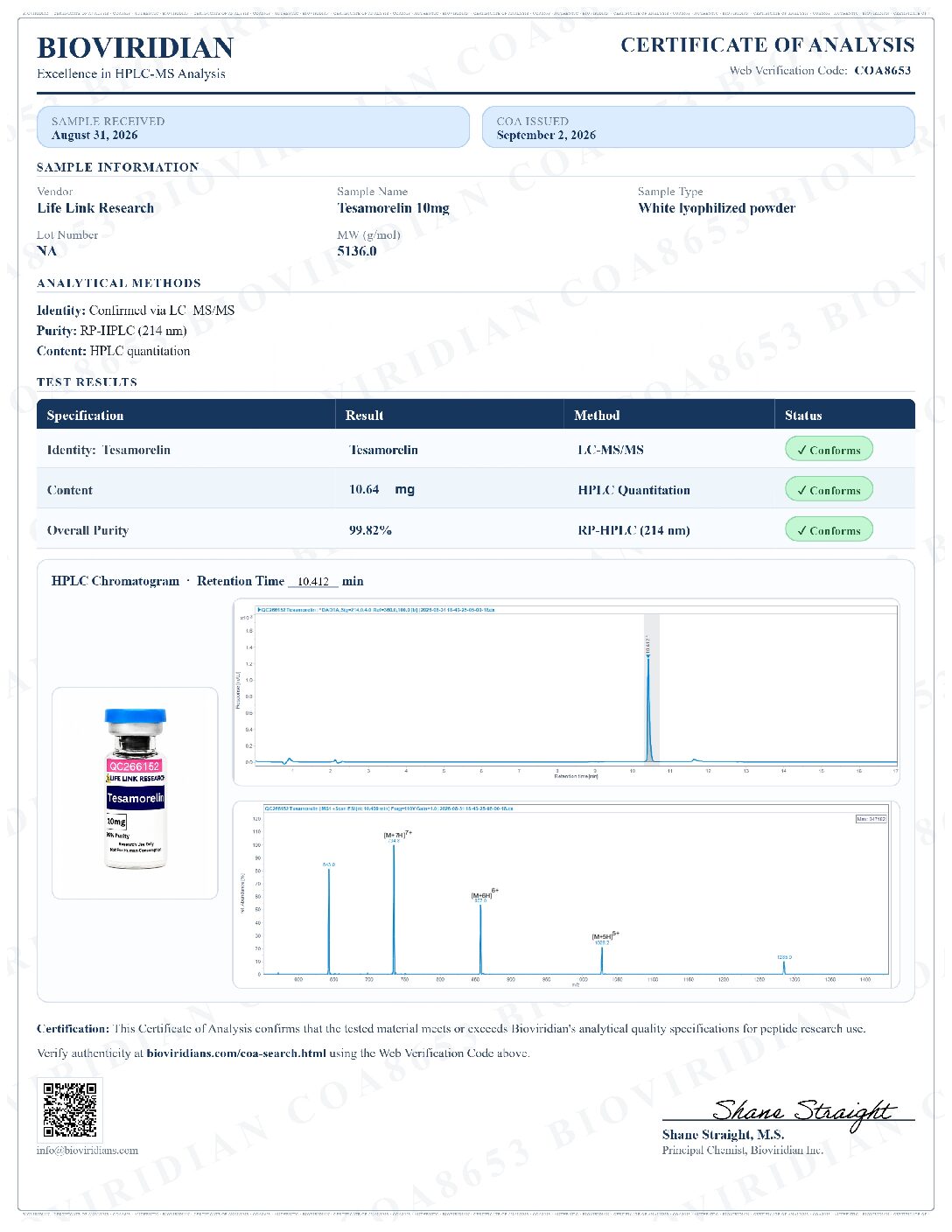
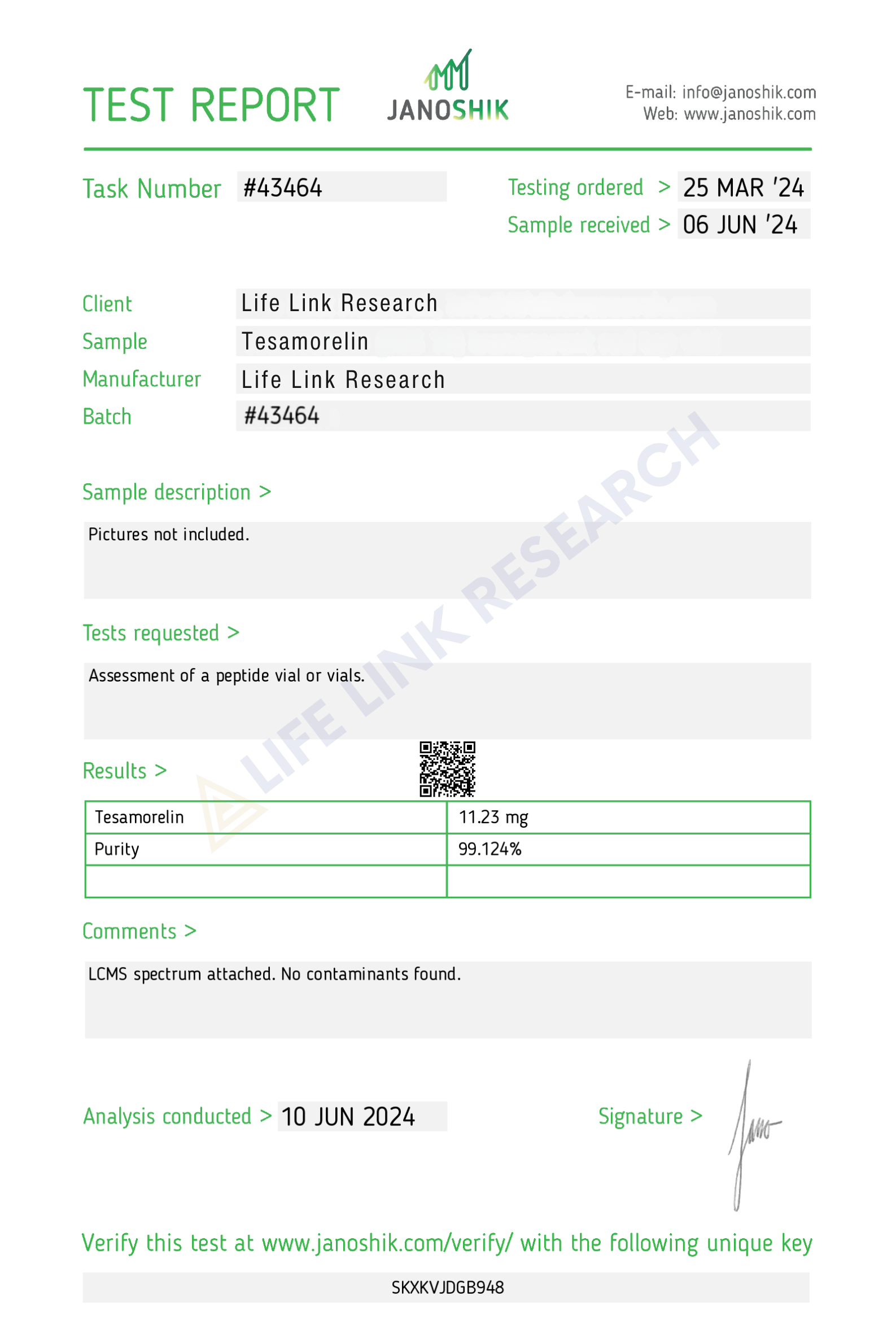
| Purity | ≥99% by reverse-phase HPLC |
| Length | 44 amino acids |
| Identity | Confirmed by ESI mass spectrometry |
| Physical form | Lyophilized powder |
| Appearance | White to off-white solid |
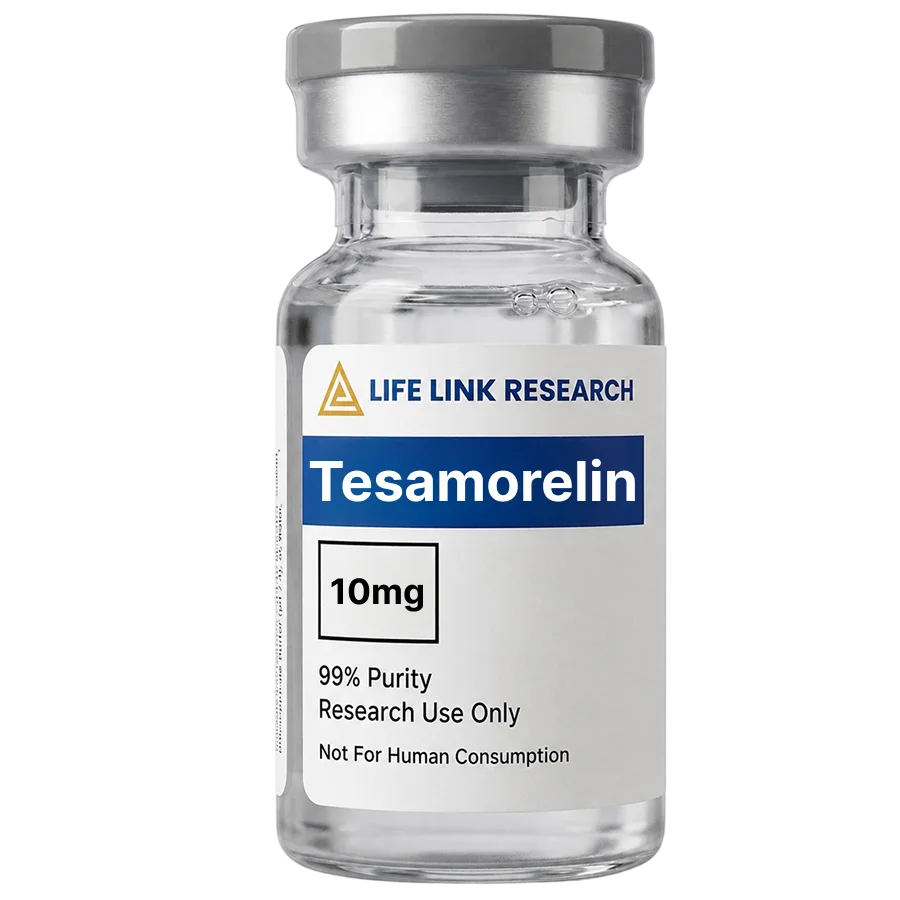
| Quantity | 10 mg per vial |
| Storage | -20°C, protected from light |
| Classification | Research use only |
Storage & Handling
Store the unopened vial at -20°C, away from light, until needed. Once dissolved, keep the solution at 2-8°C and use it in your research within roughly two weeks. Given the size of this peptide and the larger quantity in the 10 mg vial, planning aliquots is sensible, so the stock is not repeatedly frozen and thawed. Also, let it reach room temperature before opening.
Quality Assurance
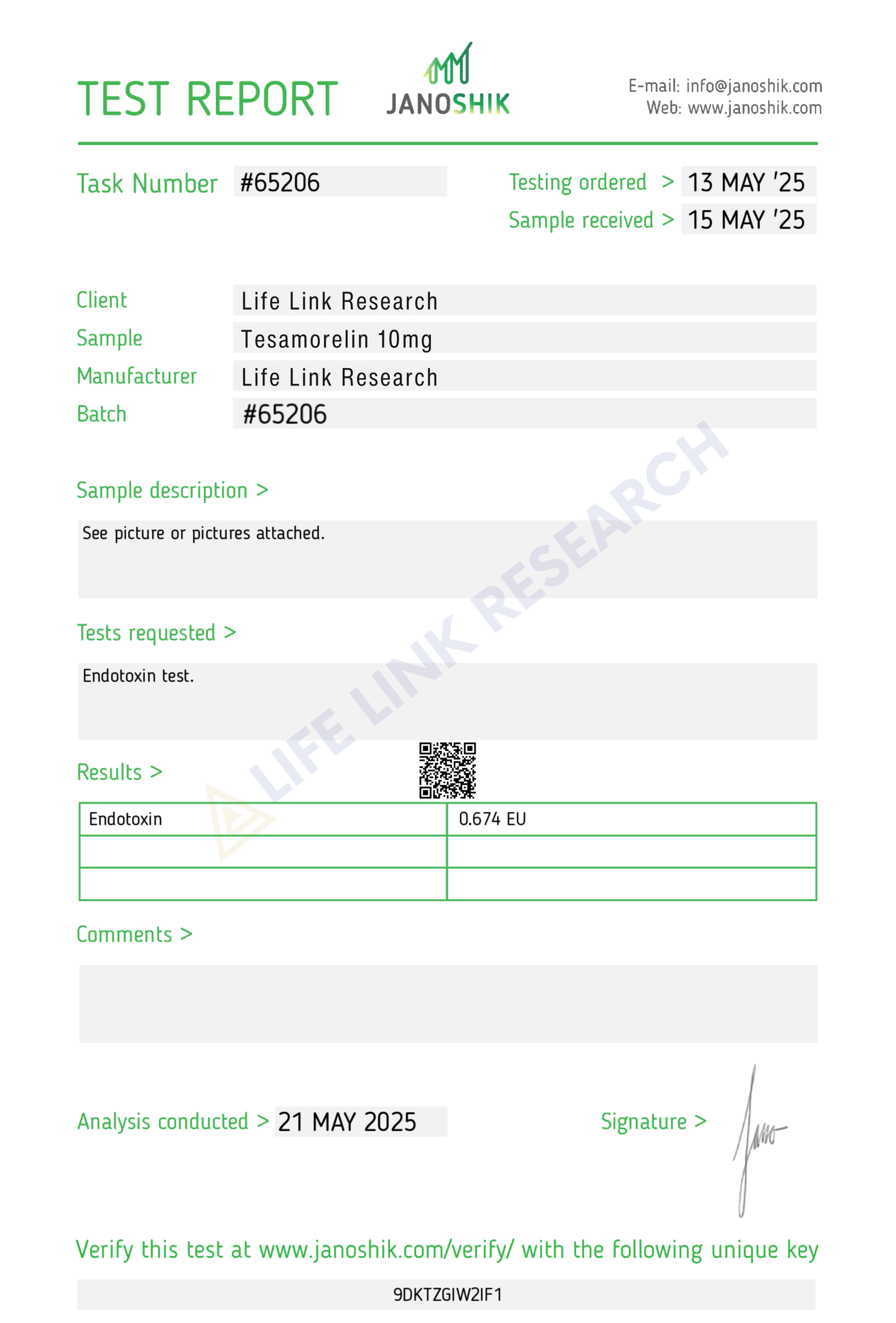
Every lot of tesamorelin clears independent quality control before release. Manufacturing follows research-grade standards, and purity by reverse-phase HPLC and identity by mass spectrometry are confirmed by outside laboratories, including Janoshik Analytical and US-based labs, rather than in-house alone. A batch-matched certificate of analysis accompanies the vial so the data can be traced to your material.
Frequently Asked Questions
What is tesamorelin used for in research?
It is studied in research on the GHRH receptor and the downstream growth-hormone/IGF-1 axis. Tesamorelin is a research-use-only material and has no approved human use in this setting.
Is the 10 mg the same molecule as the 2 mg?
Yes, the only difference is the amount of peptide in the vial. The 10 mg size is aimed at larger research programs that need more working material.
What makes tesamorelin more stable than GHRH?
A trans-3-hexenoic acid cap on the N-terminus slows enzymatic breakdown, so the peptide stays active longer in an experiment than natural GHRH.
What is tesamorelin’s sequence length?
It is a 44-amino-acid peptide (a GHRH(1-44) analog) with a molecular weight near 5135.9 g/mol and CAS number 218949-48-5.
Is tesamorelin FDA approved?
The molecule is approved as a drug in a defined clinical use, but this listing is a research-use-only reference peptide and is not for human or veterinary use.
How should the 10 mg vial be handled?
Keep it frozen at -20°C and out of light. After preparing for research, refrigerate at 2-8°C, use for your study within about two weeks, and avoid repeated freeze-thaw cycles.
How pure is this tesamorelin?
It is supplied at ≥99% purity by reverse-phase HPLC with mass-spec identity confirmation from an independent lab, and a certificate of analysis is provided for each batch.
Why is tesamorelin considered a more complex peptide than short-chain analogs?
At 44 residues, tesamorelin is significantly larger than typical short research peptides. Its size affects physical properties such as aqueous solubility and stability — relevant to assay design, not to any use protocol.