
Tirzepatide and retatrutide are both incretin-based research peptides, but they differ by one receptor: retatrutide adds glucagon receptor (GCGR) activation to the GLP-1R and GIPR activity of tirzepatide. That third pathway — GCGR — has distinct implications for research design, particularly in hepatic metabolism, energy expenditure, and lipid studies.
This page covers what GCGR activation adds mechanistically, when retatrutide is the appropriate research tool versus tirzepatide, and purity requirements for both compounds.
All compounds referenced are for research purposes only.
Quick Reference
| Property | Tirzepatide | Retatrutide |
|---|---|---|
| Receptor targets | GLP-1R + GIPR | GLP-1R + GIPR + GCGR |
| Receptor classification | Dual agonist | Triple agonist |
| Amino acids | 39 | ~50 (modified) |
| Molecular weight | ~4,813 Da | ~4,867 Da |
| Glucagon receptor activity | None | Yes — full agonist |
| Hepatic effect via GCGR | Indirect (via GLP-1R) | Direct + indirect |
| Primary research application | GLP-1R/GIPR interaction studies | Triple incretin + glucagon receptor studies |
| LLR availability | 15mg | 15mg |
The Third Receptor: What GCGR Adds
The glucagon receptor (GCGR) is a class B1 GPCR — the same family as GLP-1R and GIPR — but with distinct expression and function:
Primary GCGR expression sites:
– Hepatocytes: The dominant GCGR tissue. Glucagon activates hepatic glycogenolysis and gluconeogenesis — this is glucagon’s canonical metabolic role.
– Adipose tissue: GCGR activation promotes lipolysis; contributes to lipid mobilization
– Hypothalamus: Glucagon has CNS actions including appetite suppression (via GCGR in hypothalamus and brainstem)
– Kidney: GCGR expressed in proximal tubule; effects on sodium and glucose handling
– Heart: GCGR expressed in cardiomyocytes; inotropic effects in pharmacological ranges
Signaling pathway: Like GLP-1R and GIPR, GCGR couples to Gs → cAMP → PKA. In hepatocytes, this PKA activation drives phosphorylation of glycogen phosphorylase (activating glycogenolysis) and CREB (driving gluconeogenic gene expression).
The paradox in triple agonist research: Glucagon’s classical action (raise blood glucose via hepatic glycogenolysis) appears contradictory to the glucose-lowering effects of GLP-1R/GIPR activation. In triple agonist research, the key question is how these opposing receptor pathways interact — particularly in the liver. Current mechanistic models suggest the GCGR-mediated energy expenditure and lipolysis effects predominate in energy surplus states, while GLP-1R-mediated glucose-dependent insulin secretion modulates the hyperglycemic risk of GCGR activation.
Mechanistic Comparison
| Signaling Dimension | Tirzepatide | Retatrutide |
|---|---|---|
| Pancreatic β-cell insulin secretion | ↑↑ (GLP-1R + GIPR) | ↑↑ (GLP-1R + GIPR) |
| Hepatic glucose production | Indirect ↓ (via insulin, GLP-1R) | Complex: GCGR ↑ + GLP-1R/GIPR indirect ↓ |
| Hepatic fat metabolism (lipophagy, FAO) | Indirect | Direct GCGR component + indirect |
| Adipose lipolysis | GIPR-mediated (context-dependent) | GCGR + GIPR |
| Energy expenditure | GLP-1R + GIPR-mediated | GLP-1R + GIPR + GCGR |
| CNS appetite circuits | GLP-1R (hypothalamus, brainstem) | GLP-1R + GCGR (hypothalamus) |
| Receptor-specific cAMP in hepatocytes | Minimal direct effect | GCGR → direct hepatocyte cAMP ↑ |
Research Use Case Matrix
| Research Question | Preferred Compound | Why |
|---|---|---|
| GLP-1R + GIPR dual signaling characterization | Tirzepatide | GCGR-free; cleaner dual agonist model |
| Adding GCGR to dual agonist background | Retatrutide | By design — this is what retatrutide adds |
| Hepatic lipid metabolism in triple receptor context | Retatrutide | GCGR direct hepatocyte signaling component |
| Comparing dual vs triple incretin receptor activation | Both (head-to-head) | Requires both for the comparison |
| GCGR biology research | Retatrutide | Contains GCGR activity; also consider native glucagon |
| Glucagon receptor interaction with incretins | Retatrutide | Only compound with all three active simultaneously |
| Energy expenditure models | Retatrutide | GCGR adds thermogenic component beyond GLP-1R+GIPR |
| GLP-1/GIP insulin secretion studies | Tirzepatide | GCGR activation would complicate glucose-insulin readouts |
| Cardiovascular receptor studies (GLP-1R) | Either | If GCGR cardiomyocyte effects are a concern, use tirzepatide |
The Incretin Complexity Ladder
Life Link Research stocks the full spectrum of incretin research peptides, representing increasing receptor complexity:
- Semaglutide — GLP-1R monoagonist. Single receptor, highest GLP-1R affinity. Reference compound for GLP-1 biology. → What is semaglutide?
- Tirzepatide — GLP-1R + GIPR dual agonist. Adds GIP receptor to the semaglutide model. → Tirzepatide vs semaglutide
- Retatrutide — GLP-1R + GIPR + GCGR triple agonist. Adds glucagon receptor to the tirzepatide model. → What is retatrutide?
- CagriSema — GLP-1R + AMYR (amylin receptor). Different second mechanism from tirzepatide — amylin pathway, not GIP. → What is CagriSema?
For researchers stepping through this complexity ladder, using each compound head-to-head lets you isolate the contribution of each additional receptor.
Purity Requirements and COA Verification
Both retatrutide and tirzepatide require:
- HPLC purity: ≥98%
- Mass spectrometry confirmation: Tirzepatide ~4,813 Da; Retatrutide ~4,867 Da
- Endotoxin (LAL assay): <1 EU/mg for cell culture
- Sterility: for in vivo applications
- Amino acid composition: sequence identity confirmation
Independent third-party COA is required for both — particularly important for retatrutide, which has received less independent quality scrutiny in the research vendor market than semaglutide or tirzepatide. Peptide Sciences’ retatrutide was flagged as potentially counterfeit by third-party testing before that vendor’s closure. This underscores why independent mass spectrometry verification is non-negotiable for newer compounds.
Life Link Research provides third-party independent COAs for both tirzepatide and retatrutide, available before purchase at lifelinkresearch.com.
Frequently Asked Questions
What is the main difference between retatrutide and tirzepatide?
Retatrutide activates three receptors: GLP-1R, GIPR, and the glucagon receptor (GCGR). Tirzepatide activates two: GLP-1R and GIPR. The addition of GCGR activity is the defining difference. GCGR is most prominently expressed in hepatocytes, where it drives glycogenolysis and gluconeogenesis — a pathway not directly accessible via tirzepatide alone.
Is retatrutide more potent than tirzepatide?
“Potency” depends on the receptor and the tissue model. Retatrutide is not simply a “more potent” version of tirzepatide — it adds a mechanistically distinct receptor pathway. In research, the relevant question is not which is “stronger” but which receptor profile matches your experimental design.
Is retatrutide available as a research compound?
Yes. Retatrutide is available as a research chemical for laboratory use only. Life Link Research stocks retatrutide (15mg) with third-party COA. It is not an FDA-approved drug and is sold for research purposes only.
What does glucagon receptor activation add to the tirzepatide model?
GCGR activation adds: direct hepatocyte signaling (glycogenolysis, gluconeogenesis, and in some models, hepatic lipid mobilization), adipose lipolysis via GCGR, potential CNS effects via hypothalamic GCGR, and the complexity of opposing glucose-handling signals (GLP-1R lowers hepatic glucose; GCGR raises it). This interaction is a central question in triple agonist pharmacology research.
Can retatrutide be used as a tirzepatide replacement in an existing study?
Not without reconsidering the study design. Substituting retatrutide for tirzepatide adds GCGR activity as an uncontrolled variable in any assay sensitive to hepatic glucose metabolism, lipolysis, or cAMP signaling in GCGR-expressing cells. If your study is specifically examining GLP-1R/GIPR dual agonism, retatrutide would introduce a confound.
Order Tirzepatide →
Order Retatrutide →
All products for research purposes only. Not for human use.
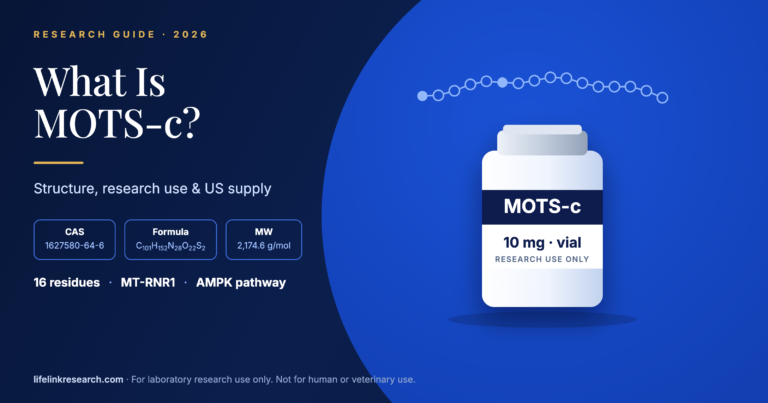
What Is MOTS-c? Structure, Research Use & US Supply
Quick Answer MOTS-c is a 16-amino-acid peptide coded within a short open reading frame of the mitochondrial 12S rRNA gene (MT-RNR1). It…
Read article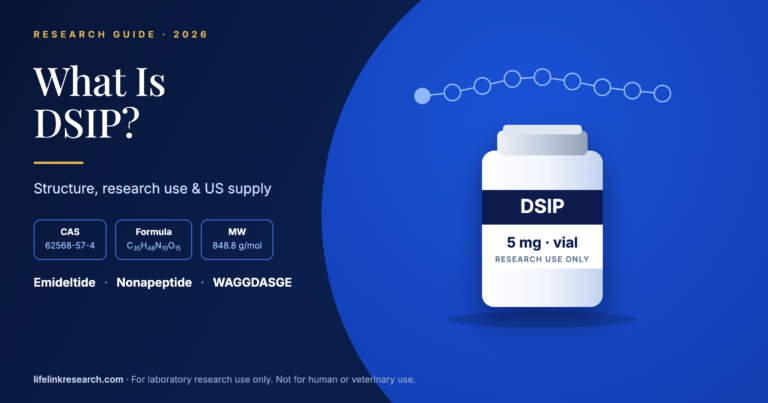
What Is DSIP? Structure, Research Use & US Supply
DSIP is a synthetic nine-residue peptide, WAGGDASGE, listed under the international name Emideltide. On July 24, 2026, it drew the narrowest vote…
Read article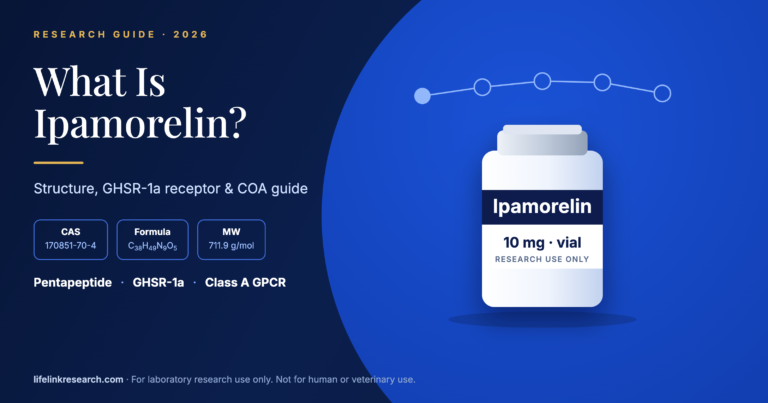
What Is Ipamorelin? Structure, GHSR-1a Receptor and COA Guide
Ipamorelin is a synthetic five-residue peptide that acts as an agonist at the ghrelin receptor, GHSR-1a. It started life as a subtraction.…
Read articleResearch-grade peptides
99%+ purity. Verified every batch.
Identity and purity tested on every batch by third-party labs, Janoshik Analytical and US-based laboratories. Shipped same day from California.
Shop all peptides