
Description
Structure & Identity
Retatrutide is a synthetic incretin peptide tuned to activate three receptors: GLP-1, GIP, and glucagon. Built on a GIP-based backbone with a fatty-acid stabilizer, it belongs to the long-acting incretin family but goes a step further than the single- and dual-receptor peptides. The “3” that sometimes appears in its labelling refers to the three receptors it targets, not a receptor called GLP-3.
Specifications
| Attribute | Value |
| Chemical name | Retatrutide |
| Also Known As | (GLP-1/GIP/glucagon triple agonist) |
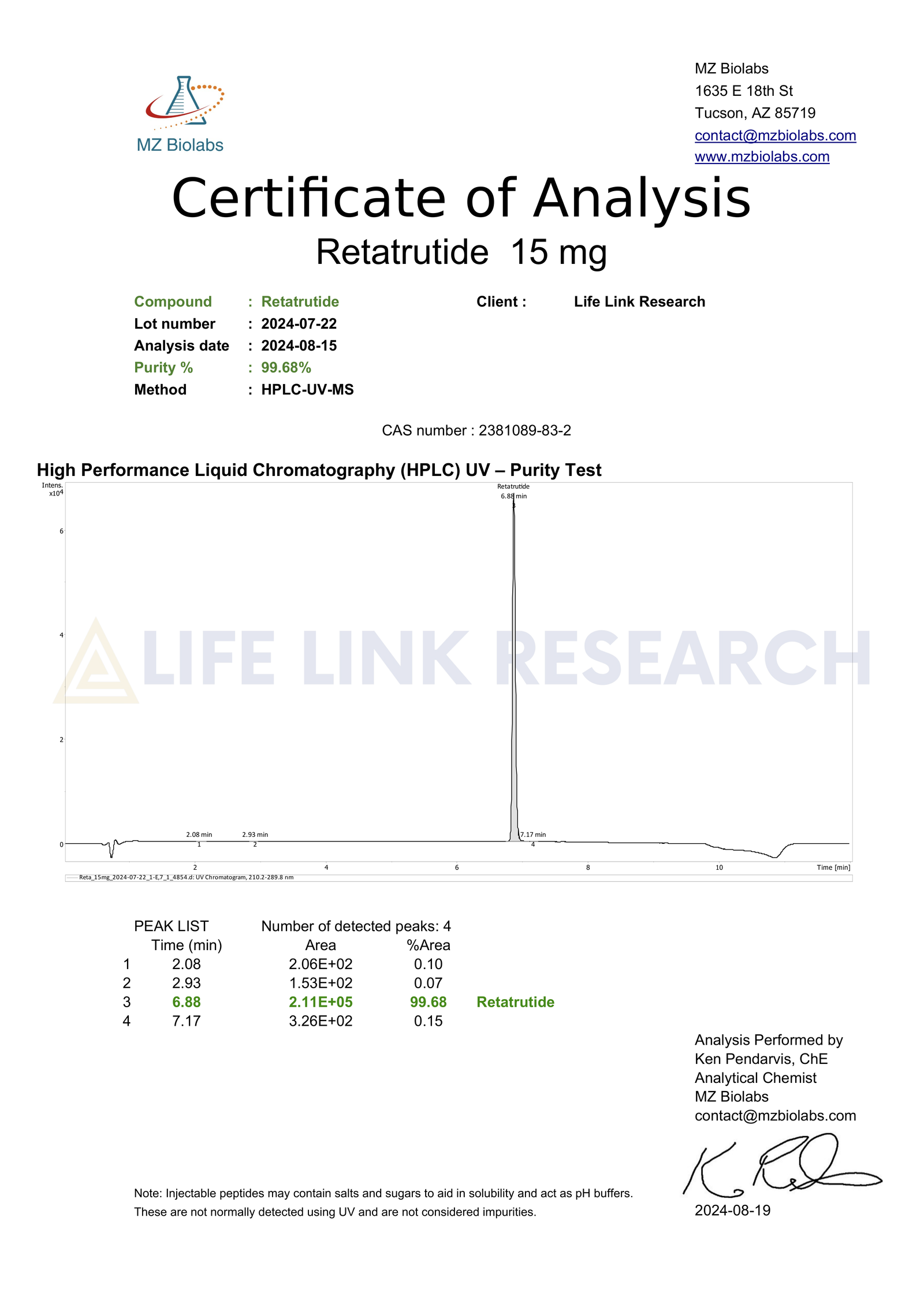
| CAS number | 2381089-83-2 |
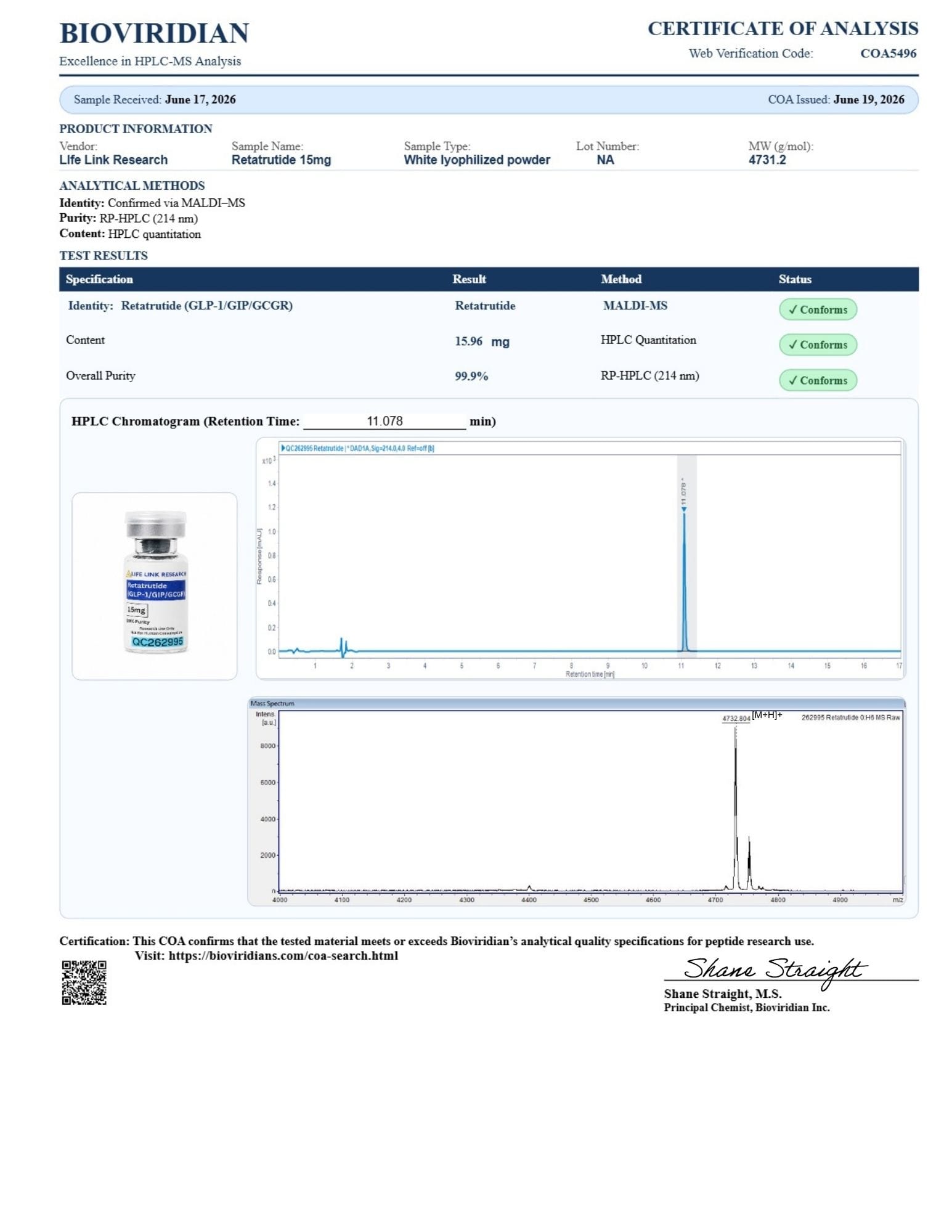
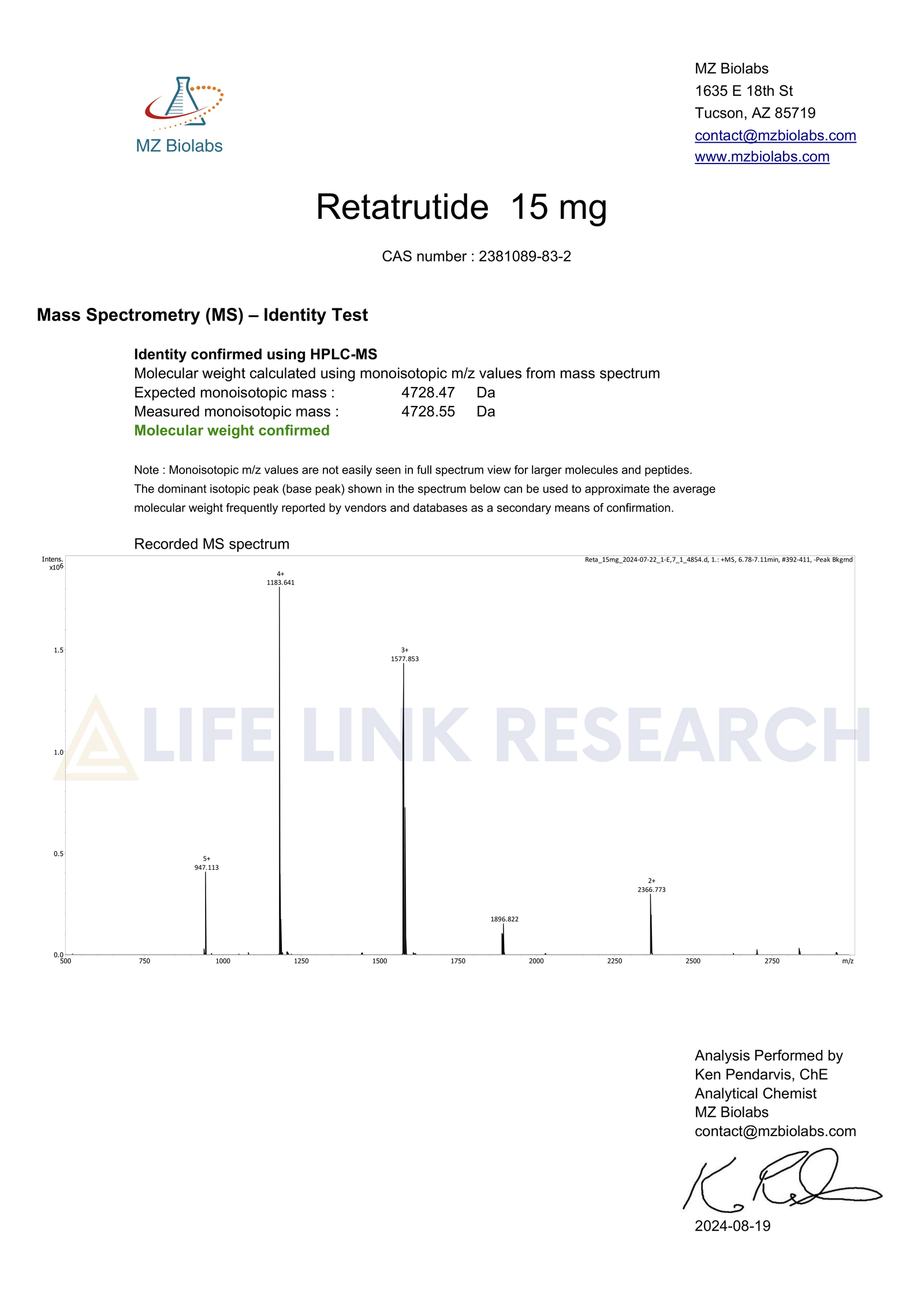
| Molecular weight | ~4731 g/mol |
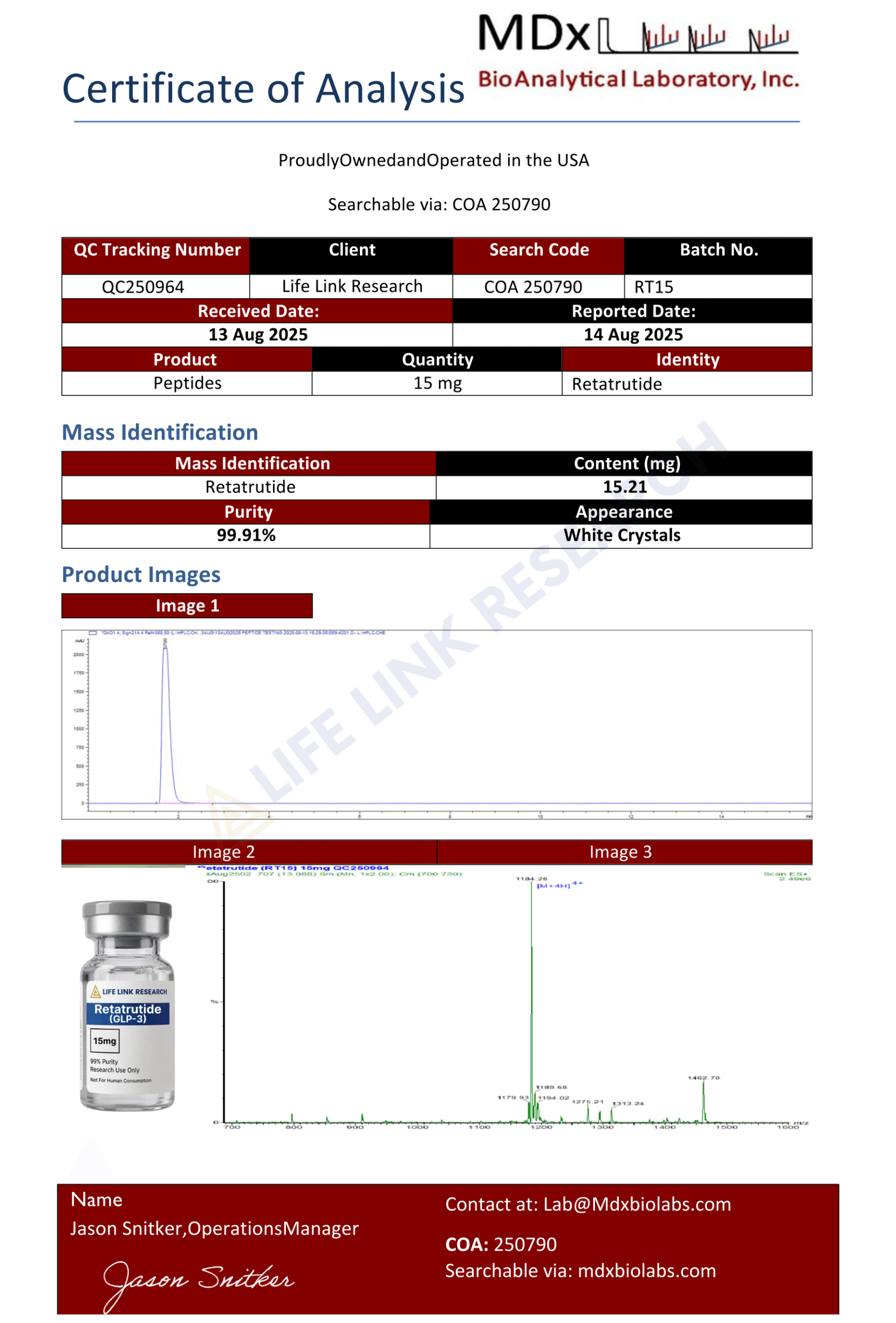
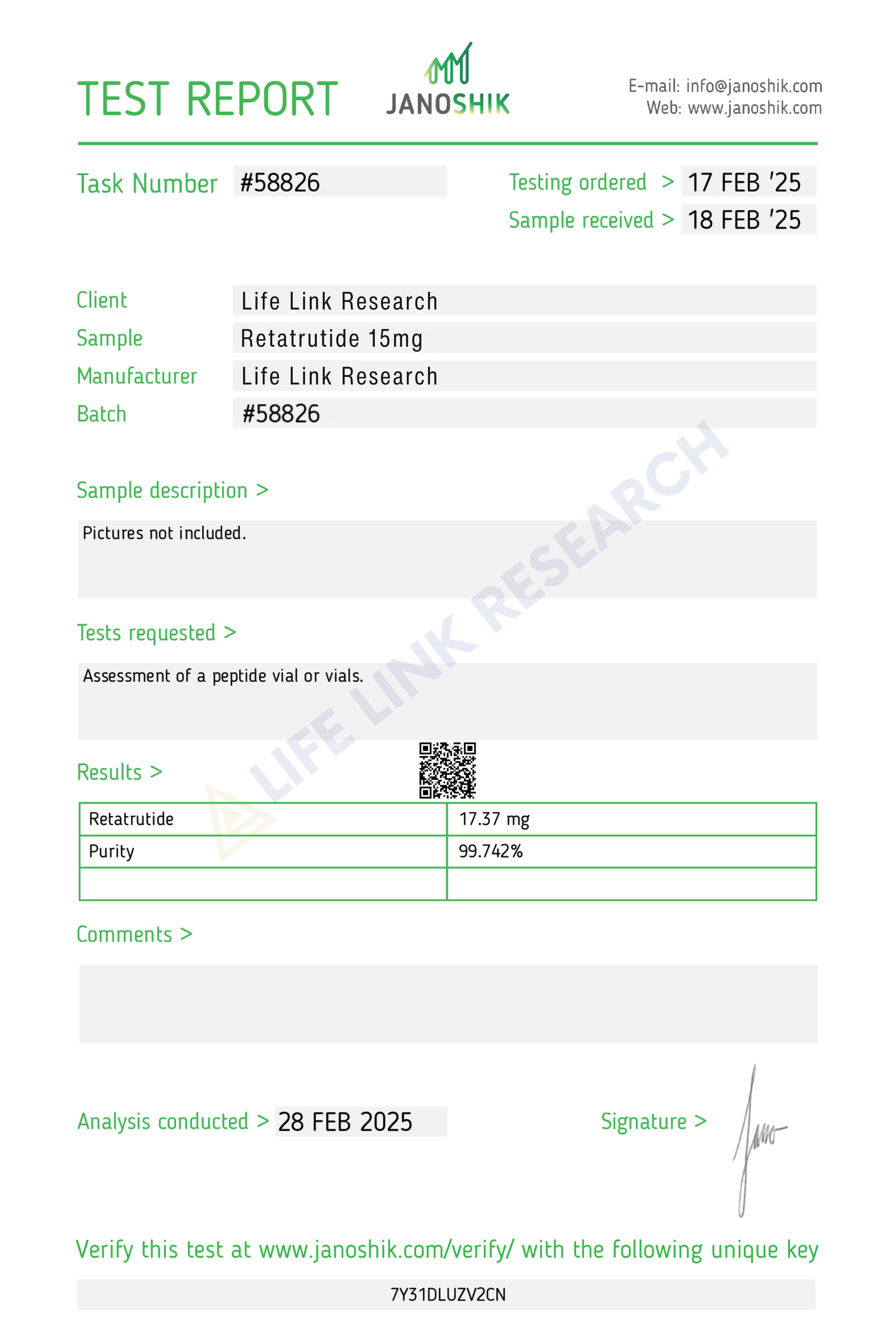
| Purity | ≥99% by reverse-phase HPLC |
| Development code | LY3437943 |
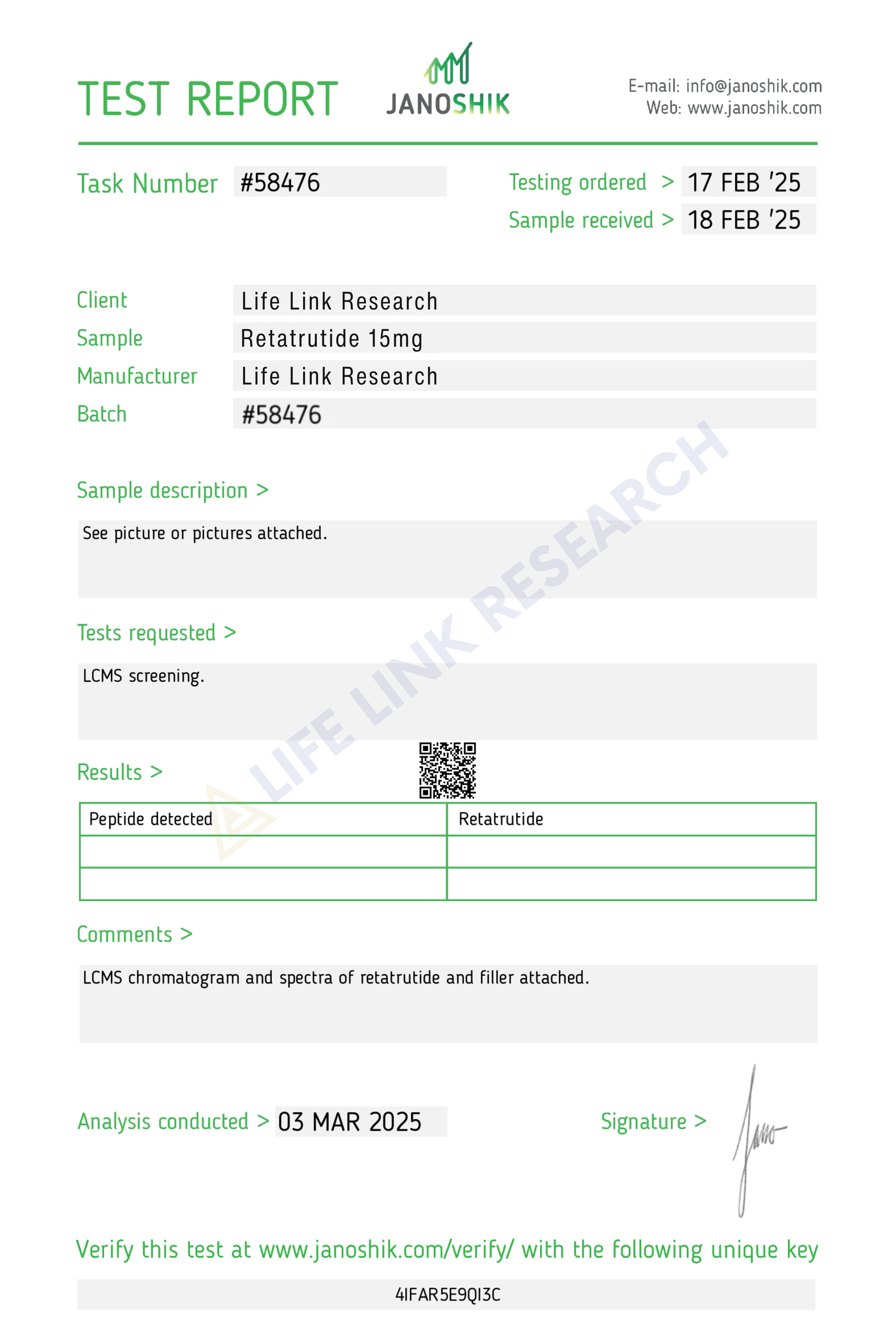
| Identity | Confirmed by ESI mass spectrometry |
| Physical form | Lyophilized powder |
| Appearance | White to off-white solid |
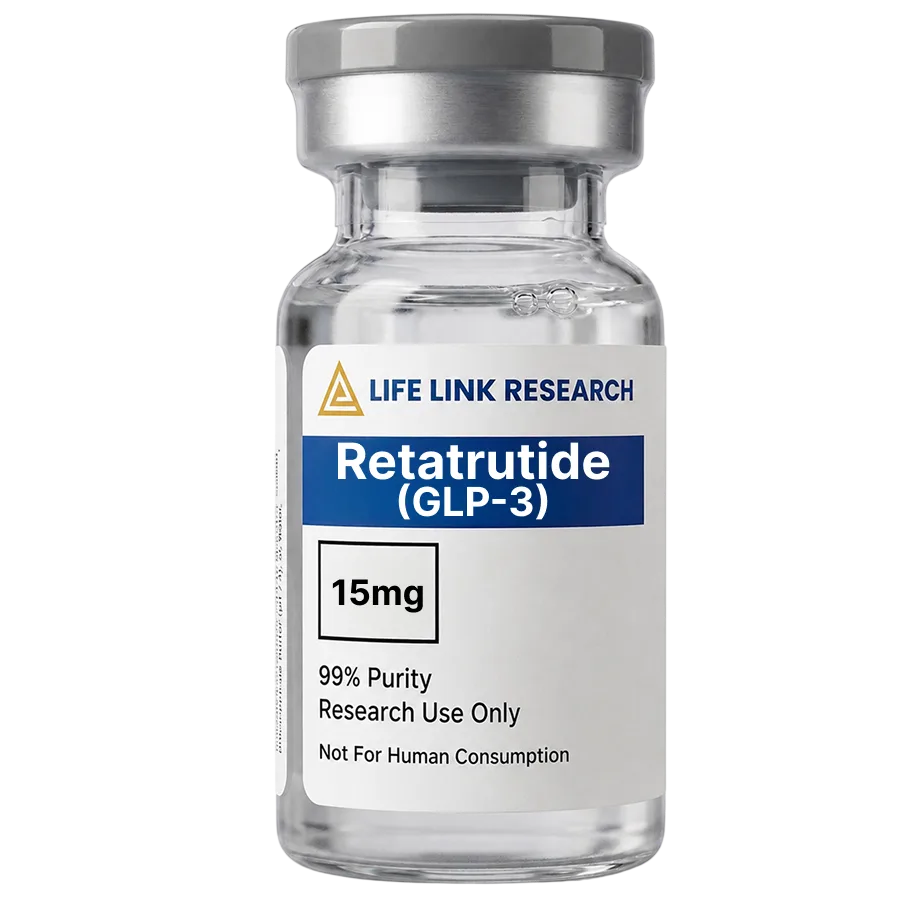
| Quantity | 15 mg per vial |
| Storage | -20°C, protected from light |
| Solubility | Soluble in bacteriostatic or sterile water (gentle mixing) |
| Classification | Research use only |
Storage & Handling
Store the unopened vial at -20°C, away from light, until needed. Once dissolved, keep the solution at 2-8°C and use within roughly two weeks. Given the peptide’s size and the mid-range quantity, let the vial reach room temperature before opening and aliquot the solution to avoid repeated freeze-thaw cycles.
Quality Assurance
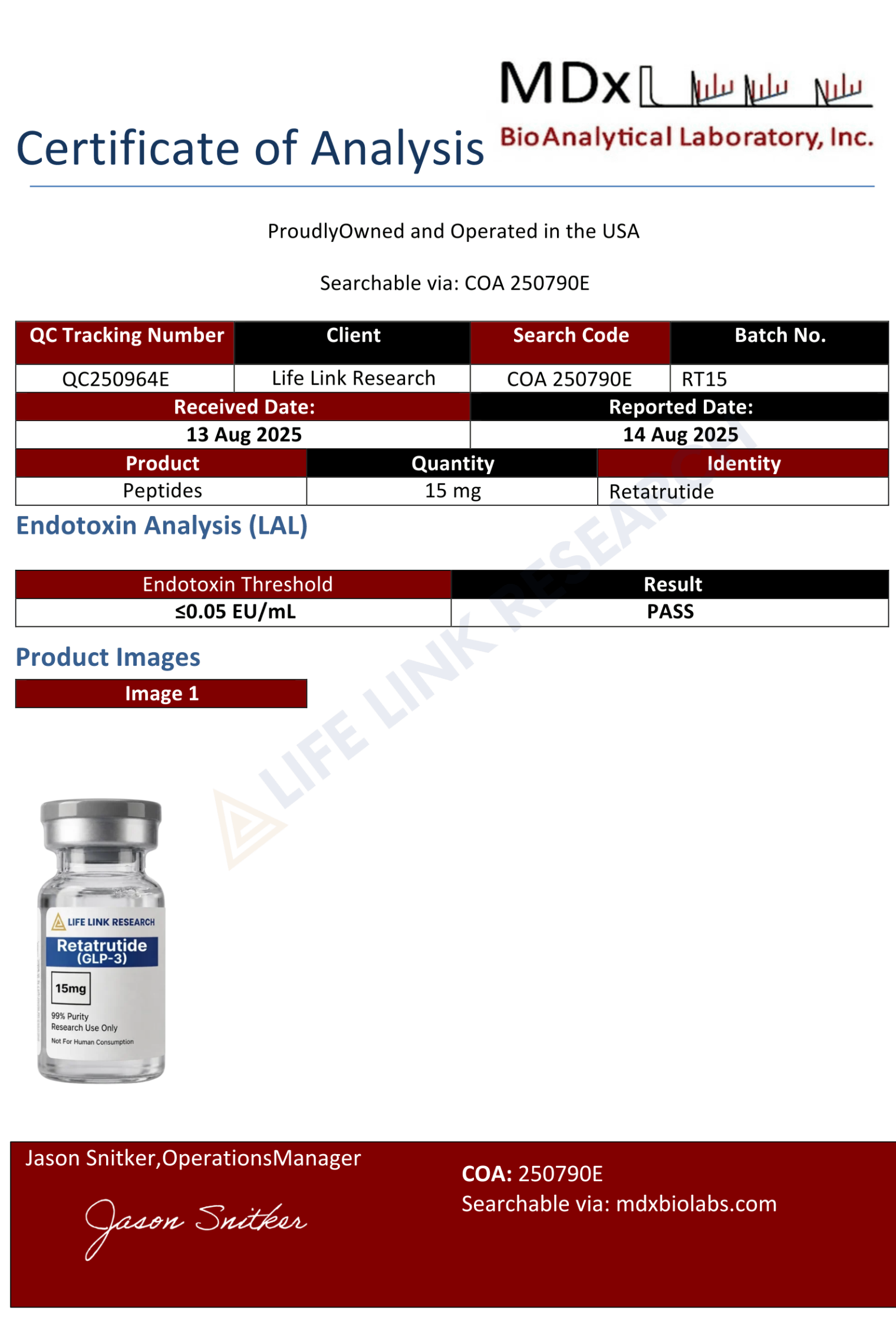
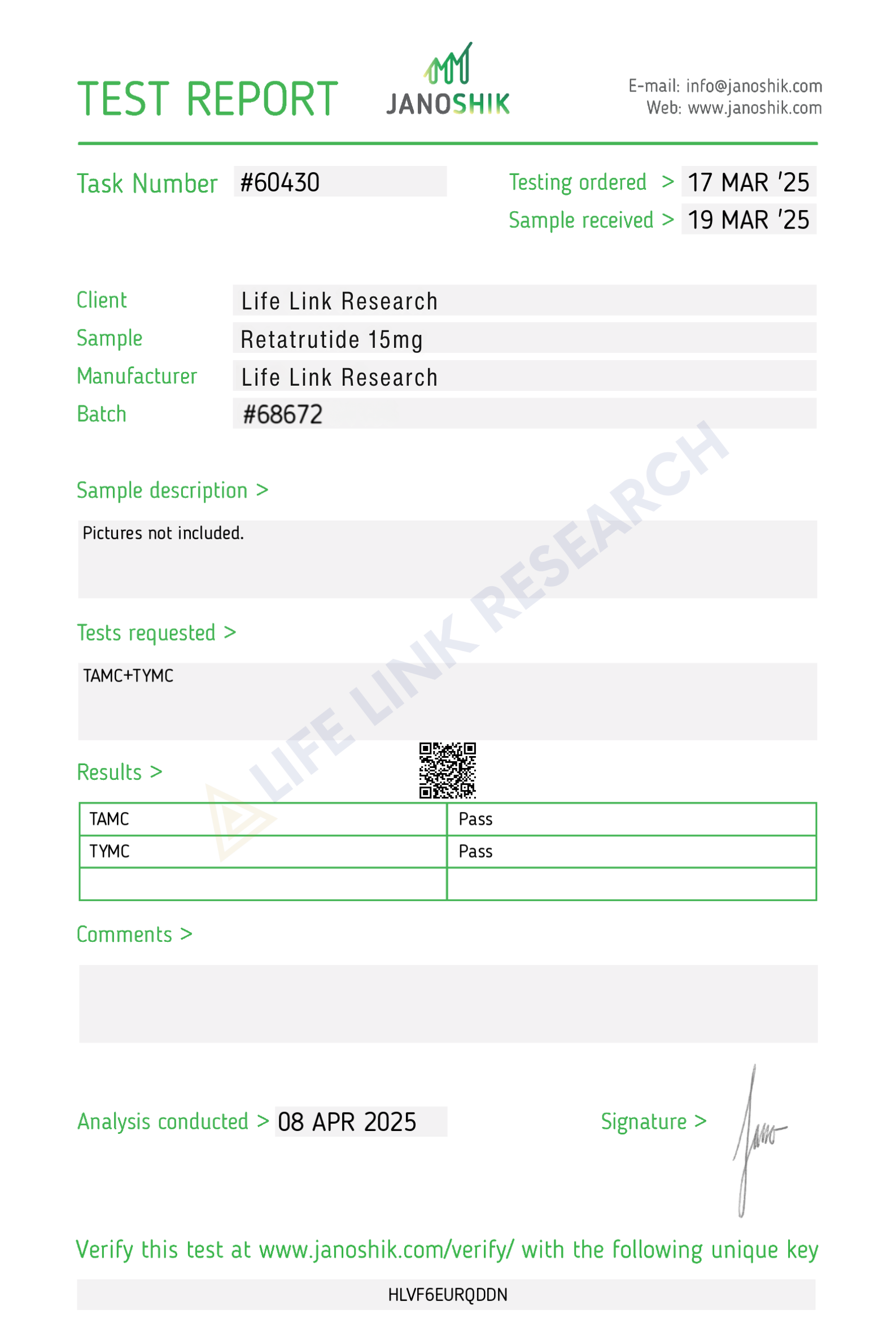
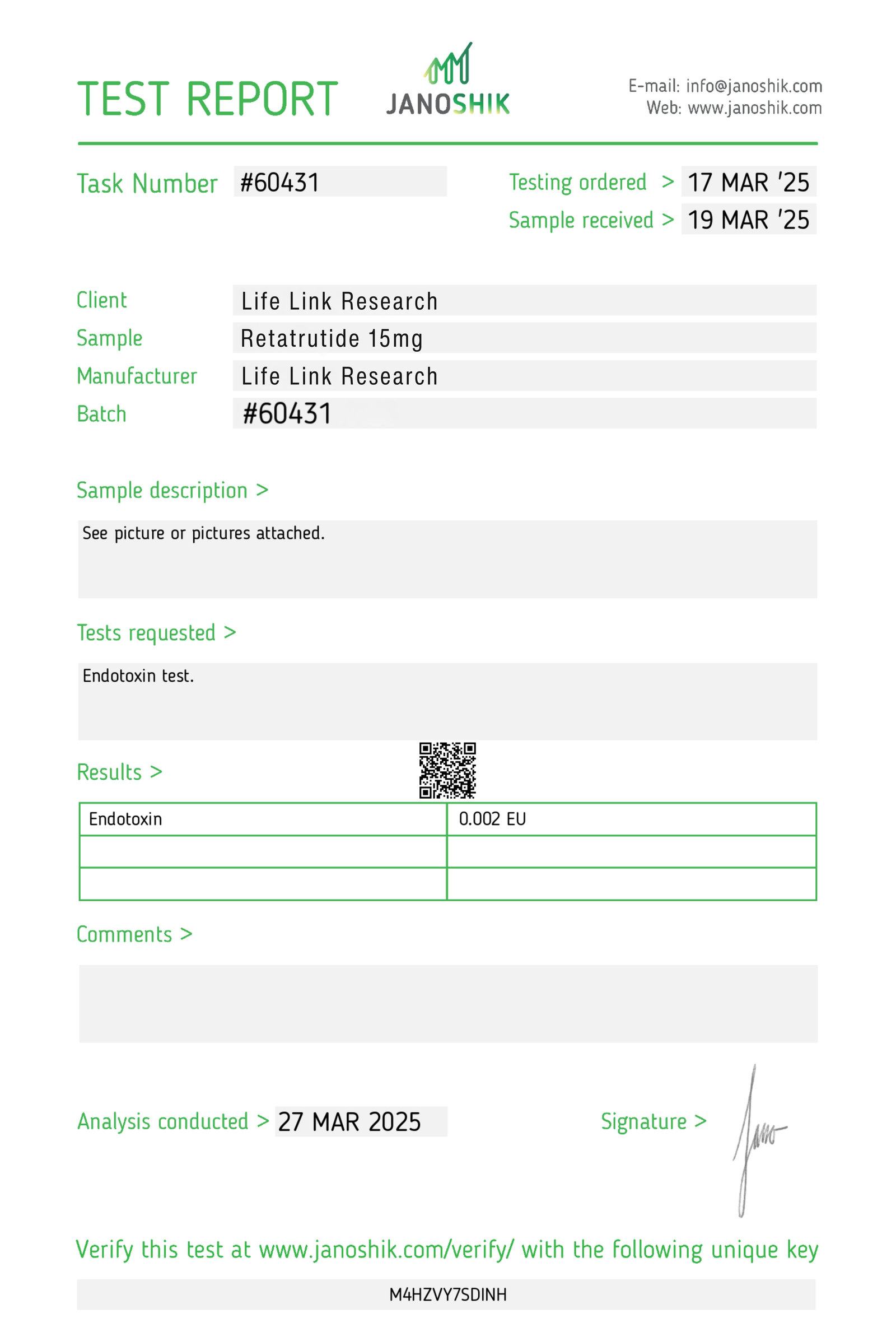
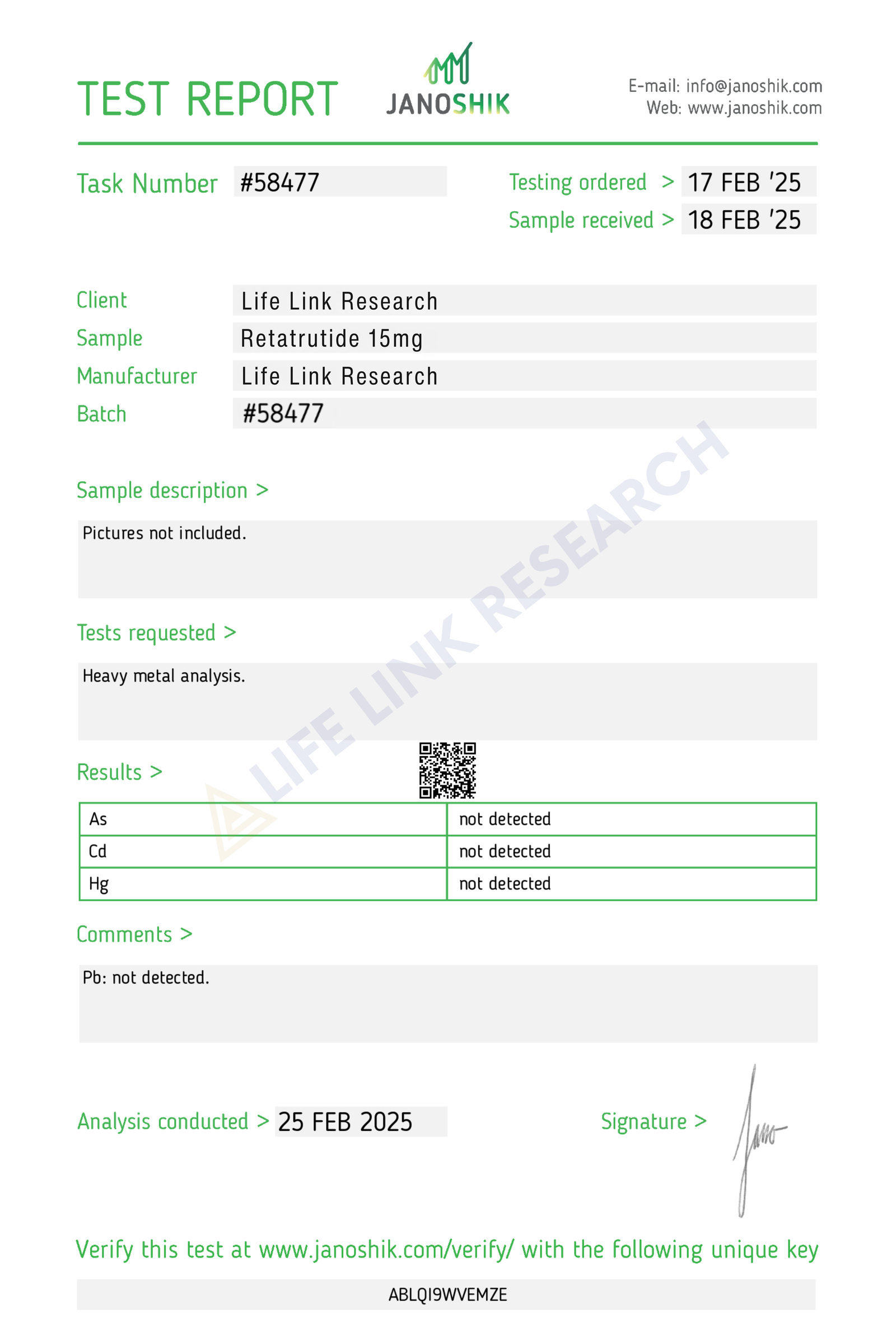
Every lot of Retatrutide clears independent quality control before release. Manufacturing follows research-grade standards, and purity by reverse-phase HPLC and identity by mass spectrometry are confirmed by outside laboratories, including Janoshik Analytical and US-based labs. A batch-matched certificate of analysis accompanies the vial so the data traces to your material.
Frequently Asked Questions
What is Retatrutide used for in research?
It is studied in research on the GLP-1, GIP, and glucagon receptors and their combined signaling. Retatrutide is a research-use-only material with no approved human use in this setting.
Is the 15 mg the same molecule as the other sizes?
Yes. Only the amount of peptide differs. The 15 mg size suits research needing a moderate working stock.
What makes Retatrutide unusual among incretin peptides?
It is a triple agonist, engaging three receptors (GLP-1, GIP, glucagon) rather than one or two. That three-way action is why it draws so much research attention.
Does Retatrutide target a “GLP-3” receptor?
No. There is no GLP-3 receptor, and the compound targets GLP-1, GIP, and glucagon receptors.
Is Retatrutide FDA approved?
No, it is investigational and not FDA approved. This listing is a research-use-only reference peptide, not for human or veterinary use.
Why are some identifiers marked “confirm”?
As a newer compound, Retatrutide’s CAS number and molecular weight are not consistently reported across registries.
How should the 15 mg vial be handled?
Keep it frozen at -20°C and out of light. After reconstitution for research, refrigerate at 2-8°C, aliquot, and use within about two weeks.
How pure is this Retatrutide?
It is supplied at ≥99% purity by reverse-phase HPLC with mass-spec identity confirmation from an independent lab, and a certificate of analysis comes with each batch.
References
- Li W, et al. Structural insights into the triple agonism at GLP-1R, GIPR and GCGR manifested by retatrutide. 2024. PMID: 39019866.
- Tong LH, et al. Development and validation of a multiplexed LC-HRMS method for nine GLP-1 receptor agonists and its pharmaceutical application. 2026. PMID: 42603384.
- Dinsmore TC, et al. Molecular Design of Unimolecular Tetra-Receptor Agonists. 2025. PMID: 40461942.