Description
Structure & Identity
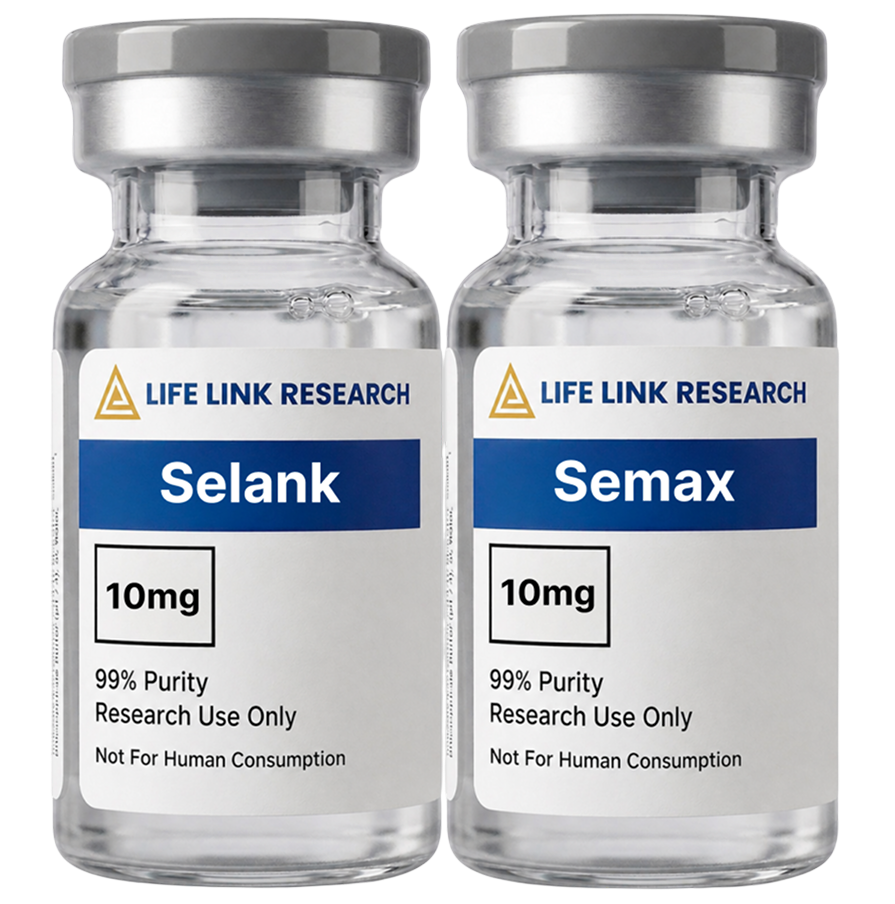
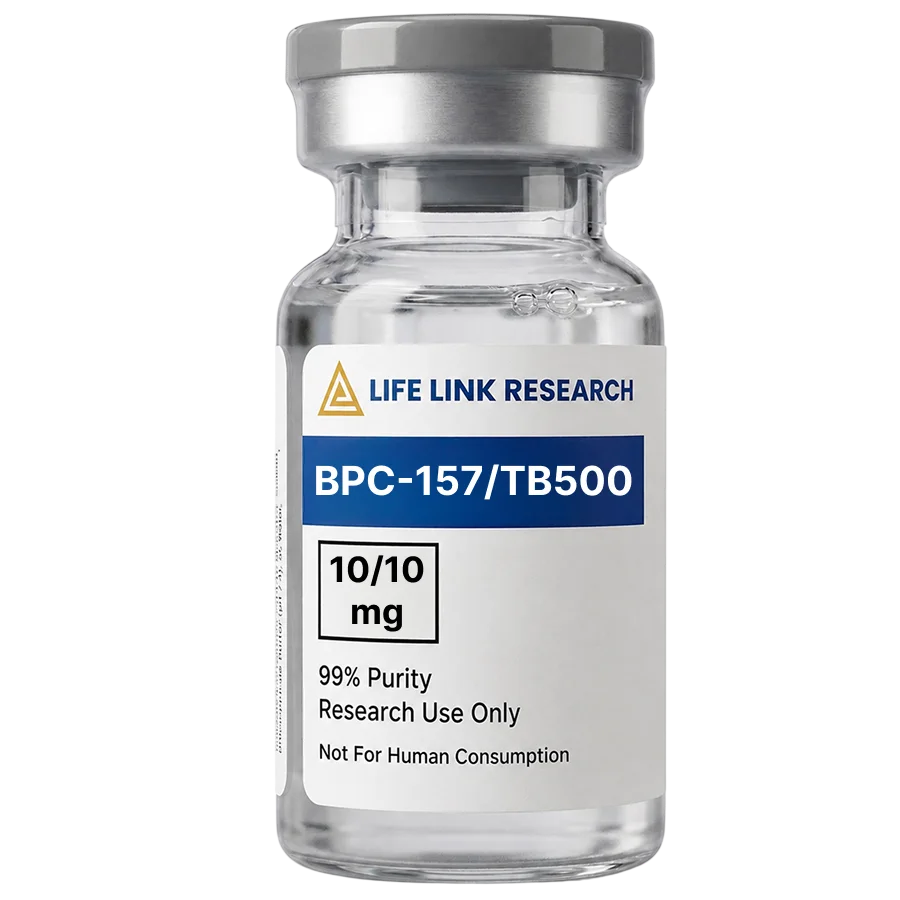
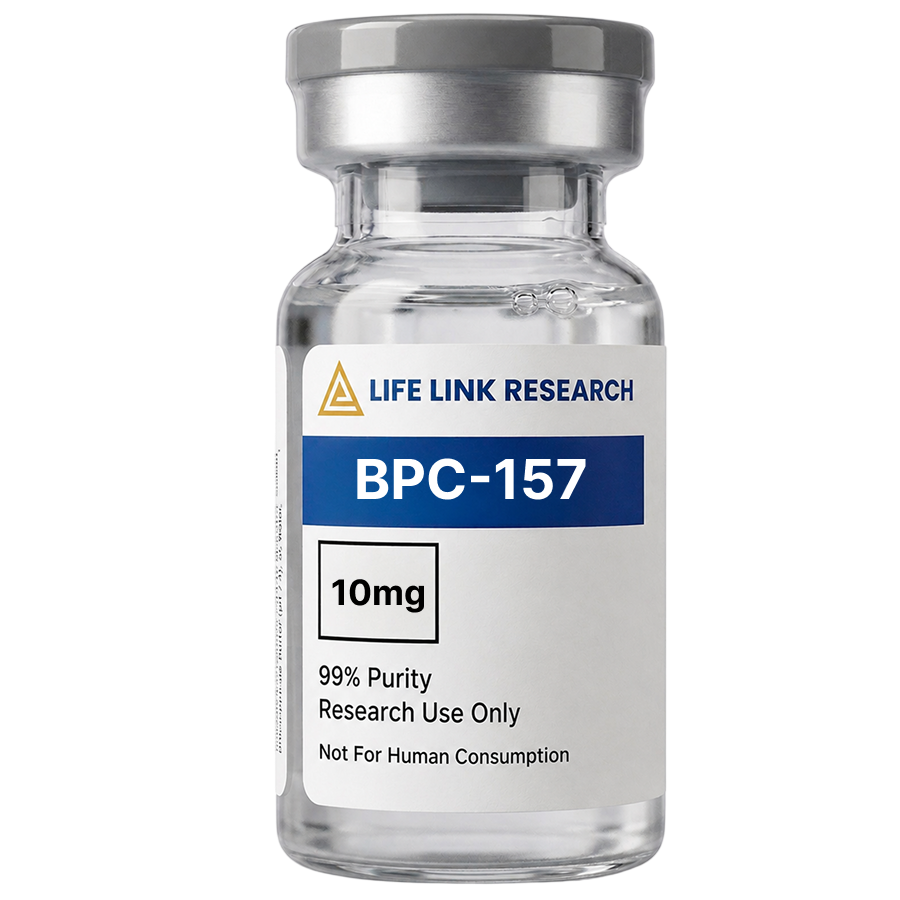
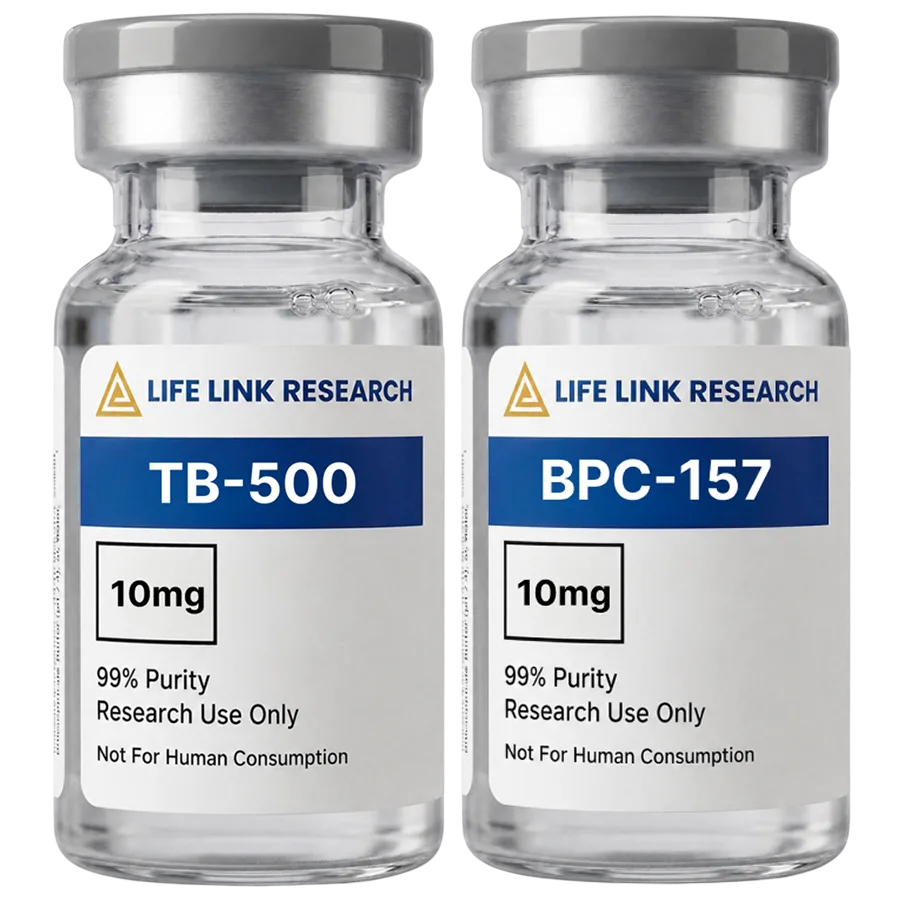
The kit contains two distinct peptides, each in its own vial. BPC-157 is a 15-amino-acid gastric-derived peptide (CAS 137525-51-0, MW 1419.5 Da). TB-500 is synthetic thymosin beta-4, the full 43-residue acetylated peptide Ac-SDKPTSFDKSKLKKTETQEKNPLPSKETIEQEKQAGES (CAS 77591-33-4, MW 4963.55 Da), whose central LKKTETQ region drives its actin-regulating activity. Both are supplied at 10 mg.
Research Background
The kit supports research on two complementary repair pathways.
- BPC-157 signaling review: BPC 157 in angiogenesis and cytoprotection models. [PMID: 30915550].
- BPC-157 angiogenesis. Examined for blood-vessel and nitric-oxide signaling [PMID: 41155565].
- TB-500 actin biology. An actin-sequestering protein tied to cell migration [PMID: 16099219].
- TB-500 actin regulation. Described as a multifunctional actin-regulating peptide [PMID: 22074294].
- Separate-vial flexibility. Supplying the peptides individually lets researchers control each one’s handling.
These are research contexts, not approved uses, and the kit is intended for laboratory study.
Specifications
| Attribute | Value |
| Product type | Kit (two separate vials) |
| Vial 1 | BPC-157, 10 mg (CAS 137525-51-0) |
| Vial 2 | TB-500 (thymosin beta-4 fragment), 10 mg (CAS 77591-33-4) |
| Purity | ≥99% by reverse-phase HPLC (each) |
| Identity | Confirmed by ESI mass spectrometry |
| Physical form | Lyophilized powder |
| Storage | -20°C, protected from light |
| Solubility | Soluble in bacteriostatic or sterile water |
| Classification | Research use only |
Storage & Handling
Keep both sealed vials frozen at -20°C and shielded from light until use. After preparing, store each solution at 2-8°C and use it in your research within about two weeks. Warm a vial to room temperature before opening, and avoid repeated freeze-thaw cycles so each peptide stays intact.
Quality Assurance
Both peptides in the kit are produced under research-grade manufacturing controls and verified by an independent lab before release. Purity is measured by reverse-phase HPLC and identity by mass spectrometry, with testing carried out by third-party laboratories, including Janoshik Analytical and domestic US labs. Each vial ships with its own batch-specific certificate of analysis.
Frequently Asked Questions
What is in the Wolverine Kit?
Two separate vials: BPC-157 10 mg and TB-500 10 mg, both studied in tissue-repair research. The kit is supplied for research use only.
How is a kit different from a blend?
A kit provides the peptides as separate vials; a blend pre-combines them in one vial. The kit lets researchers reconstitute and study each peptide independently.
Why are BPC-157 and TB-500 paired?
They are studied for complementary repair pathways, BPC-157 for gastric-derived repair signaling and TB-500 for actin-related cell migration.
Does each vial come with its own COA?
Yes. Each peptide is tested separately and ships with its own batch-specific certificate of analysis.
Is the Wolverine Kit FDA approved?
No. Neither peptide is FDA approved. The kit is a research-use-only preparation, not for human or veterinary use.
How should the kit be stored?
Keep both powders frozen at -20°C and protected from light. Once reconstituted for research, store each solution at 2-8°C and use within about two weeks.
How are the peptides verified?
Each is tested to ≥99% purity by reverse-phase HPLC with mass-spec identity confirmation by an independent lab.
References
- BPC 157: targeting angiogenesis and nitric oxide signaling. 2025. PMID: 41155565.
- Thymosin beta-4: actin-sequestering protein in cell-migration and cytoskeletal signaling. 2005. PMID: 16099219.
- Gastric pentadecapeptide BPC 157 in angiogenic and cytoprotective signaling research. 2019. PMID: 30915550.