
For Research Use Only. Not for use in diagnostic or therapeutic procedures.
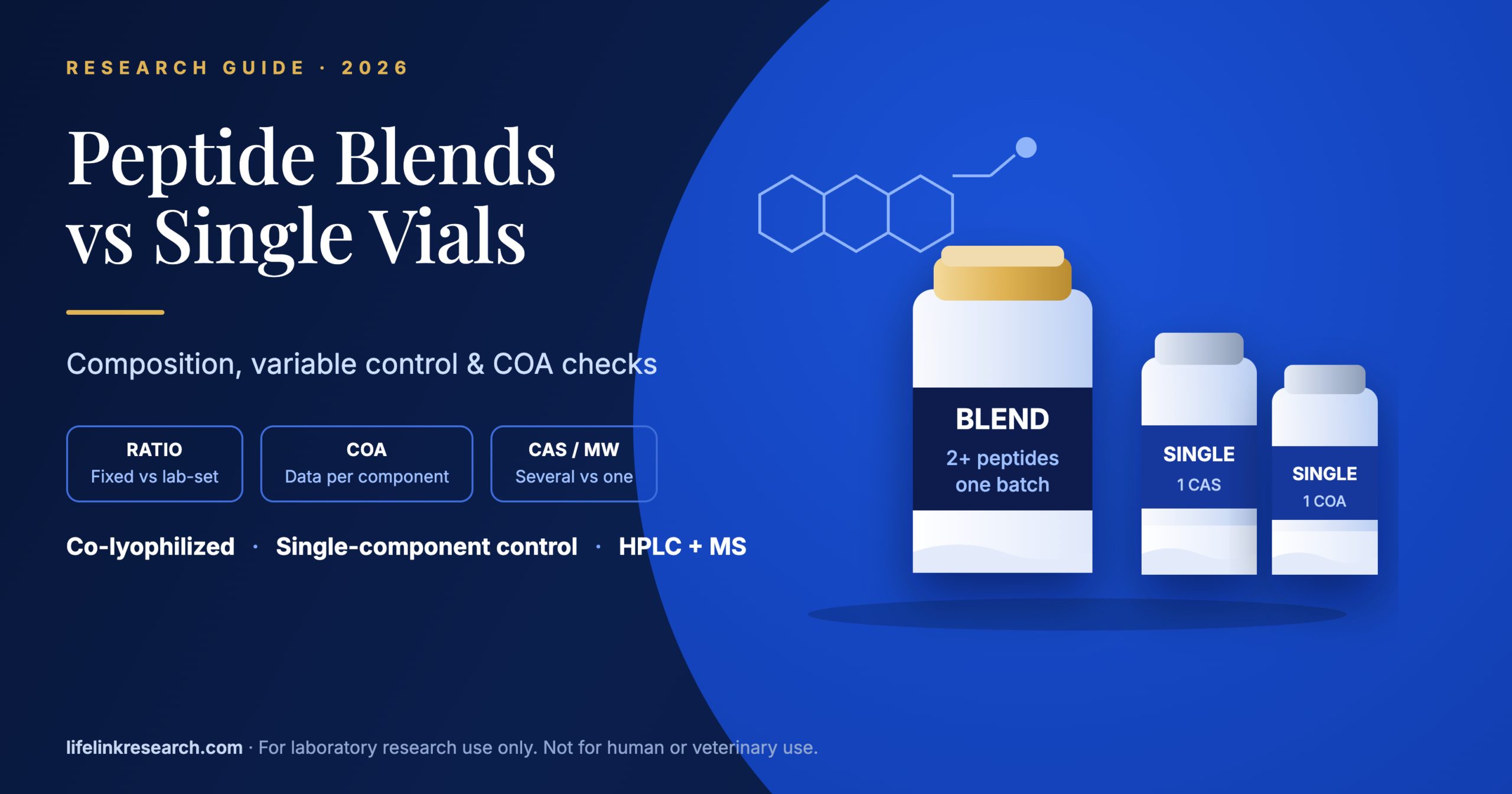
Choosing between peptide blends vs single peptides comes down to one design question: does your study need to isolate each compound, or is it studying a fixed combination as a unit? If you need to know which peptide produced a measured result, single vials give you that. If the combination itself is the object of study, a blend can fit.
This guide compares the two formats on composition, variable control, documentation and COA checks. It also walks through a blend certificate component by component, so you can judge any blend before it reaches the bench.
Key takeaways
- A blend is a fixed-ratio mixture of separate peptides in one vial.
- Single vials let you assign a result to one compound and set any ratio.
- A blend COA must show identity and amount for every component.
- Product names don’t tell you the composition. The label and COA do.
What Is a Peptide Blend?
A peptide blend is two or more synthetic peptides lyophilized together in one vial at a fixed, labelled ratio, for example a BPC-157 / TB-500 mixture. Each component keeps its own sequence, molecular weight and CAS number, so a blend is a mixture of distinct reagents, and its COA must report every component.
The ratio is locked in when the vial is filled. A 10 mg / 10 mg mixture stays 1:1 for every sample drawn from that vial, and no step at the bench can change it.
Every component also shares one batch number. That’s convenient for record keeping, since one lot code covers the whole vial. It also means a single documentation trail has to carry the identity and content data for two, three or four different molecules at once.
What Is a Single-Peptide Vial?
A single-peptide vial holds one synthetic sequence as a lyophilized powder, with one CAS number, one molecular weight and one HPLC purity result on its batch COA. Because only one compound is present, the amount, identity and purity of the material in an experiment can be traced to one specification.
That one-to-one link is the whole appeal. When a lab notebook records “BPC-157, batch X,” anyone reviewing the work later can pull up a single certificate and see exactly what went into the assay. If you’re new to how these reagents are described and documented, our introduction to research peptides covers the basics.
Peptide Blends vs Single Vials: Side-by-Side Comparison
Most of the differences trace back to one fact: a blend puts several reagents under one label, one batch and one certificate. Single vials give each reagent its own.
Here’s how that plays out across the points labs usually weigh:
| Feature | Blend | Single vials |
| Components per vial | Two or more | One |
| Ratio | Fixed at manufacture | Set by the lab |
| Assigning a result to one compound | Needs extra controls | Direct |
| CAS number and MW | Several per vial | One per vial |
| COA content | Data for each component | Data for one compound |
| Analytical complexity | Higher | Lower |
| Batch traceability | One batch for all components | One batch per compound |
| Cost | Compare per mg of each component | Compare per mg of each component |
| Flexibility | Limited to the labelled ratio | Any ratio or concentration |
A BPC-157 10 mg single vial is a typical example of the right-hand column: one sequence, one CAS number (137525-51-0), one certificate.
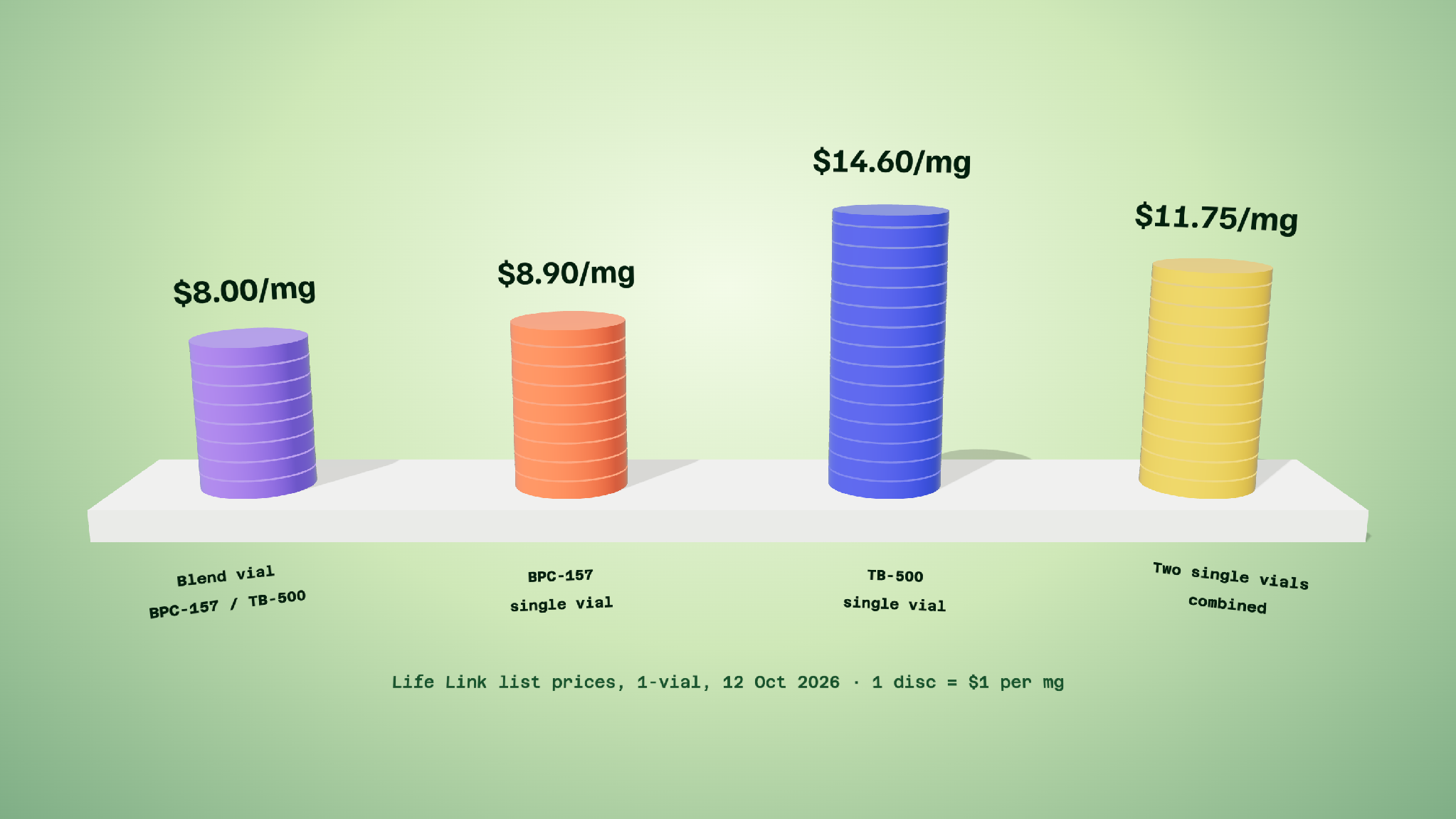
The cost row deserves a closer look. Comparing sticker prices tells you little, because a blend vial holds more total peptide. Divide the price by the mg of each component, then add any single vials you’ll need as controls.
Why Is Attribution Harder With a Blend?
In a blend, every component is present in every sample, so a result measured in an assay can’t be assigned to one peptide without separate single-component controls. The ratio is also fixed at manufacture, which means the concentration of one component can’t change without changing the others.
Statisticians call this confounding. Two variables move together, so the data can’t tell them apart.
Picture a concentration series run with a 1:1 mixture. Doubling the amount of material doubles both peptides at once. Any change in the readout lines up with both, and the experiment has no way to say which one drove it.
The fix is a control design that breaks the link:
- Component A alone, at the same concentration it has in the mixture
- Component B alone, matched the same way
- The mixture, run alongside both
- A vehicle control, so the baseline is clear
That’s four arms where a single-compound study might need two. Plan the extra plate space, reagent quantity and analysis time up front.
When Does a Single Vial Make More Sense?
Single vials suit studies that need to isolate one variable: concentration-response series in an assay, receptor-binding work, reference standards, or controls for a blend experiment. They also let a lab set any ratio between compounds, while a blend arrives at the ratio the manufacturer chose.
Isolating one variable
A concentration-response curve only means something when one thing changes. With a single vial, the x-axis is one compound, and every point on the curve traces back to one certificate.
Building controls for a blend study
Even a lab committed to a blend usually needs single vials too. The single-component arms described above can’t be run from the mixture, so budget for them from the start.
Reference standards and receptor-binding assays
Binding constants, calibration curves and retention-time references all assume a single known analyte. A second peptide in the same solution can compete for the same site or overlap on the same chromatogram.
Needing a ratio other than the labelled one
Need a 2:1 ratio, or a whole series of ratios? Separate vials let you set each amount independently. A blend gives you one ratio per product.
When Can a Peptide Blend Make Sense?
A blend can make sense when the research question is about a defined combination at a fixed ratio, such as replicating a published design that used that exact mixture. It also means one batch number and one COA for the combined material, with fewer weighing steps. It does not tell you what each component contributes.
Replication is the strongest case. If a protocol you’re following specified a 1:1 BPC-157 / TB-500 mixture, using a pre-combined vial at that ratio removes one source of variation between your work and the original.
Fewer weighing steps help too. Every separate weighing adds its own error, and with small masses on an analytical balance those errors add up. A BPC-157 / TB-500 mixture at 10 mg of each peptide is a common example of a fixed 1:1 design.
The trade-off from the attribution section still applies: the blend describes the pair, and only single-component controls can describe each half.
Blend vs Separate Vials: Is the Material the Same?
Not exactly. A pre-blended vial is co-lyophilized under one batch, so its COA must confirm each component and the ratio in that one lot. Separate vials each carry their own batch COA, giving independent identity and purity data per compound. The chemistry can match; the documentation and traceability differ.
The peptides themselves can be the same sequences made the same way. What changes is the paper trail around them.
| Documentation point | Pre-blended vial | Separate vials |
| Batch numbers | One for all components | One per compound |
| Certificates | One, covering every component | One per compound |
| Who confirms the ratio | The manufacturer, on the COA | The lab, in its own records |
| Re-testing one component | Requires testing the whole mixture | Test that vial alone |
For audit purposes, separate vials give each compound its own independent record. A blend puts all of that weight on one document, so anyone choosing the pre-blended route needs to read that certificate closely.
How Do You Check a Peptide Blend’s COA?
Check that the COA lists every component by name, confirms each one’s identity by mass spectrometry, reports a separate HPLC result per component, and states the labelled amount or ratio for each. A blend COA with one purity number and no per-component data can’t show what is in the vial.
The underlying standard comes from analytical method validation. The ICH Q2 guideline defines specificity as the ability to “assess unequivocally the analyte in the presence of components which may be expected to be present” (ICH Q2(R1), EMA). In a blend, the other peptides are exactly those expected components, so the method has to tell each one apart. Our guide on how to read a peptide COA covers the general layout; the checks below are specific to blends.
Identity by mass spectrometry for each component
Mass spectrometry confirms identity by matching an observed mass to the expected one. For a blend, every expected mass should appear on the report, one per component. A spectrum showing only one peptide’s mass leaves the others unconfirmed. Here’s how the two techniques divide the work: HPLC vs mass spectrometry.
HPLC purity for each component
A well-resolved chromatogram shows a separate main peak for each peptide, and the report gives a separate purity result for each. Look for purity by HPLC, see the batch result, listed against every component name. For context on the figures themselves, see what 98% vs 99% purity means.
Ratio and content
Compare the labelled mg of each component with the measured mg. A useful report lists a measured amount for every peptide on its own line, so you can confirm the ratio in that lot matches the label.
Does a blend have one CAS number or molecular weight?
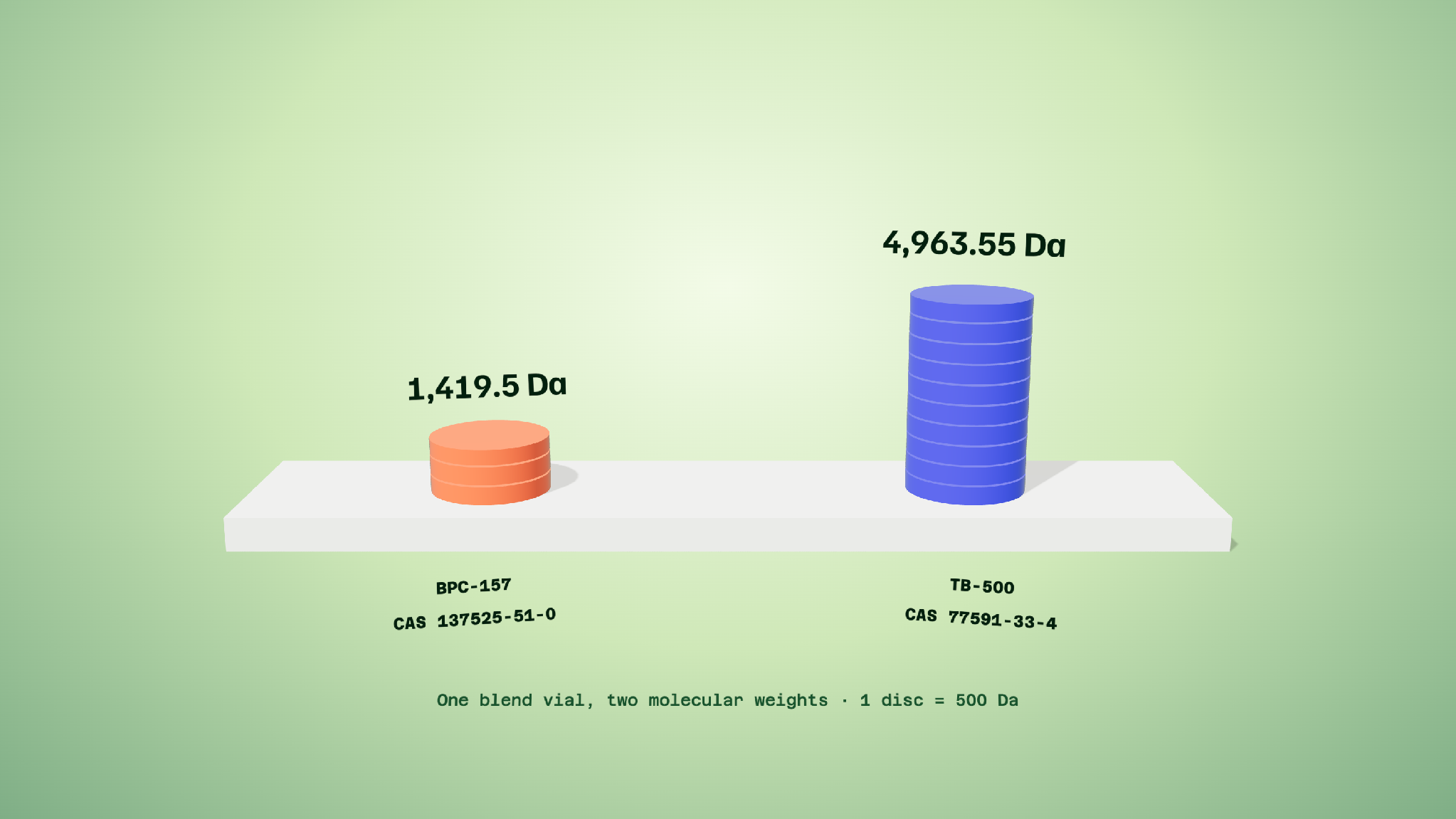
No. Each component keeps its own. On a BPC-157 / TB-500 mixture, expect BPC-157 (CAS 137525-51-0) and TB-500 (CAS 77591-33-4) listed as separate lines, each with its own molecular weight.
Red flags
- One blended purity figure for the whole vial
- No mass spectrometry data
- No batch number
- No labelled amount or ratio for each component
Blend vs “Stack”: What Do the Terms Mean?
A blend is several peptides in one vial. “Stack” is a marketing term usually used for separate vials sold together, and it carries no technical definition. For research documentation, describe either one by its components and amounts, for example “GHK-Cu / BPC-157 / TB-500 mixture,” in place of the product nickname.
Lab records should read the same way a methods section would: compound names, amounts and batch numbers.
Why Do Blends Have Names Like GLOW or KLOW?
Names such as GLOW, KLOW or Wolverine are brand names. They don’t tell you the components, the ratio or the amount of each peptide. Check the label and COA for the composition, for example GHK-Cu / BPC-157 / TB-500 / KPV, before comparing any two blend products.
Two suppliers can sell products under the same name with different contents or ratios. Our GHK-Cu / BPC-157 / TB-500 / KPV composition guide and GHK-Cu / BPC-157 / TB-500 blend overview list what each product actually contains.
Do Blends Need Different Storage From Single Vials?
Lyophilized blends and single vials follow the same general storage approach: cold, dry and away from light, as stated on the product label. With a blend, check the stability data for every component, because the vial is only as stable as its least stable peptide.
Read the sealed-vial condition printed for the blend, then confirm it against the data for each component. The peptide storage guide covers general handling, and lyophilized vs pre-mixed peptides explains why the dry form is the shipping standard.
How to Choose: 5 Questions to Ask
Run through these before ordering:
- Do you need to assign a result to one compound? Choose single vials.
- Do you need a ratio other than the labelled one? Choose single vials.
- Are you replicating a design that used this exact fixed-ratio mixture? A blend may fit.
- Does the blend COA give identity, purity and amount for each component? If not, choose single vials.
- Will you need single-component controls anyway? Budget for single vials alongside the blend.
Peptide Blends vs Single Vials FAQs
Are peptide blends better than single peptides?
Neither format is better in general. The right one depends on the research question, and mainly on whether you need to attribute a result to one compound.
Can a blend’s components be measured separately?
Yes, analytically. HPLC separates the components into individual peaks, and mass spectrometry confirms each mass. A per-component COA reports those results line by line.
Is a blend cheaper than single vials?
Sometimes. Compare the cost per mg of each component, then add the single vials you’ll need for controls. The total study cost is the fairer comparison.
Does each component in a blend need its own COA data?
Yes. The batch COA should give identity and purity for each component, plus its measured amount against the label.
Are peptide blends legal to buy in the US?
As of October 2026, research peptides are sold as laboratory chemicals and are not FDA-approved drugs. Status varies by compound: BPC-157, for instance, went before an FDA advisory committee in July 2026. See BPC-157 legal status (2026).
For Research Use Only. Not for use in diagnostic or therapeutic procedures. See our Terms and Conditions.
References
- ICH Q2(R1), Validation of Analytical Procedures: Text and Methodology. European Medicines Agency. https://www.ema.europa.eu/en/documents/scientific-guideline/ich-guideline-q2r1-validation-analytical-procedures-text-methodology-step-5-first-version_en.pdf
- US Food and Drug Administration. July 23-24, 2026: Meeting of the Pharmacy Compounding Advisory Committee. https://www.fda.gov/advisory-committees/advisory-committee-calendar/july-23-24-2026-meeting-pharmacy-compounding-advisory-committee-07232026
What Is SLU-PP-332? Structure, Research Use & US Supply
Quick Answer SLU-PP-332 is a synthetic small-molecule agonist of the estrogen-related receptors ERRŒ±, ERRŒ≤ and ERRŒ≥ (CAS 303760-60-3, PubChem CID 5338394). It…
Read article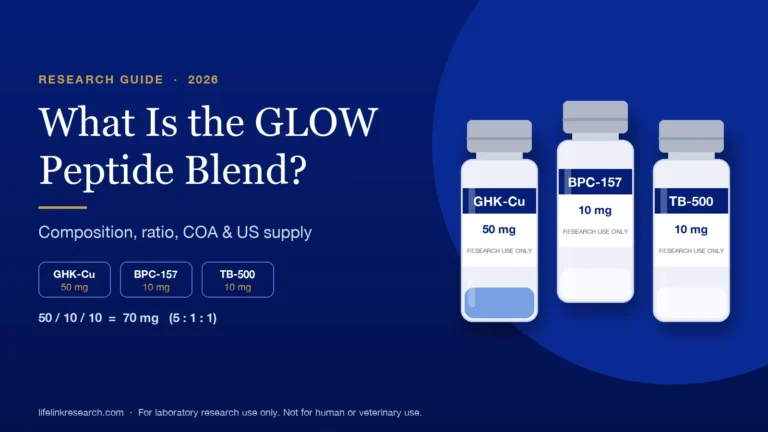
GLOW Peptide Blend: Composition, Ratio & COA (2026)
Quick Answer GLOW is a 70mg research peptide combination of GHK-Cu 50mg, BPC-157 10mg and TB-500 10mg, a 5:1:1 ratio in which…
Read article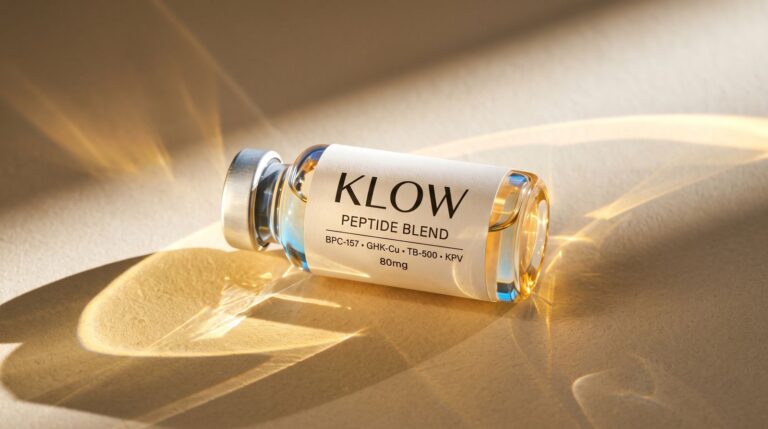
What Is the KLOW Peptide Blend? Composition, Ratio, COA & US Supply
Quick Answer KLOW is an 80mg research peptide combination of GHK-Cu 50mg, BPC-157 10mg, TB-500 10mg and KPV 10mg, a 50/10/10/10 ratio.…
Read articleResearch-grade peptides
99%+ purity. Verified every batch.
Identity and purity tested on every batch by third-party labs, Janoshik Analytical and US-based laboratories. Shipped same day from California.
Shop all peptides