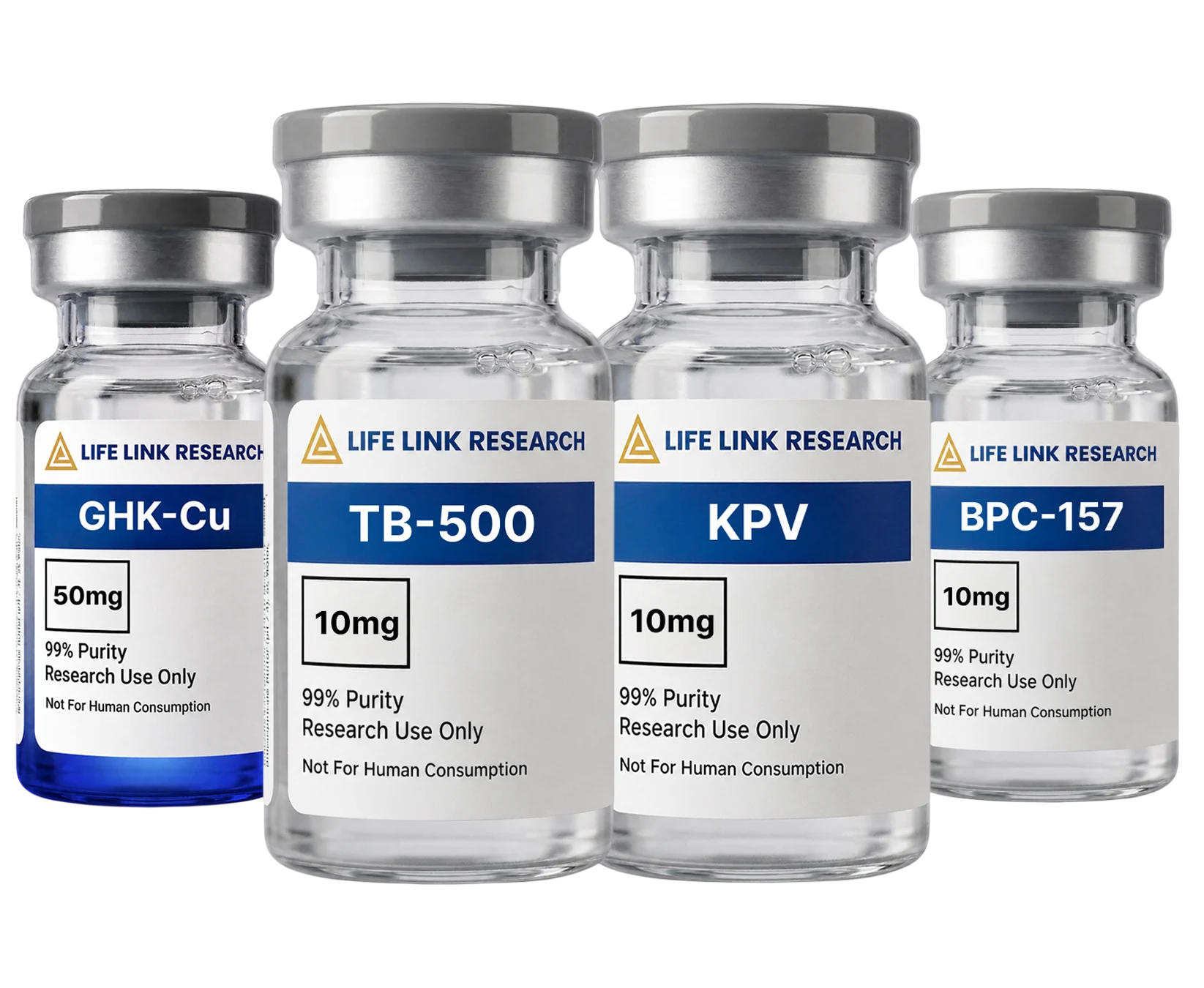
Description
Structure & Identity
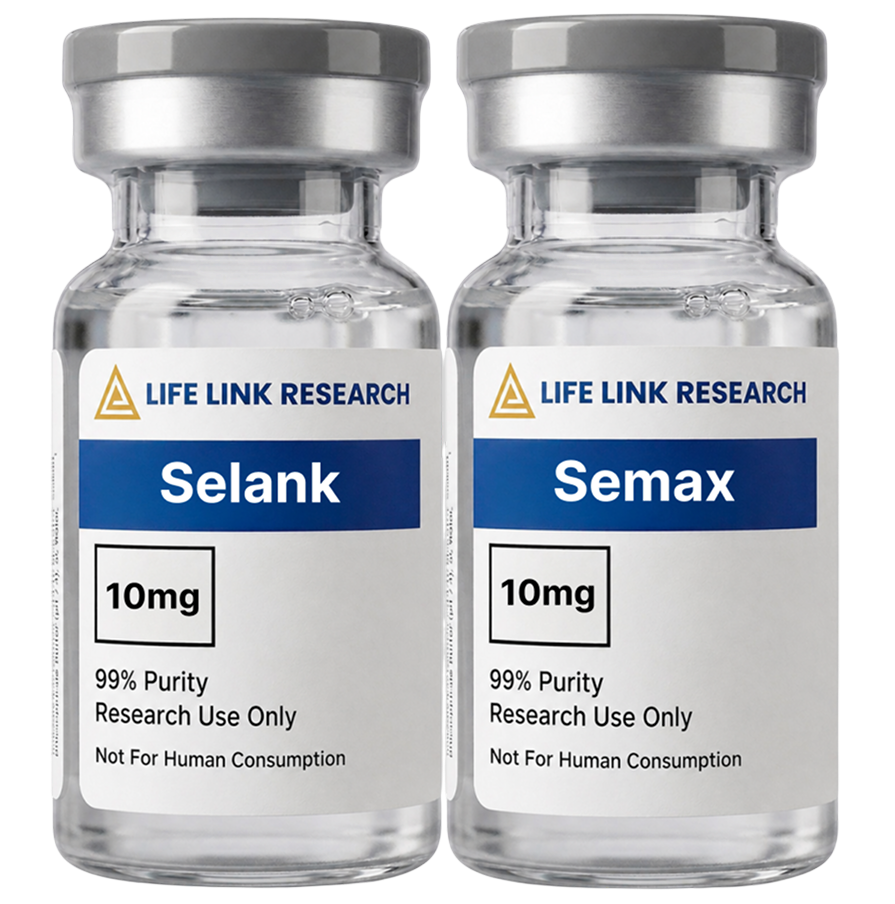
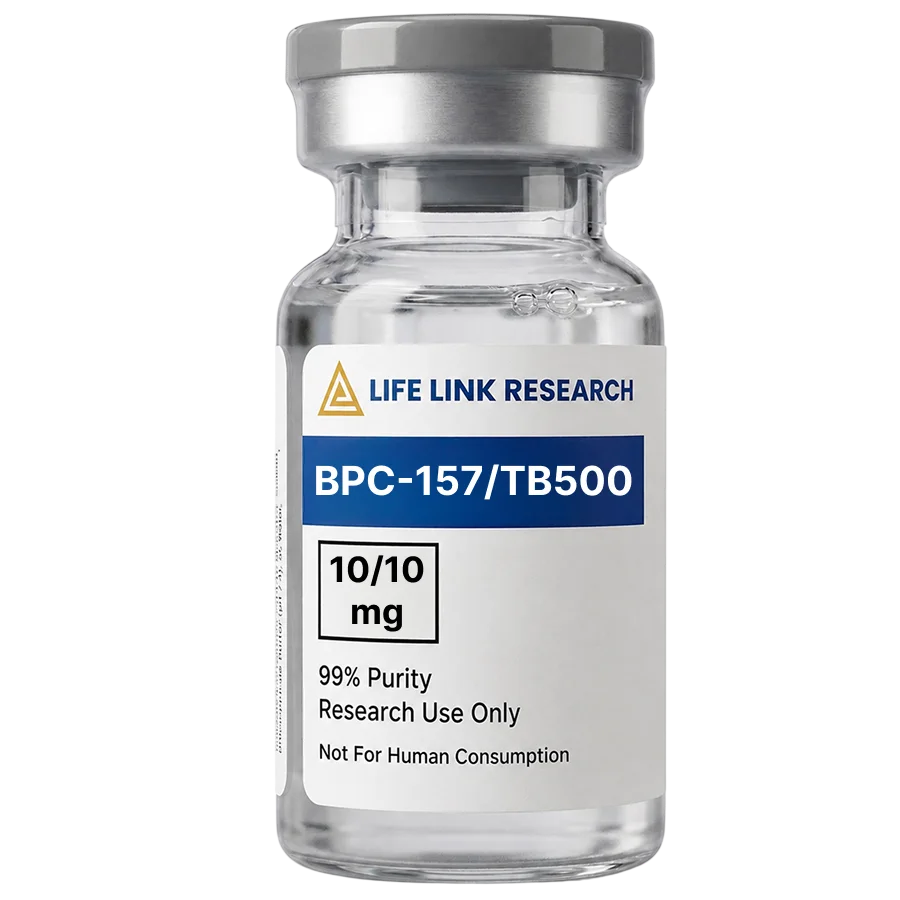
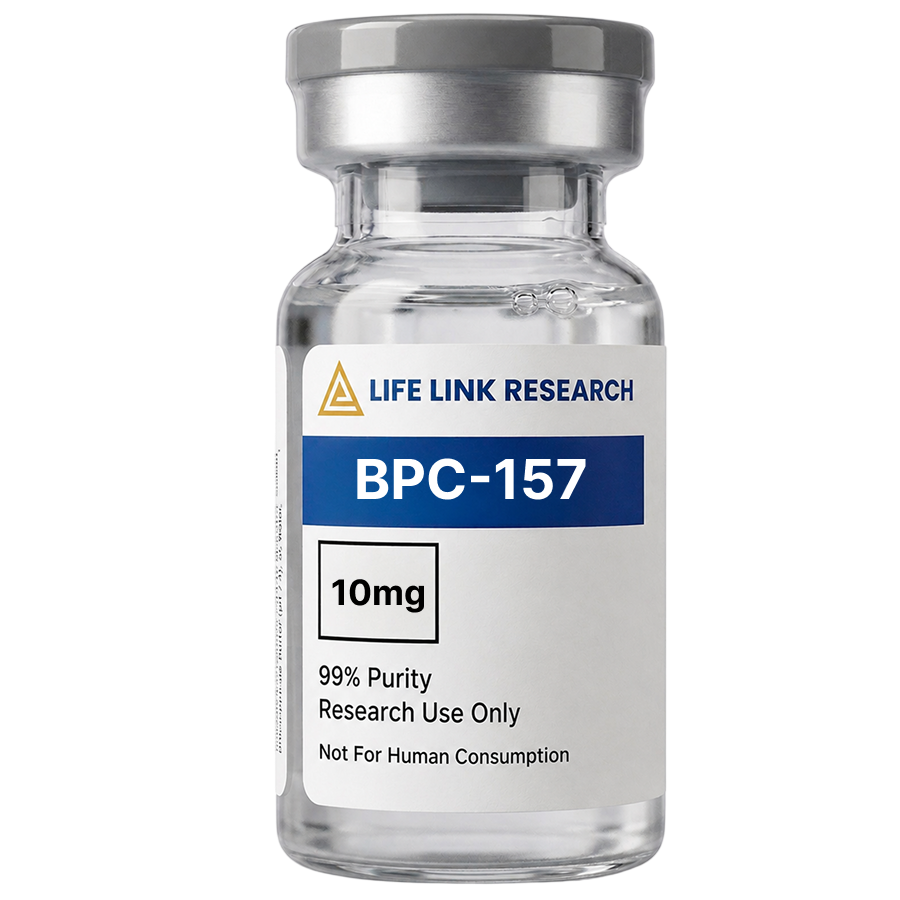
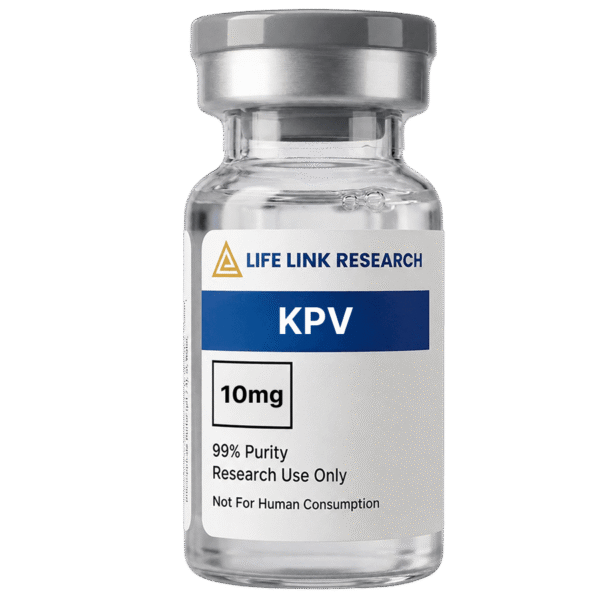
The kit brings together four structurally unrelated peptides, each studied through a different mechanism. BPC-157 is a 15-residue synthetic peptide investigated for angiogenesis and nitric-oxide-pathway signaling. TB-500 is the full-length, 43-residue acetylated form of thymosin beta-4, studied for the actin-binding activity of its LKKTETQ region. GHK-Cu is a copper-bound tripeptide (glycyl-histidyl-lysine) studied for its redox chemistry as a copper carrier. KPV is a tripeptide fragment of alpha-MSH, studied for NF-kB-pathway signaling. Grouping them lets researchers work across four distinct signaling angles, cytoskeletal, angiogenic, redox, and pathway-level, in one set, while each peptide keeps its own structure and its own vial.
Research Background
The four peptides represent several distinct research threads.
- BPC-157 signaling. Studied for angiogenesis and nitric-oxide-pathway signaling [PMID: 30915550].
- TB-500 actin biology. An actin-sequestering peptide with monomeric-actin binding activity[PMID: 16099219].
- GHK-Cu copper biology. Studied for oxidative-stress and redox signaling tied to its copper ion [PMID: 22666519].
- GHK-Cu gene-expression study. Extracellular-matrix-related gene-expression readouts in a rodent model [PMID: 25731775].
- KPV signaling. The alpha-MSH C-terminal fragment studied for NF-kB-pathway signaling[PMID: 12750433].
These are research contexts, not approved uses, and the kit is intended for laboratory study.
Specifications
| Attribute | Value |
| Product type | Kit (four separate vials) |
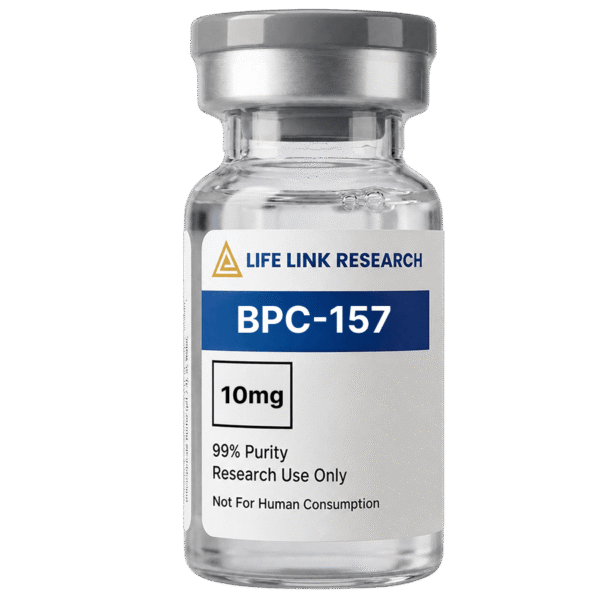
| Vial 1 | BPC-157, 10 mg (CAS 137525-51-0, MW 1419.5 Da) |
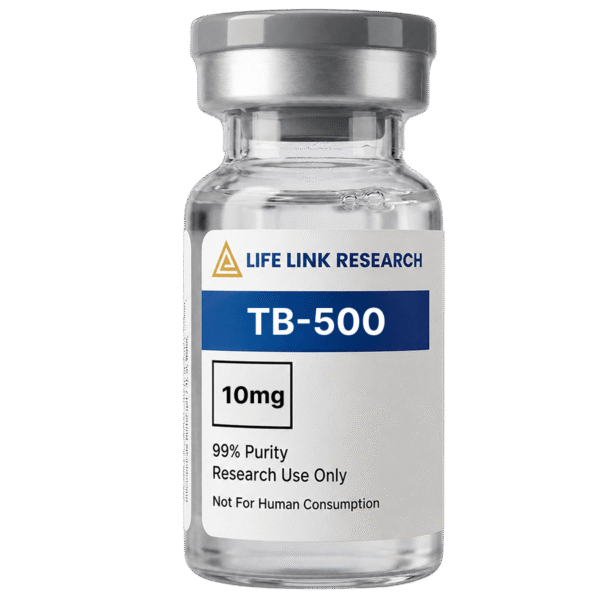
| Vial 2 | TB-500 (thymosin beta-4 fragment), 10 mg (CAS 77591-33-4, MW 4963.55 Da) |
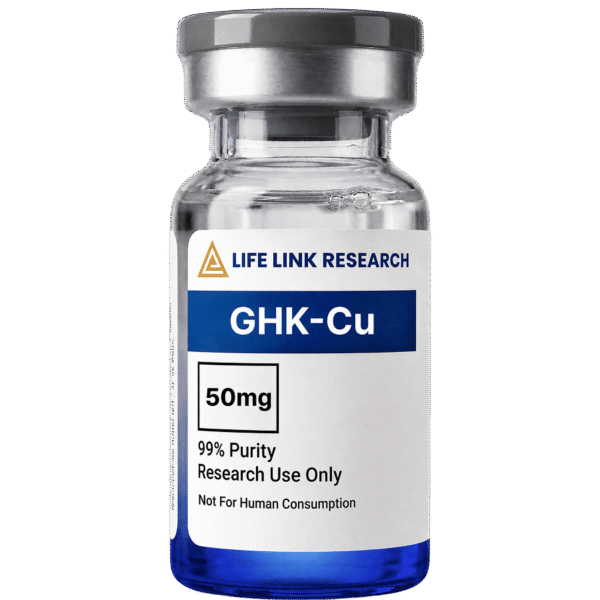
| Vial 3 | GHK-Cu (copper tripeptide), 50 mg (CAS 89030-95-5, MW ~404 Da) |
| Vial 4 | KPV (Lys-Pro-Val), 10 mg (CAS 67727-97-3, MW 342.4 Da) |
| Purity | ≥99% by reverse-phase HPLC (each) |
| Identity | Confirmed by ESI mass spectrometry |
| Physical form | Lyophilized powder |
| Storage | -20°C, protected from light |
| Solubility | Soluble in bacteriostatic or sterile water |
| Classification | Research use only |
Storage & Handling
Keep all four sealed vials frozen at -20°C and shielded from light until use. Once you prepare the solution for your assay, store it at 2-8°C and use in your study within about two weeks. Warm a vial to room temperature before opening, and avoid repeated freeze-thaw cycles. Note that GHK-Cu reconstitutes to a blue-tinged solution, which is normal for the copper complex.
Quality Assurance
All four peptides are produced under research-grade manufacturing controls and verified by an independent lab before release. Purity is measured by reverse-phase HPLC and identity by mass spectrometry, with testing carried out by third-party laboratories, including Janoshik Analytical and domestic US labs. Each vial ships with its own batch-specific certificate of analysis.
Frequently Asked Questions
What is in the KLOW Kit?
Four separate vials: BPC-157 10 mg, TB-500 10 mg, GHK-Cu 50 mg, and KPV 10 mg. The kit is studied across angiogenesis/cytoskeletal signaling, copper-tripeptide, and NF-kB-pathway research.
What does “KLOW” refer to?
It is the kit name for this four-peptide combination. The letters reflect the components commonly grouped in this kind of research set.
Are the four peptides combined in one vial?
No. Each comes in its own separate vial, so researchers can reconstitute and study each independently.
Why is GHK-Cu’s solution blue?
The blue tint comes from the copper(II) ion held by the GHK tripeptide. A genuine GHK-Cu solution carries that characteristic color.
Does each vial come with its own COA?
Yes. Each of the four peptides is tested separately and ships with its own batch-specific certificate of analysis.
Is the KLOW Kit FDA approved?
No. None of the components is FDA approved. The kit is a research-use-only preparation, not for human or veterinary use.
How should the kit be stored?
Keep all powders frozen at -20°C and protected from light until use. As with all lyophilized peptides, preparation and post-preparation handling should follow your lab’s own protocols.
How are the peptides verified?
Each is tested to ≥99% purity by reverse-phase HPLC with mass-spec identity confirmation by an independent lab.